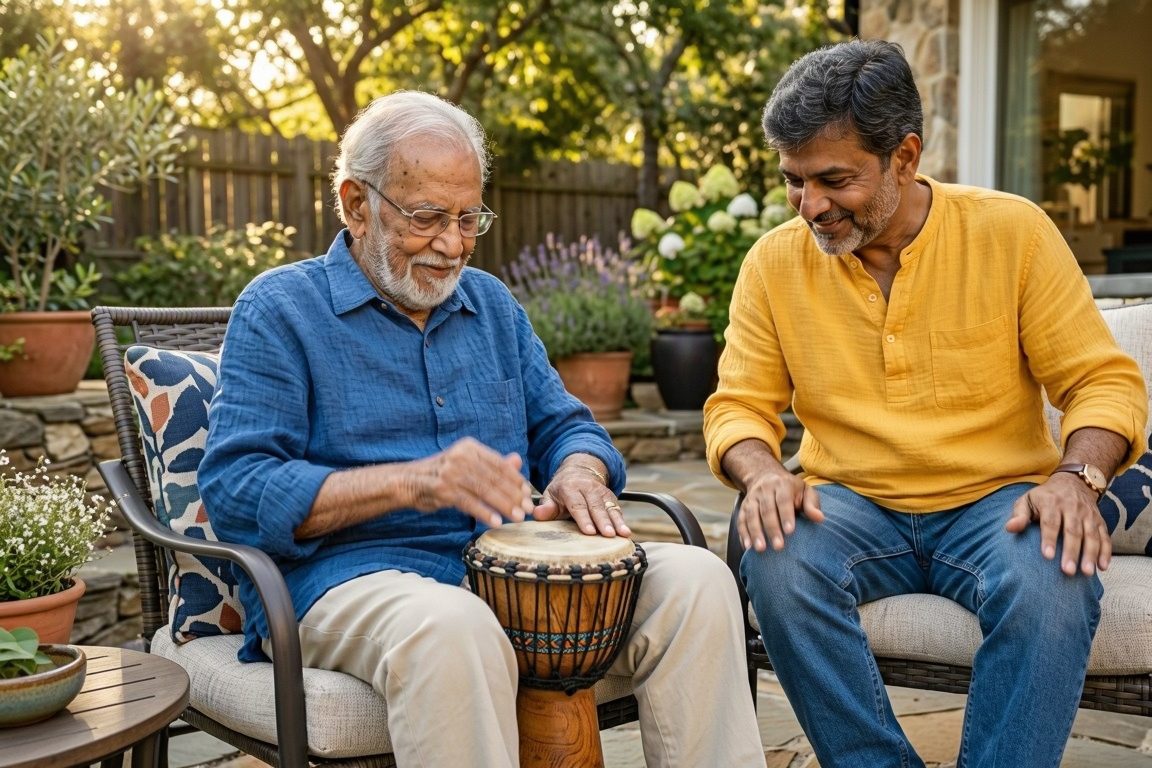
Step by step
What not to do
- Don’t ask ‘Do you remember how to do this?’ This triggers anxiety and highlights loss.Instead, assume they can do it with your support and start the task yourself as a demonstration.
- Don’t correct them if they do a task ‘wrong’ (e.g., folding a towel crookedly). This can cause shame and withdrawal.Instead, thank them for their help and gently adjust the towel later when they’re not looking.
- Don’t rush or multitask while engaging them. If you’re distracted, they’ll sense it and feel unimportant.Instead, give them your full attention for even five minutes, it’s quality over quantity.
- Don’t use complex language or multiple-step instructions. Phrases like ‘First fold this, then put it in the drawer, and then come help me with the next one’ will overwhelm.Instead, give one step at a time with a visual cue.
- Don’t force engagement if they’re agitated or tired. Pushing can escalate distress.Instead, try again later or switch to a calming sensory activity like holding a soft cloth or listening to music.
- Don’t treat them like a child by using a baby voice or oversimplifying tasks that they can still do. This undermines dignity.Instead, speak in a normal adult tone but with a warm, rhythmic cadence.
Key points
- Preserved skills in Emerald state include procedural memory, rhythm, emotional connection, and the ability to follow simple one-step cues.
- Always start with an invitation to help, not a command, this taps into the person’s desire to contribute and feel valued.
- Use the ‘hand-under-hand’ technique to guide without taking over, preserving the person’s sense of agency.
- Incorporate rhythm and familiar songs to activate the temporal region and cue movement.
- Break tasks into single steps and use visual demonstrations rather than verbal instructions.
- Celebrate small successes with specific praise, and end each engagement with a warm thank-you to reinforce their contribution.
Videos
 Dementia Care Masterclass | Working with Someone in an Emerald GEMS StateTeepa Snow demonstrates how to assess preserved skills in real time while engaging someone in an Emerald state. Watch for the spontaneous, curious approach and the use of rhythm and language cues.
 Make Meaningful Changes from Teepa Snow's VideosThis video shows how to apply the GEMS model in practice, including using gem cards to identify abilities. It’s a great follow-up to learn how to document and plan engagements.
 An Interview with Josh Crisp Founder of SolinityJosh discusses creating engagements that stimulate mind, body, and spirit. Listen for ideas on intergenerational activities and how to make tasks personally meaningful.
 Carrie Aalberts Founder & Creator of 'Dementia Darling'Carrie shares person-centered approaches to finding what brings someone to the moment. This video offers practical tips for connecting through preserved interests and skills.
2 more videos
 Is It Hard To Care For Someone With Dementia?This video addresses the emotional challenges of caregiving and offers reassurance that engagement is possible even when it feels hard. It includes real caregiver stories.
 Living Well with Dementia Sisters with Debbi McCune & Bill KellyDebbi and Bill emphasize the importance of staying socially, physically, and occupationally engaged. Their advice on keeping a person active and purposeful is directly applicable to Emerald state care.
Background
What Is the Emerald GEMS State and Why Preserved Skills Matter
The Emerald GEMS state is a stage of early to moderate dementia where the person still has significant abilities, but may struggle with new learning, complex reasoning, or fast-paced conversation. Teepa Snow’s Positive Approach to Care describes this as a time to ‘assess ability’ spontaneously, engaging the person while simultaneously figuring out what they can still do. The key insight is that preserved skills, like rhythm, language, procedural memory (how to do familiar tasks), and emotional attunement, are not lost; they just need the right invitation to surface. For example, someone who could once cook a full meal may still be able to stir a bowl or sort ingredients if you set up the task simply and join them in it.
Why Engagement Slows Decline and Restores Purpose
Research and lived experience show that when people with dementia are not engaged, their condition tends to progress faster. As noted in the All Home Care Matters interview, engagement should stimulate mind, body, and spirit, keeping the person mentally, physically, socially, and occupationally active. For someone in the Emerald state, this means finding tasks that are personally meaningful, like packing lunches for a cause they cared about or sorting silverware. The goal is not just to pass time, but to restore a sense of purpose and contribution. As one caregiver put it, people with dementia ‘need to feel valued’ and ‘need to be able to contribute’, and that starts with us finding ways to ask for their help.
The Brain Science Behind Preserved Skills
The temporal region of the brain, which handles rhythm and language, often remains relatively intact in the Emerald state. This is why you can use a rhythmic, sing-song voice or a familiar tune to cue a person into action. Similarly, procedural memories, like how to brush teeth or fold laundry, are stored in different brain areas than recent memories, so they can be triggered by physical cues and gentle guidance. When you activate your own brain to be curious and spontaneous, as Teepa Snow demonstrates, you create a shared experience where the person feels smart and capable, not reprimanded or tested.
Practical tools
6
The ‘Help Me’ Invitation Script
A set of phrases to open any engagement: ‘I need your help with something.’ ‘Would you be willing to…?’ ‘You’re so good at this, could you show me?’ These phrases tap into the preserved desire to be useful and valued. Practice saying them with a warm, curious tone.
The ‘One-Step’ Task Card
Write or draw a single step on an index card (e.g., ‘Fold towel’ with a simple picture). Hand it to the person as a visual cue. This reduces verbal overload and uses preserved reading/visual skills. Keep a stack of these for common tasks like sorting socks, wiping tables, or watering plants.
The ‘Rhythm and Song’ Cue
Choose 2-3 familiar songs (e.g., ‘Amazing Grace,’ ‘Twinkle Twinkle Little Star’) that you can hum or sing to initiate a task. Pair the song with a rhythmic movement (like tapping a spoon on the table). This activates the temporal lobe and can help the person join in without needing words.
The ‘Hand-Under-Hand’ Guide
A physical technique where you place your hand under the person’s hand to guide an action (e.g., brushing hair, stirring a bowl). This preserves their sense of doing it themselves while you provide gentle direction. Practice it first on yourself to get the feel of light, supportive touch.
The ‘Sorting Station’ Setup
Create a small tray with two containers and a mix of items (e.g., red and black cards, large buttons, or socks). Sit beside the person and start sorting one item yourself, then invite them to join. The visual setup and your modeling make the task accessible without verbal instructions.
The ‘Contribution Log’
A simple notebook where you jot down one thing the person helped with each day (e.g., ‘Sorted napkins,’ ‘Held the dustpan’). Read it back to them or to family members to reinforce their value. This also helps you track which preserved skills are strongest.
Different situations
Lewy body dementia (LBD) with fluctuating cognition
In LBD, preserved skills may come and go. Engage during ‘on’ times (alert, calm) and use shorter, simpler tasks. Avoid tasks requiring fine motor control if tremors are present. Use visual cues more than verbal ones, as visual processing may be stronger. Always have a backup calming activity (like looking at a photo album) ready for sudden shifts.
Late-stage Emerald (transitioning to Amber GEMS state)
As the person moves toward Amber, preserved skills narrow. Focus on sensory and procedural tasks: hand them a familiar object (a wooden spoon, a soft scarf) and let them hold it. Use rhythm and touch more than language. Expect shorter engagement windows (2-5 minutes) and celebrate any participation.
Spouse vs. adult child caregiver
A spouse may need to shift from ‘partner’ to ‘guide’, this can feel awkward. Use phrases like ‘I need your help’ to preserve the marital dynamic. An adult child may need to overcome a history of being the one ‘helped’, practice saying ‘You taught me this, now show me again’ to honor the role reversal. Both should avoid taking over too quickly.
In a facility setting
Professional caregivers can use group engagement: lead a rhythmic clapping song while residents sort items in a shared bowl. Use the same ‘help me’ script but address the group: ‘I need everyone’s help folding these napkins.’ Staff should model the task first and circulate to offer hand-under-hand support. Document which preserved skills emerge for each resident.
Person with aphasia or language loss
Rely almost entirely on visual and physical cues. Hold up an object and point to where it goes. Use exaggerated facial expressions and rhythmic sounds (humming, clapping). Avoid asking questions that require a verbal answer, instead, offer choices nonverbally (hold up two items and look expectantly). Their procedural memory may still be strong even if words are gone.
For the doctor
4
- Ask your doctor or occupational therapist: ‘What preserved skills should we focus on given my loved one’s specific dementia type and stage?’
- Discuss: ‘Are there any tasks we should avoid due to safety risks (e.g., using the stove, handling sharp objects) even if the person seems capable?’
- Clarify: ‘How can we tell if agitation during engagement is a sign of pain, discomfort, or overstimulation rather than frustration with the task?’
- Inquire: ‘Should we adjust any medications that might affect alertness or motor skills before trying engagement activities?’