Step by step
What not to do
- Don't assume all homes have dementia-trained staff, ask directly about training in communication, behavior management, and person-centered care.
- Don't choose based on cost alone without visiting; a cheaper standard unit may lack adaptations that prevent confusion and falls.
- Don't assume a locked door means it's a proper SCU, ask what makes it 'special' beyond security (memory boxes, color-coded paths, trained staff).
- Don't underestimate the importance of consistent routine; ask for a written schedule and look for fixed wake-up, meal, and activity times.
Key points
- Dementia Special Care Units (SCUs) in Spain provide a structured routine, trained staff, and a home-like environment that reduces confusion and agitation, improving quality of life.
- Standard nursing home units lack these specialized features, which can lead to increased behavioral issues and lower social function.
- Key environmental differences include color-coded cues, memory boxes, non-glare lighting, and secure outdoor spaces in SCUs.
- Always visit the unit at different times, ask about staff training, and request a written daily schedule to evaluate the routine.
- Personalize your choice based on the dementia type (e.g., Lewy body, vascular) and stage, and involve a clinician in medication and care planning decisions.
- Costs vary; SCUs may be private-pay, but some public funding options exist. Ask about subsidies and trial stays.
Videos
 Dementia Memory Skilled Care UNIT ABCs of Dementia FAQs: UThis video explains what a dementia unit is, how it differs from standard care, and what to look for when choosing one, directly addressing the caregiver's question.
 Coping with Sundowning & Sleep Issues as a Dementia CaregiverSundowning is common in dementia and can be worsened by a poor environment. This video offers strategies that complement the structured routine of an SCU.
 How Can You Tell The Difference Between Confusion And Dementia?Understanding the difference helps caregivers recognize when a change in environment (like moving to an SCU) might be needed versus a temporary confusion.
 Understanding Normal Thinking vs. DementiaThis video clarifies cognitive changes in dementia, which is foundational for understanding why SCUs adapt the environment and routine.
2 more videos
 Announcing 'The Baffled Brain: Demystifying Dementia'This series overview helps caregivers understand dementia symptoms, which is essential when evaluating whether a unit meets their loved one's needs.
 Dementia in the Context of Serious Mental IllnessFor residents with co-occurring mental health conditions, this video provides context on how SCUs might need to adapt care, which is relevant for complex cases.
Background
What Makes a Dementia Special Care Unit (SCU) Different?
In Spain, Dementia Special Care Units (SCUs) are distinct from standard nursing home beds because they are specifically designed to meet the needs of people with dementia. Unlike standard units, SCUs provide a structured environment with a very strict daily routine, residents get up, eat, and engage in activities at the same time every day. This consistency is crucial because people with dementia rely on routine to feel safe and oriented; when routines are disrupted, it can trigger stress and sundowning behaviors. SCUs also have higher staff-to-resident ratios and staff trained in dementia care, which means caregivers can better respond to behavioral changes and provide person-centered support.
How the Environment Affects Quality of Life
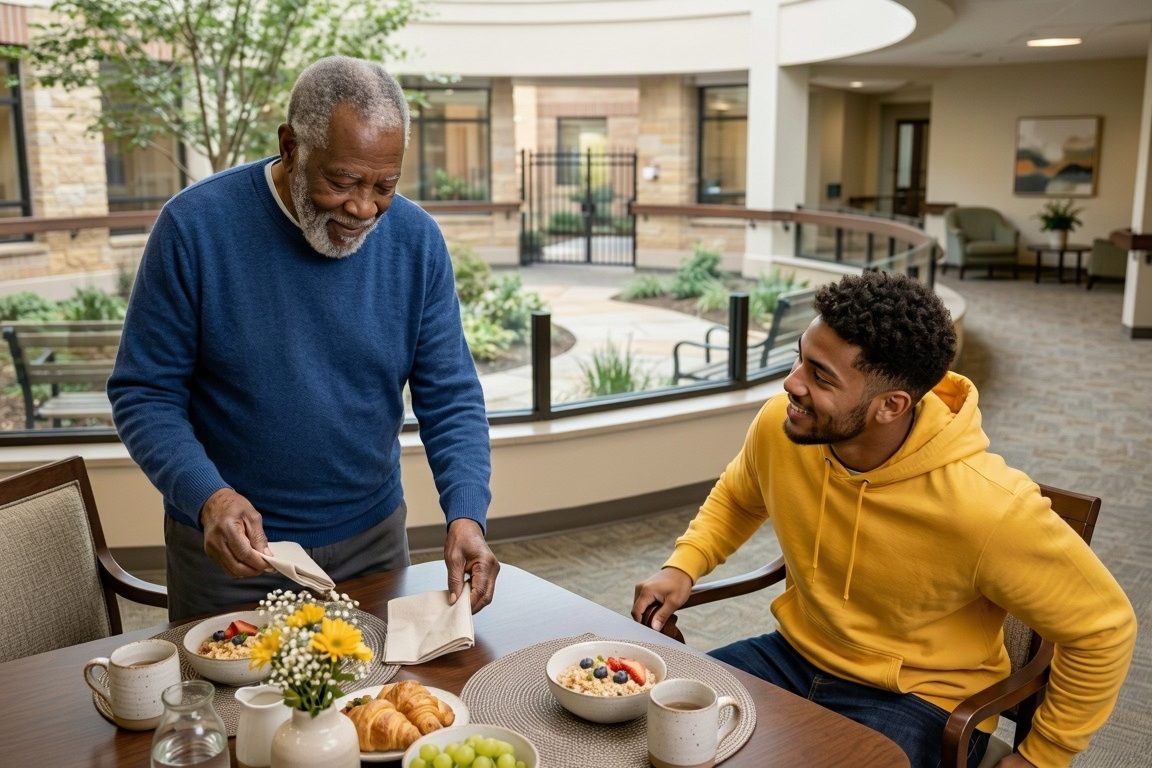
The physical environment in an SCU is adapted to compensate for the visual and cognitive changes that occur with dementia. For example, people with dementia often experience a narrowed field of vision (like looking through binoculars) and difficulty interpreting their surroundings. SCUs use color-coded carpets or memory boxes outside doors to help residents navigate, and they minimize negative stimuli like loud overhead paging or glare from shiny floors. The goal is to create a home-like atmosphere rather than a hospital-like one, with recognizable dining areas, quiet spaces, and opportunities for privacy. This reduces confusion and agitation, which directly improves quality of life.
Why Standard Units May Fall Short
Standard nursing home units in Spain are not designed for the unique challenges of dementia. They may have larger dining rooms with many people, which can be overwhelming for someone with dementia who processes information in snapshots rather than a continuous flow. Staff in standard units may not have specialized training in dementia care, so they might misinterpret behaviors like wandering or agitation as willful, rather than as expressions of unmet needs. Additionally, standard units often lack secure outdoor spaces, which can lead to residents being confined indoors, increasing restlessness and depression. Research from Spain shows that residents in SCUs tend to have better social function and fewer behavioral issues compared to those in standard beds.
Practical tools
3
Dementia-Friendly Environment Checklist
Use on visits:
Exact Phrases to Ask Staff
Ask: 'What does a typical day look like, wake-up, meals, activities?' and 'How do you handle agitation or someone trying to leave?' Good answers: consistency, redirection, validation, calm environment. Red flags: restraint, sedation, vague responses.
Routine Tracking Log
First week after moving in, note wake/sleep/eat times and any agitation. Compare to the facility's schedule; share mismatches so the routine can be adjusted.
Different situations
For a person with Lewy body dementia (LBD)
LBD often involves visual hallucinations and sensitivity to antipsychotic medications. When evaluating SCUs, ask specifically how staff handle hallucinations without medication. Look for units that use redirection, calming music, or environmental changes (like reducing shadows) rather than drugs. Also, LBD residents may have fluctuating cognition, so a consistent routine is even more critical.
Late-stage dementia (severe cognitive decline, bedridden)
In late stages, the focus shifts to comfort and dignity. SCUs should offer palliative care approaches, including pain management, gentle touch, and sensory stimulation (like hand massages or familiar music). Ask if the unit has a hospice partnership. Standard units may not provide this level of specialized end-of-life care.
Spouse vs. adult child caregiver
As a spouse, you may feel guilt about moving your partner to an SCU. Visit the unit together if possible, and ask about family involvement policies. Some SCUs encourage spouses to join meals or activities. As an adult child, you may need to advocate more strongly for your parent's needs, especially if they are non-verbal. Bring a list of their preferences (favorite foods, music, routines) to share with staff.
In a facility with public funding (e.g., public nursing home in Spain)
Public nursing homes in Spain may have fewer SCUs. Ask if there is a 'dementia wing' or a designated area with specialized staff. If not, request a care plan that includes a structured daily routine and environmental modifications (like a memory box). You may need to provide these items yourself.
For a person with vascular dementia
Vascular dementia often involves mood swings and anxiety. SCUs should have staff trained to recognize and respond to anxiety without medication. Ask about activities that reduce stress, like gentle exercise or music therapy. Also, ensure the unit has fall prevention measures (non-slip floors, handrails) since vascular dementia can affect balance.
For the doctor
5
- Ask your doctor: 'What specific environmental features should I look for to reduce my loved one's risk of falls or infections in a nursing home?'
- Discuss: 'Are there any medications that might be used in an SCU that could interact with my loved one's current prescriptions? I want to avoid unnecessary antipsychotics.'
- Inquire: 'Given my loved one's specific dementia type (e.g., Alzheimer's, Lewy body), what are the most important care features to prioritize in a unit?'
- Ask: 'How often should I expect my loved one to be reassessed by a geriatrician or neurologist while in the unit? What signs should I watch for that indicate the care plan needs updating?'
- Discuss: 'If my loved one develops challenging behaviors, what non-pharmacological approaches should the unit try first before considering medication?'