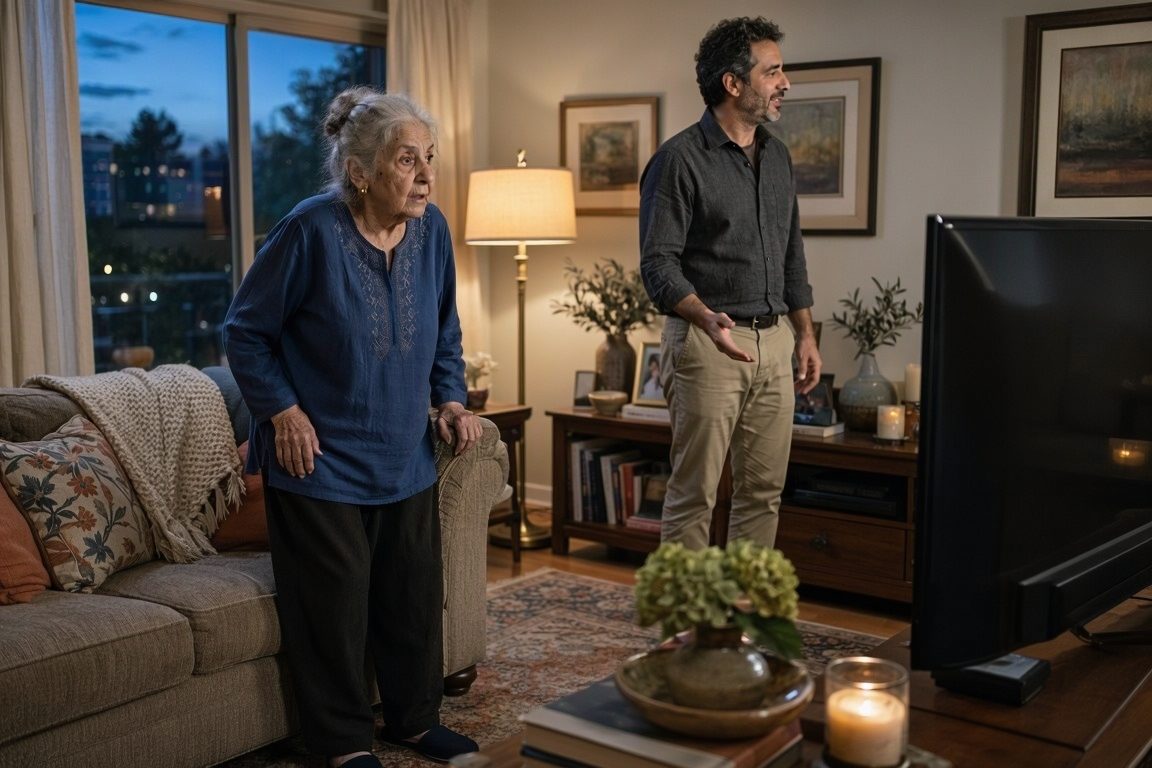
Step by step
What not to do
- Do not argue or correct them. Even if they are wrong about something, arguing will only escalate because their logic center is compromised.Instead, validate the emotion and redirect.
- Do not raise your voice or speak in a demanding tone. This signals danger to their already-frightened brain. Keep your voice calm and even.
- Do not initiate physical contact during an outburst. Touching them, even a gentle hand on the arm, can be perceived as a threat and make things worse. Wait until they are calm (source 7).
- Do not ask them to explain themselves or test their memory. Saying things like 'I already told you' or 'Don't you remember?' will make them feel criticized and humiliated, triggering more anger (source 8).
- Do not take their anger personally. It is not about you. It is about their brain being overwhelmed. If you feel yourself getting frustrated, take a break. Your frustration will only fuel theirs (source 9).
- Do not try to reason with them or give long explanations. Their brain cannot process complex information when upset. Keep your words short and simple.
Key points
- The anger is not personal, it is a reaction to feeling overwhelmed, scared, or out of control.
- Your calm voice and open body language are your most powerful de-escalation tools.
- Validate the emotion first, even if the facts are wrong. Say, 'I see you are upset.'
- Do not argue, correct, or test their memory. It will only escalate the situation.
- Reduce environmental triggers: noise, bright lights, or too many people.
- Take care of yourself. You cannot help them if you are exhausted or frustrated.
Videos
 At What Stage Do Alzheimer's Patients Become Aggressive?Helps you understand when aggression typically appears, so you can anticipate and prepare.
 10 Tips For Responding To Anger in DementiaGives you a quick, practical list of responses to use in the moment.
 What Stage of Alzheimer's is Anger?Clarifies the link between disease progression and emotional outbursts.
 The 4 R's of Responding to Dementia DistressOffers a memorable framework (Recognize, Reassure, Redirect, Relax) for de-escalation.


Background
What is really happening when they are upset?
A person with dementia does not choose to be angry or aggressive. Their brain has lost the ability to manage emotions, reason through frustration, or control impulses. When they lash out, it is almost always a reaction to an overwhelming feeling, loss of control, confusion, fear, pain, or even a simple noise that grates on them. They may not even realize they are acting inappropriately. The anger is not personal; it is a signal that something in their environment or their body is too much for them to handle. As one expert notes, 'anger and aggression is triggered by feelings of loss of control and frustration' (source 6). Your job is not to argue with the signal, but to calm the system.
Why does your response matter so much?
People with dementia are exquisitely sensitive to your tone, body language, and facial expressions. If you look tense, frustrated, or demanding, they will pick up on that and mirror it, escalating the situation. As one care expert explains, 'they are going to pick up on your nonverbals... if you are looking at them like 'I don't know what you want,' that is pretty scary for your loved one' (source 2). Conversely, a calm, even voice and open posture can help them feel safe enough to deflate. You are the emotional anchor. When you stay steady, they have a better chance of coming back to calm.
The goal is not to win, it is to shorten the storm
You cannot prevent every outburst, but you can make them shorter and less intense. The aim is to respond in a way that puts your loved one at ease and does not drive you crazy in the process (source 4). This means letting go of the need to correct, explain, or reason. Instead, you focus on validation, redirection, and safety. Every minute you stay calm is a minute closer to peace.
Practical tools
6
The Validation Phrase Bank
Keep these phrases ready: 'I can see you are upset.' 'That sounds really frustrating.' 'It is okay to feel that way.' 'I am here with you.' 'Let's figure this out together.' Use a calm, gentle tone. Do not say 'But...' or 'You need to...' after validating. Just let the validation land.
The 3-Second Pause
Before you respond, pause for three seconds. Take a slow breath. This breaks the automatic reaction of arguing or correcting. It gives you time to choose a calm response instead of a reactive one.
The Quiet Space Kit
Prepare a small bag or box with calming items:
When agitation starts, bring out the kit. Do not ask, 'Do you want this?' Just place it nearby and say, 'Here, this might help.'
The Exit Strategy
If the situation is escalating despite your best efforts, have a plan to step away. Say, 'I need to get something from the other room. I will be right back.' Leave the room for 2-5 minutes. This gives both of you space to calm down. Ensure the environment is safe before you leave (no sharp objects, no unlocked doors to outside).
The Pain Check
A person with dementia may not be able to tell you they are in pain. Look for non-verbal signs:
If you suspect pain, discuss with their clinician about a trial of pain medication. Pain is a common hidden trigger (source 10).
The Environment Scan Checklist
When an outburst happens, quickly scan:
Addressing these unmet needs can sometimes stop the agitation instantly (source 9).
Different situations
Lewy body dementia
People with Lewy body dementia are especially sensitive to visual hallucinations and fluctuations in attention. They may become upset due to seeing something that is not there. Do not argue about the hallucination. Instead, say, 'That must be scary. I am here with you.' Also, be aware that they can have extreme reactions to medications like antipsychotics, always discuss any medication changes with their clinician.
Late-stage dementia
In late stages, the person may not be verbal. Agitation may show as moaning, rocking, or hitting. Focus on physical comfort: check for pain, hunger, or a wet diaper. Use a soft, rhythmic voice and gentle touch (only if they are not already agitated). A familiar song or a hand massage can be calming. Do not try to reason or redirect verbally, just be present.
Spouse vs. adult child caregiver
Spouses may feel more personally hurt by the anger, as if it is a rejection of their love. Remind yourself: it is the disease, not the person. Adult children may feel guilt or frustration. Both need to practice self-compassion and take breaks. If you are the spouse, consider joining a support group for partners. If you are an adult child, remember that your parent may see you as a child and resist your authority, use a collaborative tone like 'Let's do this together.'
In a facility setting
If you are visiting a loved one in a facility, you may not control the environment. Ask staff to reduce noise or move to a private room. Be aware that the person may be upset because they feel abandoned or confused by the unfamiliar routine. Validate their feelings without blaming the staff. If outbursts are frequent, request a care plan meeting to address triggers.
Medicaid or low-resource settings
If you have limited access to paid caregivers or respite, prioritize your own self-care. You cannot pour from an empty cup. Use free community resources like Alzheimer's Association helpline (24/7) or local support groups. Simple tools like a calm voice and a quiet space cost nothing. Do not feel guilty for not having expensive products, your presence and calm are the most powerful tools.
For the doctor
4
- If agitation is frequent or severe, ask the doctor about possible underlying causes like infection (UTI), pain, or medication side effects.
- Do not start or stop any medications for behavior without a doctor's guidance. Some medications can worsen agitation in certain types of dementia.
- If the person becomes physically aggressive and you are concerned for safety, ask the clinician about a referral to a behavioral health specialist or a dementia-capable home health aide.
- Discuss the possibility of a pain assessment tool if the person cannot communicate pain verbally.