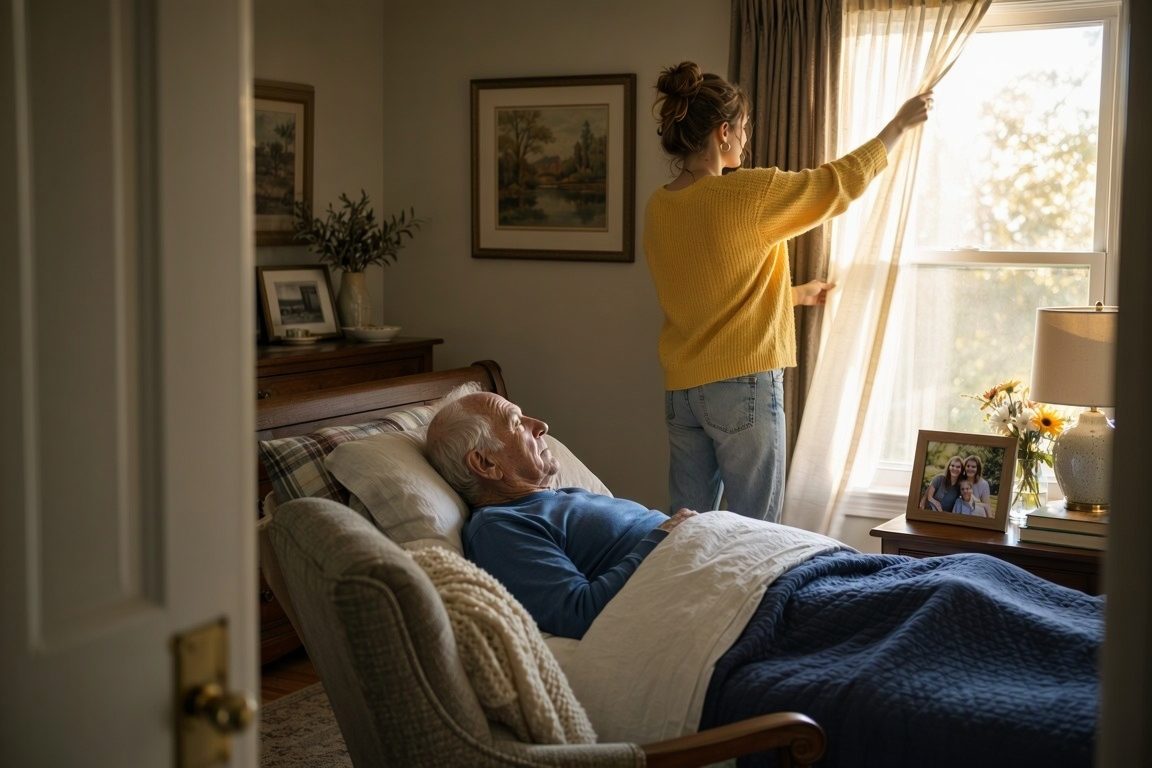
Step by step
What not to do
- Do not play loud or unfamiliar music.
- Do not force food, drink, or wakefulness.
- Do not ignore your own emotions.
- Do not leave them alone if you can help it.
Key points
- Your calm presence is the most powerful tool you have. Silent presence is as important as talking.
- Reduce sensory overload: dim lights, soft sounds, limited visitors, familiar objects.
- Use gentle touch, lotioning hands, brushing hair, holding hands, as a form of connection and healing for both of you.
- When death comes, pause. Do nothing for at least one full minute. Honor the sacredness of the moment.
- This time is not reserved for perfect relationships. Even complicated histories can find peace in these final acts of care.
- You are not alone. Lean on hospice staff, family, and your own inner strength. You can do this.
Videos
 What to Do When an Aging Parent Dies: How to Stay Present and Calm in Their Final MomentsThis video by Sofia Amirpoor directly addresses the emotional and practical steps to take during and immediately after a parent's death, including the crucial advice to pause and do nothing first.
 Non-Peaceful Death in Hospice Care *Trigger Warning* Actively Dying FootageThis video provides a raw, educational look at what active dying can look like, helping caregivers prepare for possible agitation or changes in breathing so they can remain calm and informed.
 An Interview with Hospice Nurse and Author Beth Cavenaugh R.N.Hospice Nurse Julie's interview offers professional insight into facilitating a peaceful death through education and planning, which directly supports creating a calm environment.
 Why Do Elderly Parents With Dementia Become AgitatedPamela D. Wilson's video explains how overstimulation triggers agitation in dementia, which is directly applicable to end-of-life care when the brain is even more sensitive.
2 more videos
 Christmas With Dementia || Why doesn't it FEEL like Christmas?This video from Dementia With Grace introduces the concept of 'calm, cool, and connected', a mindset that translates perfectly to creating a peaceful end-of-life environment.
 How To Manage Sundowning: Unconventional Caregiver Tips For Dementia.Dementia Help Hub's video offers practical tips on reducing agitation through sensory comfort, gentle touch, and monitoring unmet needs, all directly applicable to end-of-life care.
Background
What Is Happening: The Shift Toward Peaceful Transition
As your parent approaches the end of life, their body and mind are undergoing profound changes. They may become less responsive, sleep more, and withdraw from the world. This is not a sign of suffering, it is a natural part of the dying process. The goal is not to 'fix' anything but to create a container of safety and love around them. As Sofia Amirpoor says, being present with them is 'the best gift you can give them' because it helps them transition with peace and honors the profoundness of the situation. This is something you are doing not only for them but for yourself and anyone else who is there.
Why a Calm Environment Matters: Reducing Overstimulation
In the final days, a person's brain becomes highly sensitive to sensory input. Loud noises, bright lights, strong smells, or too many people can cause agitation, confusion, or restlessness. Pamela D. Wilson compares this to being on an airplane with children playing noisy games around you, it's overwhelming and stressful. For someone who is dying, their ability to filter out distractions is gone. A calm environment means reducing these triggers: dim lighting, soft sounds, gentle touch, and a predictable, familiar space. As the James L. West Center for Dementia Care advises, the environment should be 'familiar, functional, and friendly', a place where the person feels safe and knows what to expect.
The Role of Connection: Silent Presence Is Enough
Many caregivers worry they don't know what to say or do. But connection in these moments is not about words. Hospice Nurse Julie emphasizes that silent presence is just as important as talking. You can sit quietly, hold a hand, or simply breathe in the same space. The act of being there, without rushing to call family or make arrangements, allows you to absorb the sacredness of the moment. As Sofia Amirpoor describes, after a parent's last breath, 'time slows down' and 'the space between this world and wherever it is that they're going has thinned.' Your role is to be a witness, not a fixer.
Practical tools
4
Soft Lighting Kit
Gather
Place lamp on bedside table out of direct line of sight. Avoid blue or cool-toned bulbs.
Comfort Touch Kit
Assemble
Gently massage hands and arms with lotion; place weighted blanket on lap or chest for calming effect.
Familiar Object Basket
Place a small basket near the bed with 3–5 items:
Post-Moment Call Plan
Write down and keep by the bed:
Tape it near the bed or place inside the Familiar Object Basket.
Different situations
If your parent has Lewy body dementia or Parkinson's disease
These conditions often cause visual hallucinations and sensitivity to shadows. Use even, warm lighting to reduce shadows. Avoid mirrors or reflective surfaces that might confuse them. As AlzOrangeCounty advises, 'cover reflective surfaces such as mirrors' because someone might see their reflection and become frightened. Also, be extra cautious with scents: Lewy body patients can be very sensitive to smells.
If your parent is in a facility or hospice house
Bring familiar items from home to personalize the room. As Senior Safety Advice recommends, 'bring as many familiar objects with you as you can' and try to recreate the floor plan of their bedroom if possible. Also, communicate with staff about your desire for a calm environment, ask them to knock softly, limit visitors, and keep the door closed to reduce hallway noise. As the James L. West Center notes, hallways can be 'very loud and over stimulating.'
If you are an adult child with a complicated relationship
This time can be especially heavy. You may feel guilt, anger, or relief. As Sofia Amirpoor shares, she had only two good memories of her mother, but the act of lotioning her hands and brushing her hair became a 'peace offering.' Don't think that taking sacred time is reserved only for those who had a loving relationship. Sit with your feelings, and if you need to, say what you need to say, even if it's 'I'm sorry' or 'I forgive you.' The environment is for your healing too.
If your parent is in late-stage Alzheimer's and unresponsive
Focus entirely on sensory comfort: gentle touch, soft music, and familiar scents. Speak to them as if they can hear you, they may be able to sense your presence even if they can't respond. As All Home Care Matters notes, 'sensory connections targeting someone's senses like hearing touch or sight can bring comfort.' Use a weighted blanket and lotion their hands. Avoid trying to wake them or engage them in conversation.
If you are a spouse or partner
You may feel an even deeper need to be physically close. Lie beside them in bed if possible, hold them, and whisper memories of your life together. This is your last chance to share physical intimacy. As Teepa Snow's Positive Approach to Care describes, families have been 'gowned up, masked up, gloved up' just to sit with their loved one for hours. Don't be afraid to ask for help from hospice staff to arrange this safely.
For the doctor
5
- Ask the hospice nurse: 'What signs should I watch for that indicate my parent is in pain or discomfort, and what medications are available to manage that?' (Do not administer any pain relievers like Tylenol without a doctor's guidance, as the source mentions 'provide a mild pain reliever such as Tylenol in case of pain' but this must be discussed with the care team.)
- Ask the doctor: 'Is there a need for any sedatives or anti-anxiety medications to help my parent remain calm? What are the risks and benefits?'
- Ask the hospice team: 'What is the protocol for when my parent stops breathing? Do I call you first, or 911? What numbers should I have on hand?'
- Ask the clinician: 'If my parent has a feeding tube or is on IV fluids, should these be discontinued at the end of life? What are the signs that the body is shutting down naturally?'
- Ask the social worker or chaplain: 'Are there any cultural or spiritual rituals I should be aware of that might bring comfort to my parent or our family during this time?'