Step by step
What not to do
- Don't try to 'correct' their memories if they get details wrong. Dementia can change how someone recalls events, and arguing about facts can cause frustration and distress.Instead, listen with interest and say something like 'That's a lovely memory' or 'Tell me more about that.' The emotional truth of the story matters more than the factual accuracy.
- Don't overwhelm them with too many photos at once. Showing a stack of 50 pictures can be confusing and exhausting. Stick to one or two per session, and let them set the pace. If they seem tired or lose focus, stop and try again later.
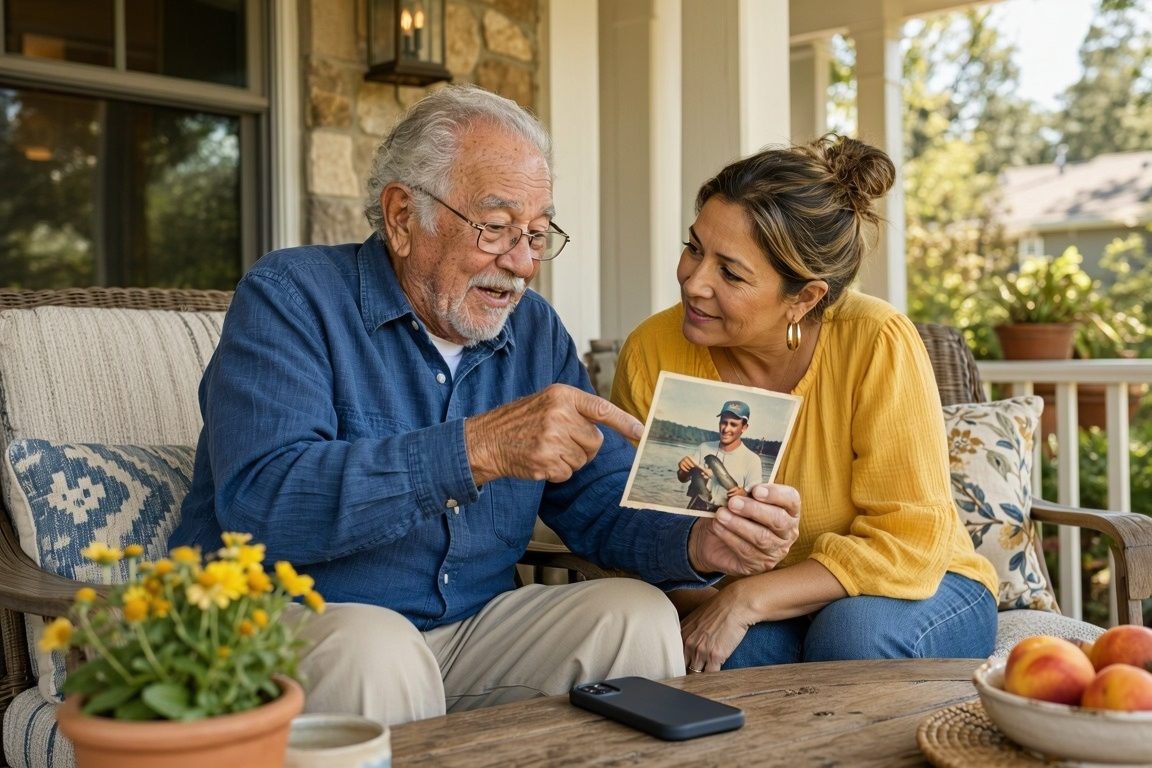
- Don't use the memory bank as a test. Avoid asking 'Do you remember this?' or 'Who is that?' in a way that puts pressure on them. Frame it as a shared experience: 'I love this picture of you at the lake. Can you tell me about that day?' This keeps it positive and collaborative.
- Don't assume they won't enjoy it because they have advanced dementia. Even in later stages, familiar voices and images can spark moments of recognition or calm. Try it in short bursts, even 2–3 minutes of listening to a recording can be soothing. If they don't respond, that's okay; the sensory input can still be comforting.
- Don't neglect the audio component. A photo alone is less engaging than a photo paired with a voice. The sound of a loved one's voice, especially their own, can trigger emotional connections that a picture alone cannot. If you can't record their voice, record yourself describing the photo or reading a letter they wrote long ago.
Key points
- A memory bank pairs photos with audio recordings of your loved one's own voice telling their stories, creating a rich, multi-sensory experience that can reduce agitation and spark connection.
- Start with 10–20 photos from long ago (childhood, young adulthood) and record their responses to simple, open-ended questions. Don't correct or test, just listen and enjoy.
- Make the memory bank easily accessible: on a tablet, in a photo album with a voice recorder, or via a dedicated app like Audivi. Leave it in a common area for spontaneous use.
- Overnight caregivers and facility staff can use the memory bank to get to know the person behind the diagnosis, improving the quality of care and reducing loneliness.
- Personalize the approach based on dementia stage and type: early-stage loved ones can help create it; late-stage use is more about soothing sensory input; Lewy body dementia may need screen-free audio only.
- Keep adding to the memory bank over time. It's a living collection that can grow with your loved one and provide comfort for years to come.
Videos
 Kristin Nelson Founder & CEO of Audivi Memory BanksThis video directly explains the concept of a memory bank (photo + audio) and how it was inspired by watching someone's mother respond to her own voice. It's the core resource for understanding the tool and its emotional impact.
 What are Dementia Friendly Gift ideas? Top 10 gift guide for someone with dementiaThis video includes the idea of a memory book with pictures from long ago, which is a simpler, non-digital version of a memory bank. It offers practical tips for gathering photos and using them as a calming activity.
 How to keep a dementia patient busyThis video covers engaging activities, including using photos and conversation starters. It reinforces the idea of using memory prompts as a way to keep someone occupied and reduce boredom-related agitation.
 3 Activities for Dementia Patients to Do AloneThis video shows how to set up independent activities, which is relevant for using a memory bank when you need a break. It offers ideas for making the memory bank self-directed (e.g., a tablet with simple navigation).

Background
Why a Memory Bank Works
When someone has dementia, their short-term memory is often the first to go, but long-term memories, especially from childhood and early adulthood, can stay remarkably clear for a long time. A memory bank taps into this preserved store of experiences, using both photos and voice recordings to engage the visual and auditory parts of the brain at once. This dual sensory input can help your loved one feel grounded, valued, and connected to their own life story, even when they can't remember what they had for breakfast.
The Emotional Power of Voice and Photo Together
Hearing a familiar voice, their own or a loved one's, telling a story from decades ago can be deeply calming and validating. The combination of a photo and the audio of them describing it creates a richer, more immersive experience than a photo album alone. It's not just about 'remembering'; it's about feeling seen and heard in the present moment. For caregivers, listening to these recordings can also be a window into who the person was before dementia, which can make caregiving feel more personal and less clinical.
Why It's Especially Helpful for Overnight Caregivers
In memory care facilities or at home, overnight caregivers often don't know the resident's life story. A memory bank gives them instant access to the person's history, interests, and personality. One community reported that overnight staff used the memory banks to learn that a resident used to play piano or ride horses, which transformed their interactions from task-oriented to relationship-oriented. This can reduce anxiety for both the caregiver and the person with dementia, especially during the 'sundowning' hours when confusion often peaks.
Practical tools
5
Audivi Memory Banks (app/platform)
This is a dedicated online platform designed specifically for creating memory banks. You upload a photo and then record an audio clip directly in the app. It stores unlimited memories and can be kept private or shared with family and caregivers. It's especially useful for overnight caregivers because they can listen to the stories on their own device. The app was inspired by watching someone's mother light up when hearing her own voice tell a story.
Simple Voice Recorder + Photo Album
If your loved one isn't comfortable with a tablet, use a basic digital voice recorder (like a Sony ICD-PX370) and a small photo album.
When they look at a photo, you can play the corresponding audio. This low-tech approach works well for people who are overwhelmed by screens.
Tablet with a Locked Folder
This is a good option for someone who can tap a screen but might get confused by complex menus.
Conversation Starter Cards (DIY)
Write simple, open-ended questions on brightly colored index cards and keep them near the memory bank. Examples: 'What was your favorite vacation?' 'Who was your best friend in school?' 'What did you love to cook?' Use these cards to spark new recordings or to prompt conversation when you're looking at photos together. This turns the memory bank into an ongoing, interactive activity.
Memory Bank 'Kit' for Overnight Caregivers
Different situations
Early-stage dementia (mild cognitive impairment)
Your loved one can be an active participant in creating the memory bank. Sit with them and ask them to choose photos and tell their stories. They may enjoy recording their own voice. This can be a meaningful activity that gives them a sense of purpose and control. You can also use the memory bank as a tool to help them remember recent events (e.g., 'Here's a photo from our visit last week, listen to what you said about it').
Middle-stage dementia (moderate impairment)
Focus on long-term memories from childhood and young adulthood, as these are most likely intact. Keep sessions short (5–10 minutes) and use simple, concrete questions. If they can't describe a photo, you can narrate it for them: 'This is you and your brother at the fair. You won a teddy bear that day.' Let them listen to the recording later, they may enjoy hearing their own voice even if they don't remember making it.
Late-stage dementia (severe impairment)
Use the memory bank primarily as a soothing sensory tool. Play recordings of familiar voices (yours, their spouse's, their child's) reading a poem or singing a lullaby. Show photos with high contrast and simple subjects (a single face, a pet, a flower). Don't expect a verbal response; just let the sounds and images provide comfort. You can also use the recordings during personal care (bathing, dressing) to reduce agitation.
Lewy body dementia or Parkinson's dementia
Be mindful of visual hallucinations or sensitivity to screens. If your loved one becomes confused or frightened by a photo, switch to audio-only recordings. Use a simple voice player without a screen. Also, because these types of dementia can cause fluctuating attention, keep sessions very short (2–3 minutes) and be ready to stop if they seem overwhelmed.
In a memory care facility
Coordinate with staff to integrate the memory bank into their daily routine. Ask the activities director to include it in group reminiscence sessions. Provide a printed copy of the photo/audio list for overnight caregivers. If your loved one shares a room, use headphones for audio to avoid disturbing a roommate. You can also create a 'memory station' in their room with a tablet and a sign: 'Welcome to Mom's Memory Bank, please listen and enjoy.'
Spouse vs. adult child caregiver
If you are the spouse, you may have decades of shared memories to draw from. Include photos of your wedding, early married life, and children. Your voice will be deeply familiar and comforting. If you are an adult child, focus on your parent's life before you were born (their childhood, young adulthood) to help them connect with their own identity. Include photos of their parents, siblings, and hometown. Your voice may be less familiar, but your interest in their story can be very validating.
For the doctor
3
- If your loved one becomes agitated or distressed when looking at old photos or listening to recordings, ask their doctor or a dementia specialist whether this type of reminiscence therapy is appropriate for their current stage.
- If you plan to use the memory bank as a regular part of their daily routine, discuss with their clinician whether it might interfere with other therapies or medications, especially if they have a history of sundowning or anxiety.
- If your loved one has a history of traumatic memories (e.g., war, abuse, loss), ask a therapist or social worker for guidance on how to handle potentially triggering content. Some memories may need to be avoided or reframed.