Step by step
What not to do
- Do not argue or try to reason with your loved one during moments of agitation. This will only increase their distress and your own.Instead, validate their feelings and redirect their attention to a calming activity or a comforting object.
- Do not rush through tasks like bathing or dressing. Your hurried energy will make your loved one feel anxious and resistant. Slow down, speak in a calm, gentle voice, and allow extra time for each step. Patience is your most powerful tool.
- Do not use harsh, overhead lighting in the bathroom or bedroom at night. It can feel clinical and disorienting.Instead, use warm, soft lighting from a lamp or nightlight to create a cozy, inviting atmosphere.
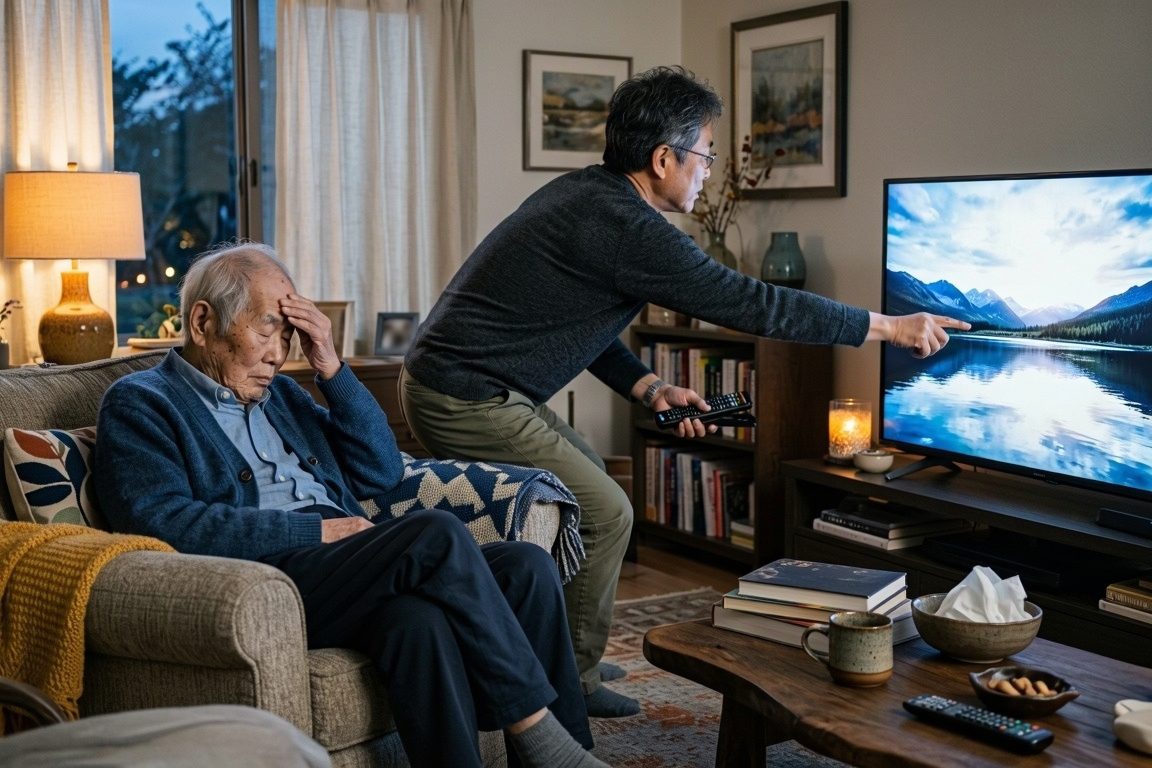
- Do not leave the television on as background noise. It can be overstimulating and confusing, especially in the evening. Turn it off unless someone is actively watching, and choose calm, familiar programs if you do watch.
- Do not force a bath or shower if your loved one is resistant. Forcing them into compliance creates trauma and escalates the situation for everyone.Instead, try a warm sponge bath, or revisit the idea later with a different approach (e.g., a different time of day, a different room, or a different caregiver).
- Do not neglect your own self-care. Avoid unhealthy coping strategies like denial or avoidance. Facing challenges with practical solutions and emotional resilience is key. Use respite care, seek emotional support, and take time for yourself to recharge.
Key points
- A calm environment reduces sensory overload and agitation for your loved one, and lowers your own stress.
- Warm the bathroom, use soft lighting, and play calming music to create a soothing space, especially during bathing and evenings.
- Always approach from the front, announce your presence, and use a relaxed demeanor to prevent startling your loved one.
- Use the 'hand-under-hand' technique to give your loved one a sense of control during personal care tasks.
- Check for unmet needs (hunger, thirst, pain, bathroom) before assuming a behavior is 'difficult.'
- Practice patience and self-care: take deep breaths, use coping statements, and step away when you need a break.
Videos
 How To Manage Caregiver Stress Effectively? - Dementia Help HubProvides a broad overview of managing caregiver stress, including the importance of training, support, and practical solutions, which directly supports the environmental adaptation approach.
 How To Manage Sundowning: Unconventional Caregiver Tips For Dementia. - Dementia Help HubOffers specific, unconventional tips for managing sundowning, which is a key time when environmental adaptations (lighting, noise, routine) are most critical.
 MAXIMIZE YOUR CAREGIVING EXPERIENCE: Caring for Elderly Parents - StressFocuses on practical advice for family caregivers, including the importance of patience and slowing down, which are foundational to creating a calmer environment.
 Should You Force a Loved One with Dementia to Bathe?Directly addresses a common stressful caregiving task (bathing) and offers a gentler, environment-focused approach that aligns with the article's principles.
2 more videos
 This one thing causes so much dementia caregiver painExplores a common source of caregiver pain (likely guilt or frustration) and offers a compassionate perspective that supports the need for self-care and environmental changes.
 Manage dementia caregiver stress: 4 tips to cope with difficult dementia behaviorsProvides four concrete tips (coping statements, deep breathing, removing yourself, moving your body) that are directly applicable to maintaining a calm caregiver presence.
Background
Why a Calmer Environment Matters
When you care for someone with dementia, their brain is processing the world differently. Sights, sounds, and even the temperature of a room can feel overwhelming or confusing. This sensory overload often leads to agitation, anxiety, or what is known as 'sundowning', increased confusion and restlessness in the late afternoon or evening. By intentionally shaping the environment, you are not just making things 'nicer'; you are directly reducing the triggers that cause distress. Research shows that caregivers who use these practical adaptations experience less stress themselves, which in turn improves the quality of care they provide and can even delay the need for institutional care.
The Core Principle: Reduce Overwhelm, Increase Comfort
The goal is to create a space that feels safe, predictable, and soothing. This means minimizing harsh stimuli, like loud noises, bright or flickering lights, and cold drafts, while introducing calming elements like soft lighting, familiar music, and gentle warmth. Think of it as designing a 'sensory sanctuary' within your home. This approach is not about controlling your loved one; it is about removing the obstacles that make their world feel chaotic. When the environment is calmer, your loved one is more likely to feel secure, and you, as the caregiver, will find it easier to remain patient and present.
Your Role as the Calm Anchor
Your own emotional state is a powerful part of the environment. If you are rushed, frustrated, or anxious, your loved one will pick up on that energy, often leading to a mirroring of that distress. Practicing patience is a skill you can build. Before entering the room, take a deep breath and tell yourself, 'I am going to be patient. We are not going to get upset.' This simple act of intention-setting can dramatically change the tone of an interaction. Remember, you are not just managing a situation; you are modeling calmness. When you are truly present in the moment, it is much harder to feel emotional pain, and your loved one benefits from that stability.
Practical tools
6
The 'Calm Before the Task' Checklist
Before any potentially stressful activity (bathing, dressing, doctor visit), run through this mental or written checklist:
This checklist shifts your focus from the task to the environment and your own state.
The 'Hand-Under-Hand' Technique
When helping with brushing teeth, eating, or shaving, place your hand under your loved one's hand. This allows them to maintain a sense of control and their brain registers the motion as their own. It reduces the feeling of being 'done to' and increases cooperation. Use your other hand to gently touch their shoulder for added comfort.
The 'Redirection' Toolkit
Keep a small basket or box with calming items ready:
When you see agitation rising, offer one of these items to redirect their focus. This is a proactive, not reactive, tool.
The 'Evening Wind-Down' Routine
Create a predictable sequence for the late afternoon and evening:
This routine signals to the brain that it is time to calm down, reducing sundowning.
The 'Patience Practice' Mantra
Before entering your loved one's room or starting a care task, take a deep breath and say to yourself: 'I am going to be patient. We are not going to get upset. This is about connection, not completion.' This simple verbal cue can reset your emotional state and set a calm tone for the interaction.
The 'Sensory Audit'
Once a week, walk through your home as if you were your loved one. Note:
Make one small adjustment each week to reduce sensory overload.
Different situations
For a loved one with Lewy Body Dementia (LBD)
People with LBD are especially sensitive to temperature and visual hallucinations. Ensure the environment is consistently warm, not just during bathing. Use very soft, warm lighting to reduce shadows that might be misinterpreted. Avoid high-contrast patterns on walls or floors, which can be perceived as moving or threatening. Always approach from the front and speak calmly, as they may be more easily startled.
For a loved one in late-stage dementia
Focus on physical comfort and gentle sensory input. Use a weighted lap blanket to provide a sense of security. Play very soft, familiar music from their youth. Speak in a low, soothing tone, and use gentle touch like holding hands. The environment should be as quiet and predictable as possible, with minimal changes to the room layout. The goal is to create a cocoon of safety.
For an adult child caregiver vs. a spouse caregiver
Adult children may feel more guilt and pressure to 'fix' the situation. Practice letting go of the need to control the outcome. Spouses may struggle with the loss of their partner and the role reversal. For both, it is crucial to use respite care and seek emotional support. Adult children might benefit from setting firm boundaries (e.g., 'I will help with bathing, but I need a break afterward'). Spouses might need to redefine their relationship as one of care and compassion, not just partnership.
For a loved one living in a memory care facility
You can still influence the environment. Bring in familiar items from home: a favorite blanket, photos, a small lamp with warm light. Work with staff to create a consistent routine for visits. Choose a quiet time of day for visits, and avoid the dining room during busy meal times. Use the 'hand-under-hand' technique during visits to maintain connection. Advocate for a small, family-like household model if possible, as it is less overwhelming than large, noisy dining rooms.
For a loved one with a history of aggression
Focus on prevention. Use continuous, meaningful activity programming (like folding towels or simple sorting tasks) to keep them engaged and reduce boredom, which can trigger aggression. Always approach from the front, within their visual field, with a relaxed demeanor and a smile. If aggression occurs, remove yourself from the situation mentally or physically, and then return when calm. Discuss with a clinician about whether a referral to a behavioral specialist is appropriate.
For the doctor
4
- If your loved one's agitation or aggression is frequent or severe, discuss with a doctor whether a referral to a geriatric psychiatrist or a behavioral specialist is needed. Do not attempt to manage severe behavioral issues alone.
- If you are considering using essential oils or aromatherapy for calming, ask your loved one's doctor or a pharmacist about potential interactions with their medications or any skin sensitivities.
- If your loved one is on medications for dementia or mood, do not change or stop them without consulting the prescribing clinician. Medication adjustments should always be done under medical supervision.
- If you are feeling overwhelmed, depressed, or unable to cope, discuss this with your own doctor or a mental health professional. Caregiver burnout is a serious health risk, and you deserve support.