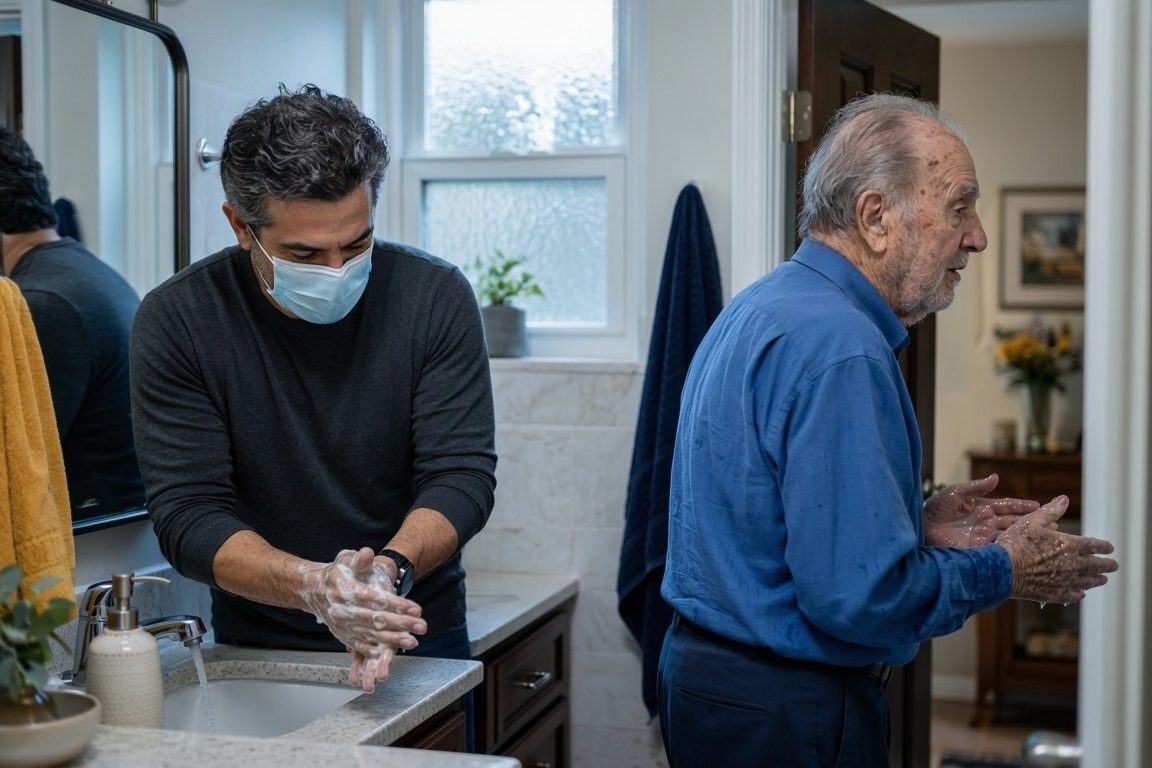
Step by step
What not to do
- Do not argue or reason with the person about why they must stay home or wear a mask. This often leads to frustration and agitation.Instead, use redirection: offer a preferred activity or say, 'Let's go look at the garden together.'
- Do not force handwashing or mask-wearing if the person becomes extremely distressed. Forcing can cause a behavioral crisis and increase the risk of injury.Instead, try alternatives like hand sanitizer wipes or a face shield (which may feel less restrictive).
- Do not isolate the person in a room alone for long periods, even for infection control. This can worsen confusion, depression, and physical decline.Instead, create a safe, supervised space where they can move around while maintaining distance from others.
- Do not assume the person cannot learn new routines. With repetition and visual cues, many people with early to moderate dementia can adapt to handwashing or using a tissue. Be patient and celebrate small successes.
- Do not neglect your own health as a caregiver. Burnout and illness in the caregiver directly harm the person with dementia. Take breaks, ask for help, and follow public health guidelines for yourself. You cannot pour from an empty cup.
- Do not skip medical appointments or vaccinations out of fear of exposure. Telehealth is often available for routine checkups. Ensure the person receives the COVID-19 vaccine and booster as recommended by their clinician, this is the single most effective protection.
Key points
- People with dementia often cannot understand or follow standard COVID-19 precautions like handwashing or distancing due to cognitive impairment and behavioral symptoms.
- Dementia itself is a risk factor for severe COVID-19 outcomes, including hospitalization and death, especially in advanced stages.
- Lockdowns and isolation can worsen confusion, anxiety, and agitation; maintaining routine and connection is critical.
- Use visual cues, distraction, and gentle redirection instead of arguing or forcing infection control measures.
- Monitor daily for infection signs, including behavioral changes, and act quickly if symptoms appear.
- Caregivers must protect their own health and have a backup plan in case they become ill.
Videos
 QUARANTINE? Nursing Home Shutdown? How to SUPPORT People w DEMENTIA Free Ideas How to VISIT on PhoneOffers practical, free strategies for staying connected with a loved one with dementia during lockdowns, including phone visit tips.
 Dementia Care Partner Talkshow Podcast Ep. 51: Why COVID-19 Makes Dementia Care So ChallengingExplains the specific cognitive and behavioral reasons why COVID-19 precautions are hard for people with dementia, and how to adapt.
 What Is Caregiver Burden During Dementia Progression? - TestHelps caregivers recognize their own stress and burnout, which is heightened during a pandemic, and offers validation and support.
 Dementia Care Needs PAC Now, More Than Ever - Go Fund MeHighlights the urgent need for compassionate dementia care training during COVID-19, especially in care communities.
2 more videos
 A Special Message From Teepa SnowProvides reassurance and specific positive approach techniques for caregivers navigating the pandemic with a loved one with dementia.
 Comprehensive Guide to Managing Toileting and Incontinence in Dementia CareAddresses a common care challenge that becomes harder during isolation and infection control, with practical step-by-step advice.
Background
Why Dementia Makes COVID-19 Prevention So Difficult
People with dementia often cannot follow public health recommendations like hand hygiene, social distancing, or staying home. This isn't stubbornness, it's the disease. Their cognitive impairment may prevent them from understanding or remembering the rules, especially in moderate to severe stages. For example, they might forget to wash their hands after touching a surface, or they may not grasp why they can't hug a visitor. Behavioral symptoms like motor agitation, intrusiveness, or wandering can also make self-isolation nearly impossible. A person who paces or tries to leave the house is not being difficult; they are responding to internal restlessness or confusion. This means standard infection control advice, 'just stay home and wash your hands', often fails without major adaptations.
Higher Risk of Severe Illness and Hospitalization
Older adults with dementia are among the most vulnerable groups for severe COVID-19 outcomes. Research shows that people with dementia have a higher risk of COVID-19 infection, hospitalization, and death compared to those without dementia. This is due to a combination of factors: advanced age, underlying health conditions, and the physical toll of dementia itself. Dementia is a progressive, fatal disease, pneumonia (including from COVID-19) is a leading cause of death because the brain can no longer coordinate the muscles needed to clear the lungs. Additionally, infections are a top reason for hospitalization in people with dementia, especially those with severe functional impairment. During a pandemic, this risk multiplies, making infection prevention a life-or-death priority.
The Unique Stress of Lockdowns and Isolation
When care communities go into lockdown or families isolate at home, people with dementia often experience heightened confusion, anxiety, and agitation. They may not understand why familiar faces disappear or why they can't go outside. Staff in nursing homes may have minimal training in compassionate dementia care while also trying to enforce infection protocols. Family caregivers, suddenly cut off from outside help, face burnout as they juggle round-the-clock care with no respite. The loss of routine, social contact, and physical touch can accelerate cognitive decline and worsen behavioral symptoms. This is not just an inconvenience, it is a serious threat to the person's emotional and physical well-being.
Practical tools
6
Visual Handwashing Chart
Create a laminated, step-by-step picture chart (4-6 simple images) and place it above the sink. Use bright colors and large images. Point to each step as you guide their hands. This reduces confusion and makes the task feel like a game.
Distraction Kit for Wandering
A basket or box filled with calming, engaging items:
Keep it in a visible, accessible spot. When the person tries to leave, offer the kit with a warm smile and a simple phrase like, 'Let's sit and listen to some music.'
Daily Schedule Board
Use a whiteboard or poster board to write out the day's activities with simple icons (e.g., a sun for morning, a toothbrush, a plate, a bed). Review it together each morning. This provides structure and reduces anxiety about the unknown.
'This Is Me' Hospital Passport
A one-page document (available free from many dementia organizations) that lists the person's name, preferred name, routines, favorite foods, calming phrases, and communication tips. Give a copy to any hospital or care facility staff. This helps them provide person-centered care even during a crisis.
No-Touch Thermometer
A forehead thermometer that gives a quick reading without physical contact. Use it daily at the same time (e.g., before breakfast). Explain simply: 'This checks if you're feeling okay.' It is less invasive and easier to tolerate than an oral or ear thermometer.
Simple Video Call Setup
Use a tablet or smartphone with a single-app interface (like 'Senior Mode' or 'Easy Touch'). Pre-program the video call app to auto-answer or have one large button labeled 'Call [Name].' Place the device on a stand so hands are free. This makes virtual visits possible even if the person cannot manage a phone.
Different situations
Early-stage dementia (mild cognitive decline)
The person may still understand and cooperate with infection control if explained calmly and repeatedly. Use short, clear sentences: 'We wash our hands to keep germs away.' They can learn new routines with practice. Encourage them to wear a mask by letting them choose a fabric pattern they like. Maintain social connections through video calls, as they can still follow conversations.
Late-stage dementia (severe cognitive decline)
The person likely cannot understand or follow any infection control measures. Focus on environmental controls: keep the home or facility clean, limit visitors, and ensure caregivers wear masks and gloves. The person may need full assistance with handwashing and may resist. Use gentle touch and a calm voice. Monitor closely for infection signs, as they cannot communicate symptoms. Prioritize comfort and palliative care if COVID-19 occurs.
Lewy body dementia or Parkinson's disease dementia
These individuals are at higher risk of severe reactions to medications and may have more pronounced movement issues. Avoid sedating medications for agitation if possible, as they can worsen confusion and falls. Be extra cautious with fever, as they may have difficulty regulating body temperature. Use non-pharmacological calming techniques (music, gentle rocking) instead of physical restraint.
Care community (nursing home or assisted living)
Advocate for the facility to have a dedicated dementia care unit with staff trained in both infection control and dementia care. Ask for regular updates on the person's well-being. If the facility is on lockdown, request scheduled video calls or window visits. Ensure the person's room has familiar items (photos, blanket) to reduce disorientation. Report any signs of neglect or inadequate care immediately.
Family caregiver at home (spouse or adult child)
You are the primary infection control officer. Set up a 'clean zone' near the entrance for removing shoes and washing hands. Limit your own exposure to COVID-19 by wearing a mask in public and getting vaccinated. Arrange for a backup caregiver (a trusted friend or paid aide) who can step in if you become ill. Create a written emergency plan: who to call, where to go, and what to bring if hospitalization is needed.
For the doctor
5
- Ask your doctor: 'Given my loved one's dementia stage and other health conditions, what is their specific risk for severe COVID-19? Should they receive the latest vaccine or booster?'
- Discuss: 'If my loved one develops COVID-19 symptoms, what is the best way to monitor them at home? When should we go to the hospital?'
- Ask: 'Are there any medications (like antipsychotics or sedatives) that could increase their risk of complications from COVID-19 or make infection harder to detect?'
- Discuss: 'What is the facility's policy on family visitation during outbreaks? Can I request a designated caregiver exemption to stay with my loved one if they are hospitalized?'
- Ask: 'If my loved one is hospitalized with COVID-19, how can we ensure a dementia-friendly environment and avoid delirium? Are there non-drug approaches to manage agitation?'