Step by step
What not to do
- Do not correct a staff member in front of a resident or other staff. Pull them aside later and ask 'What do you think might have worked better in that moment?'
- Do not assume experienced staff already know everything; use questions to gently challenge habits, such as 'I noticed you approached her from behind. What do you think she might have experienced in that moment?'
- Do not use questions that feel like a test or trap, such as 'Why didn't you do it the way I showed you?' Instead, ask 'What made that approach challenging for you today?'
- Do not give the answer immediately when a staff member is unsure. If they say 'I don't know,' pause and ask 'What do you think might be going on? Even a guess can be helpful.'
- Do not forget to address the emotional needs behind staff behavior. If a staff member seems frustrated, ask 'How are you feeling about this situation?' before jumping into skill coaching.
Key points
- Asking questions instead of telling shifts the dynamic from bossy to collaborative, giving you more data and reducing your burnout.
- The staff who have the most contact with residents (aides, housekeeping, dietary) need the most training, and coaching through questions is a practical way to build their skills in real time.
- Use open-ended questions like 'What did you notice?' and 'What do you think might work?' to invite staff to think critically and share their observations.
- Reflect back what you hear to show you are listening and to ensure understanding before moving forward.
- Pair questions with positive encouragement and a clear next step ('Would you be willing to try that?') to build staff confidence and ownership.
- Tailor your coaching to the staff member's experience level, the resident's stage of dementia, and the specific setting (memory care vs. general assisted living).
Videos
 Dementia Care Partner Talk Show # 34: Three Skills and Two Strengths to Not Become the Lone RangerTeepa Snow explains why asking questions keeps you from being bossy and helps you gather more data from staff and residents.
 Dementia Care Partner TalkShow: Ep. 104 - How Can Direct Care Staff Develop New Dementia Care SkillsThis episode directly addresses the challenge of helping direct care staff develop skills, including the use of questions and hands-on practice.
 What To Ask When Looking For A Memory Care Facility?Provides example questions to ask about staff training, which you can adapt for coaching conversations with your own staff.
 How To Choose a Memory Care Facility For DementiaHighlights the importance of asking about specific techniques for behaviors like exit-seeking and bathing refusal, which you can use as coaching prompts.
2 more videos
 Ep. 183: See the Person FirstReinforces the principle of seeing the person behind the dementia, which is the foundation of the questioning approach.
 Dementia and Anger Outbursts (3 Mistakes That You're Making)Illustrates common mistakes like commanding instead of asking, which you can use as teaching points when coaching staff.
Background
Why Telling Doesn't Work and Asking Does
When you tell a staff member what to do, you put yourself in the role of the expert and them in the role of the follower. This can feel bossy, and it keeps you in what Teepa Snow calls the 'Lone Ranger mode', where you carry all the responsibility and data yourself. Instead, when you ask questions, you invite the staff person to share what they think, what they feel, and what they noticed. As Teepa Snow explains, this approach 'keeps you from being bossy' and gives you more data to work with because you are actually taking in information from the person who is with the resident every day. Asking questions also models the same respectful, curious approach you want staff to use with residents. It shifts the dynamic from 'I know better' to 'let's figure this out together.'
The Real Training Gap: Who Needs the Skills Most
In many facilities, the director, the marketer, or the nurse may have some dementia training, but the people who have the most contact with residents are the aides, housekeeping, dietary, and activities staff. As one expert notes, these are the ones who should have extensive dementia training, yet they are often the least trained. When facilities are desperate for staff, they may hire people with no training at all, which creates a risk for neglect or abuse, not from malice, but from being unaware and not knowledgeable. By coaching through questions, you help these staff members build the skills they need in real time, during real interactions, rather than relying on a one-time video or lecture. This is how you close the gap between policy and practice.
The Power of Shared Learning and Reflection
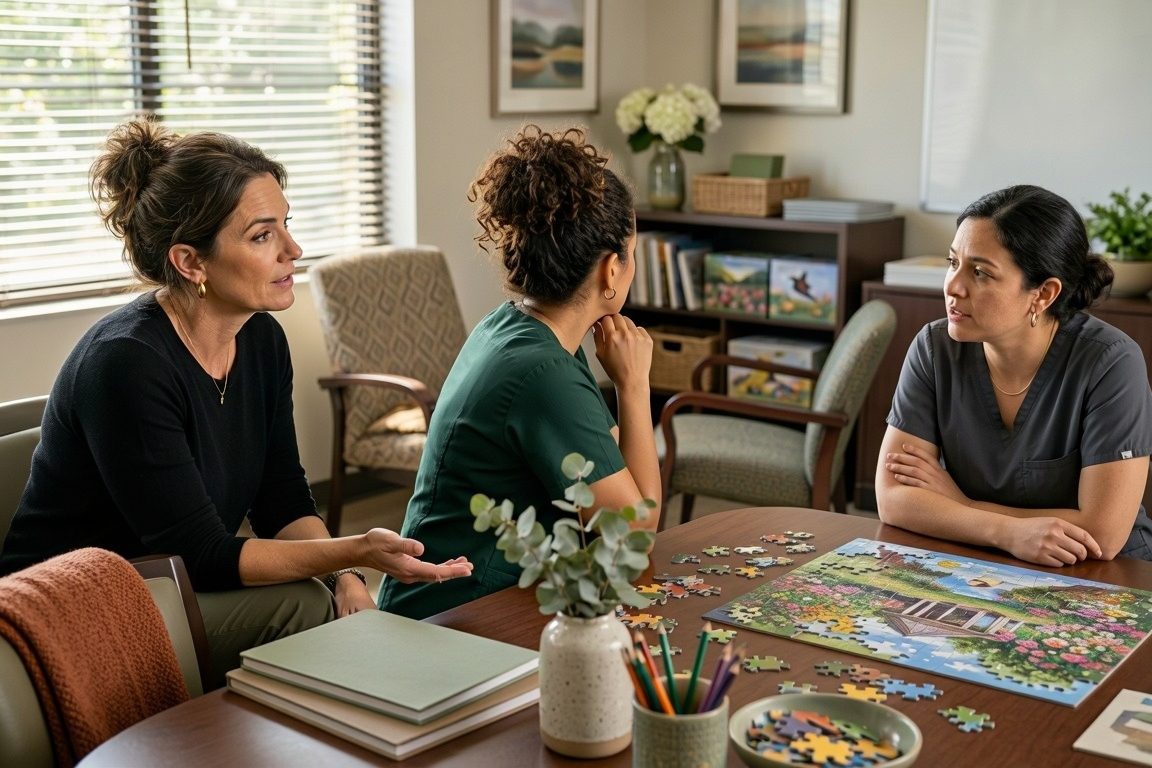
Coaching through questions is not about testing staff or making them feel stupid. It is about creating a culture where everyone is learning together. When you ask a staff member, 'What did you notice about how Mrs. Jones responded when you approached her from the front?' you are helping them become more observant. When you then share back what you thought you heard them say, you are showing them that their observations matter. This process of asking, listening, and reflecting builds trust and helps staff internalize skills rather than just following orders. It also gives you, as the coach, more information to tailor your guidance to the specific resident and the specific staff member's strengths and challenges.
Practical tools
3
The 'What Did You Notice?' Question Bank
Create a short list of go-to questions for any coaching moment. Examples: 'What did you notice about his breathing when you entered the room?' 'What did you notice about her facial expression when you said that?' 'What did you notice about the way he moved his body?' These train staff to be more observant and give you concrete data.
The 'Walk Me Through a Scenario' Checklist
For common challenges like exit-seeking or bathing refusal, have a checklist of questions. For example: 'Walk me through what you would do if a resident starts asking the same question over and over. What would you say? How would you respond to the feeling behind the question?' This helps you assess skill level and coach step by step.
The 'Emotional Need Behind the Behavior' Checklist
When a resident reacts strongly, coach staff to pause and ask what unmet need might be driving the response. Common needs to consider:
This reframes the situation from managing behavior to understanding a person.
Different situations
When coaching staff who work with residents in early-stage dementia
Focus questions on preserving the resident's independence and dignity. For example, ask 'How can we help her feel like she is still making choices?' Use questions that encourage staff to offer limited choices, like 'Do you want the blue shirt or the red shirt?' rather than open-ended questions that may overwhelm.
When coaching staff who work with residents in late-stage dementia
Emphasize non-verbal communication and observation. Ask 'What did you notice about his breathing or eye movements when you touched his hand?' Use fewer words and more visual and tactile cues. Coach staff to respond to the feeling, not the words, and to use simple statements like 'Let's have a drink' instead of questions.
When coaching staff in a memory care unit versus a general assisted living facility
In a dedicated memory care unit, you can expect staff to have more baseline training, so your questions can go deeper. Ask 'What do you think the underlying need is for this behavior?' In a general facility, start with more basic questions like 'What did you notice about how she responded?' and build from there.
When the staff member is new versus experienced
For new staff, use more supportive and guiding questions. For example, 'What do you think might happen if you try approaching from the front?' For experienced staff, use more challenging questions that invite reflection, such as 'How does your current approach align with what we know about person-centered care?'
When coaching staff who are resistant or defensive
Start by acknowledging their effort. Say 'I know you are doing your best, and so is everyone else. Let's look at this together.' Ask questions that focus on the resident's experience rather than the staff member's performance, such as 'What do you think she might have been feeling in that moment?' This reduces defensiveness.
For the doctor
3
- If a staff member reports that a resident's behavior changes suddenly or dramatically, ask them to document it and discuss with the nurse or doctor to rule out medical causes like infection, pain, or medication side effects.
- If a staff member is unsure how to handle a resident who is physically aggressive or at risk of falling, coach them to ask for a care plan review with the clinical team before trying new techniques.
- If a staff member is struggling with a resident who has a complex medical condition (e.g., Parkinson's, Lewy body dementia, or a history of stroke), encourage them to ask the nurse or therapist for specific guidance on positioning, communication, or safety.