
Step by step
What not to do
- Do not throw things away without the person knowing. This can cause intense anxiety and erode trust.Instead, involve them when possible, or at least explain what you are doing and why.
- Do not try to declutter the entire house in one day. This is overwhelming for both of you. Focus on one small area at a time, like a single drawer or a corner of the kitchen.
- Do not argue about the value of an item. To your loved one, that old newspaper or broken pen may hold deep meaning. Arguing will only increase their distress and make them more resistant.
- Do not assume that a cluttered home means hoarding. Many people with dementia simply lack the skills to keep things tidy. Look for the key signs: blocked rooms, safety hazards, and extreme distress at parting with items.
- Do not ignore the problem hoping it will go away. Hoarding behaviors tend to get worse over time, especially as the dementia progresses. Early, gentle intervention can prevent a crisis later.
- Do not shame or blame. Your loved one is not doing this on purpose. They are losing their ability to process and organize. Criticism will only make them feel more anxious and defensive.
Key points
- Clutter is messy but rooms can still be used; hoarding makes rooms unusable and creates safety hazards.
- In dementia, hoarding is usually a symptom of lost executive function, not a mental health disorder.
- Never throw things away without the person knowing, it can cause severe anxiety and erode trust.
- Focus on safety first: clear pathways, check for spoiled food, and remove fire hazards.
- Create a designated ‘rummage box’ to give the person a safe place to sort and feel in control.
- Involve the person in decluttering only if they can handle it without becoming very upset; otherwise, do it when they are distracted.
- Document the behavior and share it with the person’s doctor to rule out other issues like depression or anxiety.
Videos
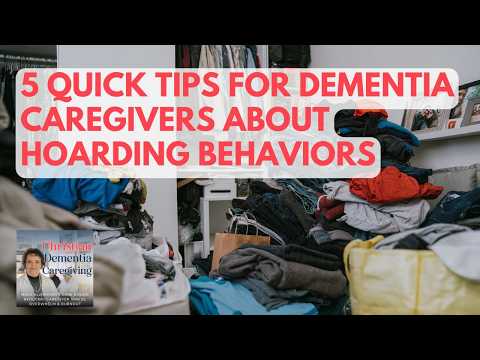 5 Quick Tips for Dementia Caregivers About Hoarding BehaviorsThis video directly addresses the difference between clutter and hoarding in dementia, which is the core of this article. It offers quick, practical tips for caregivers.
 Hoarding Disorder in Geriatric PatientsThis video helps you understand hoarding disorder in older adults, which can be confused with dementia-related hoarding. It gives context for when a mental health diagnosis might be involved.
 How Hoarding Can Impact Decision MakingThis video explains how hoarding affects the brain’s decision-making abilities, which is directly relevant to understanding why your loved one cannot simply ‘stop’ hoarding.
 Hoarding Behaviors: Insights and InnovationsThis video offers innovative approaches to hoarding behaviors, including strategies that can be adapted for dementia care. It provides hope and new ideas.
2 more videos
 Ep. 282: Unpacking Hoarding and Brain Health: A Fresh Approach to Understanding and CareThis episode takes a fresh look at hoarding through the lens of brain health, which aligns with the understanding that dementia-related hoarding is a symptom of brain changes.
 Normal Aging or Dementia? Watch This Simple Rule: Annoying vs Life-Disrupting Memory LossThis video helps you distinguish between normal aging and dementia symptoms, which is useful for understanding whether the hoarding behavior is part of dementia or a separate issue.
Background
What’s happening in the brain?
In dementia, the brain’s ability to plan, organize, and make decisions, what experts call executive function, gradually declines. This means a person may start keeping things they never would have before, not out of a deep emotional need, but because they simply cannot process the steps needed to sort, discard, or organize. This is very different from hoarding disorder, which is a mental health condition where a person feels a powerful urge to save items and becomes extremely distressed at the thought of letting them go. In dementia, the behavior is more about lost skills than about a fixed belief in the item’s value.
Clutter vs. collecting vs. hoarding: key differences
Clutter is when a home has a lot of stuff but rooms can still be used for their intended purpose, you can walk through, sit on the couch, and cook at the stove. Collecting is when items are organized by type (like souvenir spoons or old books) and displayed neatly, without blocking pathways or creating hazards. Hoarding is when the accumulation of items makes it impossible to use rooms as they were meant to be used: you can’t cook in the kitchen, sleep in the bed, or walk through the hallway without stepping over piles. In dementia-related hoarding, the person often doesn’t realize the problem and may become anxious if you try to remove things.
Why does it happen in dementia?
People with dementia may hoard for several reasons. It can give them a sense of control and comfort in a world that feels increasingly confusing. They might be holding onto items that remind them of their past, like old keys or expired licenses, because those objects feel familiar and safe. Sometimes they simply forget they already have something and keep acquiring more. Food hoarding is common because they may worry about not having enough, or they may forget they’ve already eaten. The key is to understand that this behavior is not intentional defiance, it’s a symptom of the disease.
Practical tools
6
The ‘Is It Safe?’ Checklist
A simple mental checklist you can use daily:
If you answer ‘no’ to any, that area needs immediate attention.
The ‘Rummage Box’ Setup
Find a small, shallow box or a large drawer. Fill it with safe, interesting items:
Place it in a spot where your loved one often sits or walks. This gives them a safe place to sort and feel in control.
The ‘One-In, One-Out’ Rule for Food
If food hoarding is a problem, use this simple rule: when you buy a new item, you must remove an old one. For example, when you bring home a new loaf of bread, take the old one out of the pantry and check it. This keeps the food supply manageable and reduces spoilage.
The ‘Gentle Redirect’ Phrase
When your loved one is fixated on a particular item, try saying: ‘Oh, I see you found that old key. It’s interesting, isn’t it? Let’s put it in this special box so we don’t lose it.’ This validates their interest while guiding them to a safe storage spot.
The ‘Weekly Safety Scan’
Set a recurring reminder on your phone for the same day each week. Walk through the home with a notepad and check for new hazards. This keeps you proactive rather than reactive, and it helps you notice gradual changes before they become dangerous.
The ‘Memory Box’ for Past Hobbies
If your loved one used to enjoy sewing, woodworking, or gardening, create a small box with safe items related to that hobby. For sewing, include fabric scraps and plastic needles. For gardening, include fake flowers and a small trowel. This can redirect their rummaging into a familiar, comforting activity.
Different situations
Lewy body dementia
People with Lewy body dementia may have more visual hallucinations and fluctuations in attention. Hoarding behaviors might be linked to a delusion (e.g., believing someone is stealing their things). In this case, do not argue about the delusion. Instead, validate the feeling: ‘I can see you’re worried about your things. Let’s put them in a safe place together.’ Also, be aware that clutter can increase fall risk, which is already higher in Lewy body dementia.
Late-stage dementia
In late stages, the person may not be able to participate in sorting at all. Focus entirely on safety: remove hazards, block off unsafe areas, and use distraction. Do not try to involve them in decisions. Instead, do the clearing when they are asleep or occupied, and keep the environment calm and simple.
Spouse vs. adult child caregiver
A spouse may have a harder time seeing the behavior as a symptom and may feel personally hurt or frustrated. If you are an adult child, you may have more emotional distance. Either way, remember that the person is not doing this to upset you. Spouses may benefit from joining a support group for caregivers of people with dementia-related hoarding.
Living in a facility (memory care or nursing home)
In a facility, the staff should be aware of the behavior. Ask them to provide a small, safe ‘stash’ area in the person’s room. Work with the team to avoid sudden cleanouts, which can cause distress. If the person is hoarding food from the dining room, ask staff to offer small, non-perishable snacks that can be kept in the room safely.
Medicaid or limited financial resources
If you cannot afford a professional organizer, look for free or low-cost resources. Some area agencies on aging offer in-home assessments. You can also ask a trusted friend or family member to help with a weekly safety scan. Focus on the most critical areas first: the kitchen, bathroom, and all exits.
For the doctor
4
- If the hoarding is causing significant safety risks (e.g., blocked exits, fire hazards, spoiled food), ask the doctor about a referral to an occupational therapist who specializes in home safety.
- If the person is also showing signs of depression, anxiety, or paranoia (e.g., believing someone is stealing their things), discuss whether a medication adjustment or a mental health evaluation is appropriate.
- If the hoarding is severe and you are unable to keep the home safe, ask about adult protective services or a geriatric care manager who can help assess the situation and connect you with resources.
- If the person is hoarding medications (old prescriptions, expired pills), do not handle this alone. Ask the pharmacist or doctor how to safely dispose of them and whether a pill organizer or blister pack could help.