
Step by step
What not to do
- Don't buy unlabeled CBD from gas stations, convenience stores, or unverified websites, these are not FDA-regulated and may contain little or no CBD, the wrong amounts, or harmful contaminants. Only buy products with a certificate of analysis.
- Don't assume 'natural' means safe. Cannabis can cause falls, dangerous drug interactions, and psychosis. Avoid it (or use extreme caution) in people with a history of psychosis or schizophrenia, active heart disease, substance misuse, or who are pregnant or breastfeeding.
- Don't give high THC doses, especially with a history of psychosis or confusion. Start CBD-dominant and add minimal THC only under medical guidance.
- Don't stop or change prescribed medications abruptly when starting cannabis, sudden withdrawal of antipsychotics or sedatives can worsen symptoms; taper only under the doctor's supervision.
- Don't use cannabis within two weeks of any planned surgery, as it can interfere with anesthesia and increase risks.
- Don't combine cannabinoids with alcohol or other sedatives without explicit doctor approval, the risk of dangerous drowsiness and falls rises.
- Don't use cannabinoids as a substitute for medical evaluation of sudden behavior changes (which may signal a UTI, pain, or a medication side effect).
- Don't expect immediate results; consistent dosing over days to weeks is usually needed, track subtle changes in mood, sleep, or appetite.
- Don't continue if your loved one can't tell you how they feel, watch body language and behavior closely and stop if something seems off.
Key points
- Cannabinoids (CBD and THC) may help with agitation, anxiety, sleep problems, sundowning, appetite, and pain in dementia, but they are not FDA-approved for it and not a cure.
- Start low and go slow with a high-quality, third-party lab-tested CBD-dominant product, and add THC only under medical guidance.
- Always check with a doctor or pharmacist first because cannabis interacts with many medications, especially blood thinners, blood pressure drugs, sedatives, and antipsychotics.
- Over-the-counter CBD is unregulated, buy only from licensed dispensaries with third-party lab testing, and avoid smoking or vaping.
- People with Lewy body dementia, heart disease, mental health conditions, or a history of substance misuse need extreme caution; pregnant or breastfeeding women should not use it.
- Monitor for drowsiness, dizziness, confusion, paranoia, and falls; adjust dose or timing with the clinician and prepare the home to prevent falls.
- Combine cannabinoids with non-drug approaches like routine, validation, and a calming environment, and keep a symptom log to track what truly works.
- If your primary doctor isn't comfortable, seek a cannabis-knowledgeable clinician (e.g., via your state program or the Society of Cannabis Clinicians).
Videos
 Being Patient: Explainer | Medical Cannabis and DementiaProvides a clear overview of how cannabis is being studied for dementia, including the differences between THC and CBD and the potential as an alternative to antipsychotics.
 Cannabis & Alzheimer's: CBD/THC for Dementia? [Hemp, Marijuana, etc.]Explores the science behind cannabinoids as antioxidants and neuroprotectants, and discusses practical considerations for caregivers.
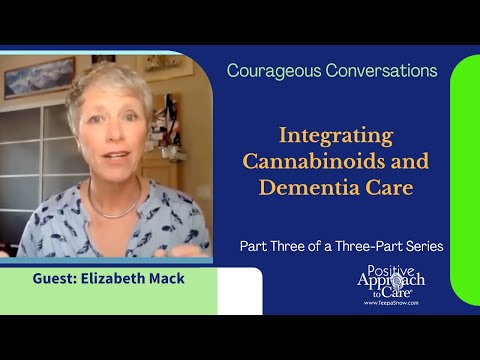 Courageous Conversations: Integrating Cannabinoids and Dementia CareFeatures expert Teepa Snow discussing symptom management with cannabinoids, including how to find the 'just right' dose and the importance of quality products.
 dementia medications pharmacist interviewA pharmacist discusses how dementia medications work, including when they may lose effectiveness, and offers insights on cannabinoids as an emerging option.
3 more videos
 Management of Comorbid Symptoms that Interfere with Sleep in the Older AdultAddresses sleep issues in dementia and the role of non-drug approaches, which complements the use of cannabinoids for sleep.
 Courageous Conversations: The Role of the Endocannabinoid System and MedicationsDeep dive into the endocannabinoid system and how cannabinoids can help with pain, inflammation, and immune function in dementia.
 Cannabis Gets the Green Light for Dementia Patients | Brain Talks | Being PatientHear from experts and caregivers about real-world experiences using cannabis for dementia, including dosing tips and what to watch for in terms of side effects.
Background
Understanding the situation
Cannabinoids are natural compounds from the cannabis plant. The two most studied are cannabidiol (CBD), which is non-intoxicating and has calming, anti-inflammatory, neuroprotective, and anxiety-reducing properties, and delta-9-tetrahydrocannabinol (THC), the psychoactive component that produces a 'high' but also offers therapeutic effects, especially paired with CBD. They work through the body's endocannabinoid system, which helps regulate mood, pain, sleep, appetite, and immune responses. Small, promising studies and many caregiver reports suggest a CBD/THC combination may ease agitation, aggression, anxiety, restlessness, sleep disturbances, sundowning, poor appetite, and pain, symptoms that are hard to treat with conventional drugs that often carry heavy side effects. CBD alone may be too mild for aggressive behaviors, which is why some experts favor a low-THC blend. But large clinical trials are limited: the FDA has approved only one CBD-based drug (Epidiolex) for certain seizure disorders, and it warns that most over-the-counter CBD products are unregulated for safety, quality, or accurate labeling. Cannabis can also slow the central nervous system (causing drowsiness, dizziness, and impaired thinking that can mimic or worsen dementia), interact with many medications, and be habit-forming. The realistic goal is improved quality of life and comfort, not reversing the disease.
Practical tools
8
Dose & Symptom Tracking Log
Make a chart with columns for date, time, product name, CBD/THC in mg, agitation level (1–10), sleep (hours and restfulness), confusion episodes, and any side effects (e.g., 'less agitated at 4pm', 'slept 6 hours', 'more confused', drowsiness, dizziness, nausea). Bring it to every follow-up appointment to reveal patterns and adjust safely.
'Goldilocks' Dose Check
Aim for the 'just right' dose, calm and connected, not drowsy or spaced out. If your loved one is too sleepy, confused, or 'not themselves,' report it to the doctor before changing the dose rather than adjusting on your own.
When to Call the Doctor Right Away (Red Flags)
Call promptly for any of these:
Trust your instincts, if confusion or agitation increases after a dose, stop the cannabis and call.
Phrases to Use with the Doctor
Open collaboratively: 'We are considering CBD for [symptom]. Can you check interactions with their meds? Do you have a preferred brand or starting dose?' Or: 'We are considering cannabis for agitation or sleep, can you help us understand if it's safe given her other medications?' This invites a partnership rather than permission-seeking.
Medication Interaction Review Sheet
Dispensary Checklist (Buyer Criteria)
Before buying, confirm:
Fall Prevention Setup
Because cannabis can cause dizziness and drowsiness, especially in the first hours after a dose
Stay nearby for the first few hours after each new dose or dose increase.
Virtual Cannabis Specialist Consultation
If your local doctor isn't comfortable guiding cannabis use, many states list cannabis-knowledgeable clinicians on their medical cannabis program website, and telehealth options (including the Society of Cannabis Clinicians) are widely available. Bring your medication list and symptom log to the appointment.
Different situations
Lewy body dementia (LBD): People with LBD are extremely sensitive to medications, including antipsychotics (which can be dangerous) and cannabis. Cannabinoids may be a safer route for hallucinations and agitation, but THC can worsen confusion, hallucinations, and movement issues. Favor CBD-only products, start at an even lower dose and increase very slowly, monitor for any rise in tremors or rigidity, focus on nighttime dosing for sleep, and consult a neurologist familiar with LBD before starting.
Late-stage / bedridden dementia: Swallowing and communication may be limited, so use sublingual or in-cheek tinctures rather than capsules, and start with a microdose since metabolism slows. Shift the goal entirely to comfort, easing pain, restlessness, and promoting rest. Watch for signs of comfort (relaxed face, slower breathing) versus over-sedation (difficulty waking, shallow breathing), and coordinate with the hospice or palliative care team.
Spouse vs. adult child caregiver: Spouses may feel hesitant or guilty, especially if shaped by the 'war on drugs'; reassure them this is about symptom relief, not getting high, and offer to attend the doctor's appointment together using language like 'I know this is new for us, let's learn together and see what the doctor says.' Adult children may be more open but should avoid unilateral decisions, respect the spouse's values, and include the person with dementia in the conversation if they can still participate. Keep a shared log.
Living in a facility (nursing home or assisted living): Many facilities prohibit cannabis even where it's legal because it is federally illegal. Check the policy first; if allowed, you may need a doctor's note, to provide the product yourself, sign a waiver, and store it in a locked box. Coordinate timing and monitoring with the facility nurse, educate staff with printouts from reputable sources, and consider a cannabis-friendly facility if this is a priority.
Medicaid / Medicare or limited income: Cannabis is not covered by Medicare or Medicaid because it is not FDA-approved, so expect out-of-pocket costs (tinctures often run roughly $30–$100 per bottle). Look for manufacturer assistance, bulk options from reputable retailers, or state programs that reduce fees for low-income medical cannabis patients. Never sacrifice quality for price, since cheap products may be ineffective or contaminated, and ask a social worker about financial assistance or low-cost non-drug approaches first.
Common questions
5
Sublingual tinctures absorb faster and are easier to titrate than capsules, ideal when swallowing or precise dosing is a concern.
Real-world example: one caregiver's 102-year-old aunt stopped frantically asking for her deceased husband and held calm conversations after starting a CBD/THC tincture; the only side effect, drowsiness, eased with a lower dose, showing why finding the smallest effective dose matters.
Keep expectations realistic, benefits often build over days to weeks, and not everyone responds; the log helps you decide objectively whether to continue.
Bring printouts from reputable sources to educate facility staff and any clinician unfamiliar with cannabinoids in older adults.
Re-evaluate as dementia progresses, the brain may respond differently over time, so a dose or product that once helped may need adjusting or stopping.
For the doctor
7
- Confirm safety and dosing with your loved one's clinician before starting, never treat the dose ranges here as instructions. Ask the doctor: 'Given her current medications, especially blood thinners (e.g., warfarin), blood pressure drugs, sedatives, or antipsychotics, is it safe to try a CBD/THC product, and should we monitor INR or blood pressure?' Ask the pharmacist to screen for interactions. Ask the specialist about risks and benefits for the specific dementia type (Lewy body, Alzheimer's, frontotemporal). If considering THC, ask about the safest starting dose and ratio for this level of cognitive impairment. Also ask: how mood/anxiety or a history of depression might be affected and what paranoia signs to watch for
- whether heart disease makes it unsafe
- how long to stop before any surgery and what to tell the anesthesiologist
- whether baseline or ongoing labs (e.g., liver function) are needed
- how to safely taper any current sedatives or antipsychotics
- how to adjust or stop if side effects appear
- and how to transition if it isn't helping after a few weeks.