Step by step
What not to do
- Do not ask questions like 'Do you know who I am?' or 'Do you remember this song?' This puts pressure on a brain that cannot retrieve memories. It can cause distress or withdrawal.Instead, make statements: 'I am your daughter, Sarah. I am here with you.'
- Do not assume that no response means no awareness. The person may be processing your presence internally but unable to show it. Keep offering gentle connection without expecting a reaction. Your presence still matters.
- Do not use a loud or high-pitched voice, even if you are trying to be cheerful. A loud voice can be perceived as threatening or confusing. A calm, low voice is more soothing and easier for a damaged brain to process.
- Do not correct them if they say something that seems confused or nonsensical. In late-stage dementia, the goal is not accuracy, it is connection. If they say a word or phrase, simply respond with warmth: 'That sounds nice,' or 'Thank you for telling me.'
- Do not neglect your own emotional preparation. The source passages acknowledge that these moments can evoke both profound meaning and deep sorrow for caregivers. It is okay to feel sad. Allow yourself to grieve while still showing up with love. Seek support from a counselor or support group.
Key points
- Awareness in late-stage dementia is not about memory or language; it is about feeling safe, loved, and comfortable in the present moment.
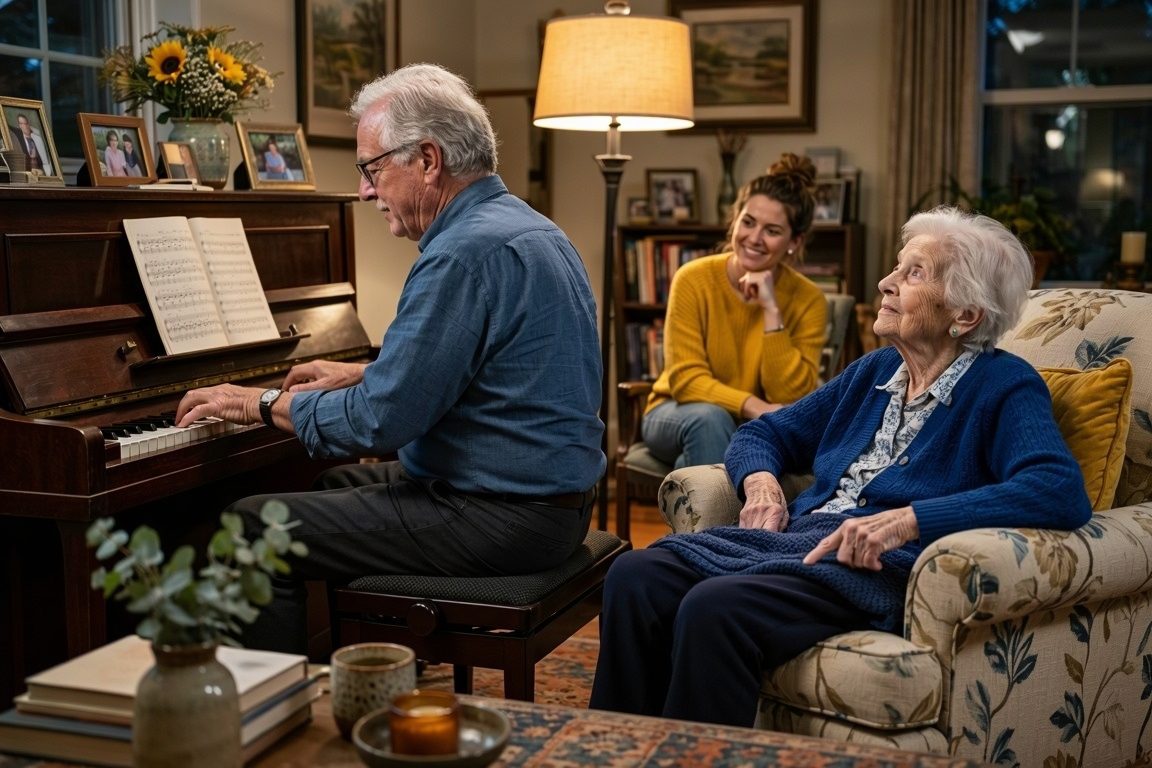
- The person can still respond to tone of voice, gentle touch, familiar music, and the presence of a kind person.
- Your calm, loving presence is the most powerful tool you have. Speak softly, touch gently, and be patient.
- Do not pressure them to remember or respond. Focus on connection, not correction.
- Create a calm, predictable environment with familiar routines and sensory comforts.
- Take care of yourself. Your emotional well-being directly affects your ability to provide comfort. Seek support.
Videos
 What to Expect with Late Stage Dementia Symptoms (My Experience)This video offers a firsthand caregiver perspective on what late-stage dementia looks like and how to find moments of connection, which directly supports the theme of awareness.
 Alzheimer's Disease - The End Stage (Mini-Series Part 3)This video provides a clinical yet compassionate overview of the end stage of Alzheimer's, including what awareness may look like and how to provide comfort.
 Grandpa, Do you Know who I am? (Dementia Tips)This video addresses the emotional challenge of feeling unrecognized and offers practical tips for connecting with a loved one who may not remember your name.
 Surprising Symptoms of Dementia: PART 2This video discusses 'random remembering' and other surprising symptoms, which helps explain why moments of awareness can occur even in late-stage dementia.
Background
What Awareness Looks Like in Late-Stage Dementia
In the final stage of dementia, the brain has undergone significant damage. The person may lose the ability to speak in full sentences, recognize faces, or control their movements. They may be bedridden, unable to hold their head up, and require total care for all daily activities. However, the source passages make clear that even at this stage, the person is still who they are. They can still understand a kind person, and they may tap or hum to music. This is not the same as the awareness of a healthy adult, but it is a form of awareness nonetheless, a connection to the present moment through the senses and through emotion.
The key insight is that awareness in late-stage dementia is not about remembering facts or names. It is about feeling safe, loved, and comfortable. The person may not know your name, but they can still feel the warmth of your hand. They may not understand your words, but they can sense your calm or your anxiety. This is why the focus of care shifts to comfort and quality of life. Creating a peaceful environment, maintaining familiar routines, and offering reassurance and love are essential. The brain may be failing, but the heart still responds.
Why Moments of Awareness Occur: The Role of the Senses and the Brain
The brain in late-stage dementia is not uniformly damaged. Some areas may retain function even as others fail. This is why a person can experience what is sometimes called 'random remembering', they may recall a random detail from decades ago but not remember what they ate for breakfast. This uneven pattern of damage also explains why a person might respond to a familiar song, a gentle touch, or the scent of a favorite flower. These sensory inputs can bypass the damaged parts of the brain and trigger a moment of recognition or emotion.
Furthermore, the source passages mention that in the final stage, the person may still understand a kind person. This suggests that the brain's capacity for emotional connection, for feeling safe and loved, can persist even when higher cognitive functions are gone. This is not a conscious, verbal understanding. It is a felt understanding. As a caregiver, you can lean into this. Your presence, your tone, your touch, these are the languages that still reach them. The goal is not to make them remember, but to make them feel seen and comforted in the moment.
Practical tools
6
The 'Gentle Presence' Script
A set of phrases you can use repeatedly: 'I am here with you.' 'You are safe.' 'I love you.' 'It is okay.' 'You are not alone.' Say these in a slow, rhythmic way, like a lullaby. Use them when you enter the room, when you touch them, and when you sit with them. They are a verbal anchor.
The 'Music and Memory' Playlist
Create a playlist of 5-10 songs that were meaningful to your loved one in their younger years (e.g., songs from their teenage years or wedding songs). Use a simple device like a small Bluetooth speaker or a CD player. Play it at a low volume during quiet times. Watch for any response, a toe tap, a hum, a change in breathing. This is a powerful tool for connection.
The 'Sensory Comfort Kit'
A small basket containing:
Introduce one item at a time, gently, and observe their reaction.
The 'Observation Log'
A simple notebook or a note on your phone where you jot down: date, time, what you did (e.g., held hand, played song), and what you observed (e.g., slower breathing, slight smile, no visible response). Over time, patterns may emerge. This log can also help you communicate with other caregivers or the healthcare team.
The 'Calm Environment Checklist'
Before entering the room, check:
A calm environment reduces agitation and makes it easier for the person to feel safe and present.
The 'Hand-Under-Hand' Touch Technique
Instead of grabbing their hand from above (which can feel controlling), gently slide your hand under theirs, palm up. Let their hand rest in yours. This is a less threatening, more collaborative touch. It allows them to feel your warmth and presence without feeling trapped. This technique is recommended by dementia care experts like Teepa Snow.
Different situations
Lewy body dementia / late stage
In Lewy body dementia, fluctuations in alertness and attention are common. The person may have moments of seeming more aware and then drift off. They may also have visual hallucinations. Do not argue about the hallucinations. Instead, acknowledge their experience: 'I see you are looking at something. It seems real to you.' Focus on comfort and safety. Music may be especially helpful, but be aware that they may be more sensitive to noise. Keep the environment calm and predictable.
Frontotemporal dementia / late stage
In frontotemporal dementia, the person may retain some physical abilities longer but have profound changes in personality and social awareness. In late stage, they may still be able to move but have lost the ability to understand social cues. They may seem unaware of your presence but may still respond to music or a familiar routine. Use very simple, direct language. Avoid any complex instructions. Focus on creating a safe, low-stimulation environment.
Spouse vs. adult child caregiver
As a spouse, you may have a deeper well of shared history and intimacy. Use that. Talk about your shared memories in simple terms: 'Remember our trip to the beach? The sun was so warm.' As an adult child, you may feel the weight of role reversal. It is okay to feel that. Focus on being present without trying to 'fix' anything. Your love is enough. Both roles can benefit from seeking support groups specific to their relationship to the person.
In a facility vs. at home
In a facility, you may have less control over the environment. Advocate for a consistent caregiver who knows your loved one. Bring familiar items from home (blanket, photos, music). Visit at the same time each day to create a routine. At home, you have more control. Use that to create a calm, predictable space. However, do not hesitate to ask for respite care or in-home help if you are exhausted. Your well-being directly affects your loved one's comfort.
Medicaid / limited resources
You do not need expensive tools. A simple playlist on your phone, a soft blanket from home, and your calm presence are free. Focus on the 'Gentle Presence Script' and the 'Observation Log.' Many community programs and Alzheimer's Association chapters offer free resources and support groups. Do not be afraid to ask for help. Your presence is the most powerful tool you have.
For the doctor
4
- If your loved one shows signs of pain (grimacing, moaning, restlessness), discuss pain management options with their doctor. The source passages note that pain is common in end-stage dementia and can be difficult to communicate.
- If they develop a fever or difficulty breathing, seek medical attention promptly. The source passages indicate that pneumonia is a common cause of distress in end-stage dementia and requires attentive palliative care.
- Discuss the use of any medications for agitation or restlessness. The source passages note that these symptoms are common, but medications should be used carefully and under medical supervision, as they can have side effects.
- If you are considering hospice care, discuss this with the healthcare team. Hospice can provide additional support for comfort and symptom management in the final stage of dementia.