
Step by step
What not to do
- Do not try to reason with an agitated loved one; instead, remove the trigger or redirect calmly.
- Do not make sudden environmental changes; if needed, introduce changes gradually and explain simply.
- Do not eliminate all stimulation, replace overwhelming stimuli with simple, purposeful activities.
- Do not present multiple choices at once (e.g., full closet or pantry); offer only two clear options.
- Do not ignore signs of overstimulation (pacing, irritability); reduce noise or clutter when these occur.
- Do not neglect your own stress as a caregiver, step away briefly when feeling overwhelmed.
Key points
- A simplified environment reduces cognitive load, which lowers anxiety, agitation, and confusion for a person with early-stage Alzheimer's.
- Focus on reducing visual clutter, minimizing background noise, and creating consistent routines and storage spots.
- Use contrast (e.g., dark toilet seat on a light floor) to help your loved one find important items more easily.
- Offer two choices instead of open-ended questions to reduce decision-making stress.
- Create a 'quiet zone' where your loved one can retreat when feeling overwhelmed.
- Involve your loved one in changes by offering simple choices and making adjustments gradually.
Videos
 Alzheimer’s and Dementia: 4 Myths You Need to Know (Part 2)This video helps you understand common misconceptions about dementia, which can reduce your own stress and help you approach environmental changes with more patience and empathy.
 Simple Approach to Difficult Dementia BehaviorsThis video offers a straightforward method for responding to challenging behaviors, many of which are triggered by an overwhelming environment. It reinforces the idea that simplifying the environment can prevent these behaviors.
 how to prevent anger in dementiaAnger in dementia is often a response to feeling overwhelmed. This video provides practical tips for preventing anger by adjusting the environment and your approach.
 Dementia Paranoia Explained: Why It Happens & How to RespondParanoia can be reduced by creating a predictable environment. This video explains the link between confusion and paranoia, and how consistency helps.
2 more videos
 4 Easy Activity Ideas For Middle Stage DementiaEven in early-stage dementia, meaningful activities are important. This video shows how to simplify activities so your loved one can participate without feeling overwhelmed.
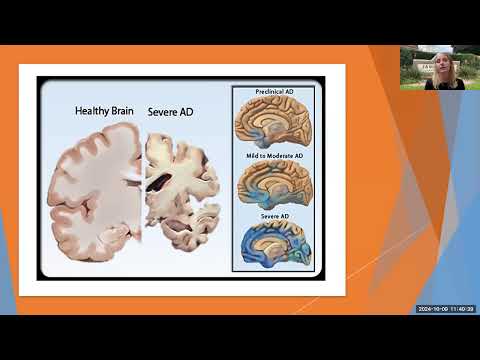 Coping with Sundowning & Sleep Issues as a Dementia CaregiverSundowning is often worsened by an overstimulating environment. This video offers strategies for creating a calming evening routine and reducing triggers.
Background
Why the Environment Matters So Much in Early-Stage Alzheimer's
In early-stage Alzheimer's, the brain is already working overtime just to process everyday information. Imagine trying to listen to a conversation while a radio blares, the TV is on, and someone is shuffling papers in front of you. That is what a cluttered or noisy environment can feel like for your loved one. The brain has to filter out all that extra stimulation, and when it can't, the result is often anxiety, restlessness, or even anger. As one expert explains, 'Too much stimulation in the environment can lead to dysregulation inside of your loved ones with dementia. The brain is processing all of that information, and when you have a vulnerable brain, extra noise, extra stimulation, extra clutter can lead to overwhelm.' This overwhelm may show up as pacing, defensiveness, or simply shutting down. Simplifying the environment is not about taking away their independence, it is about removing unnecessary hurdles so they can use their remaining abilities more easily.
The Link Between Simplicity and Safety
A simplified environment is also a safer one. When a person with dementia cannot easily see or find what they need, like the toilet, their toothbrush, or a glass of water, they may become frustrated or attempt to navigate unsafe areas. Reducing fall hazards, putting away dangerous items, and increasing contrast (for example, using a dark-colored toilet seat against a light floor) can help them move around more confidently. As one source notes, 'We can support people with dementia by making the environment safe and dementia-friendly. That could look like reducing fall hazards, putting away dangerous or hazardous items, labeling things, adding simple wayfinding or instructional signs... and increasing contrast in the environment so they can more easily see and find what they need.' When the environment is predictable and easy to navigate, your loved one is less likely to feel lost or frightened, which reduces the risk of accidents and behavioral challenges.
How Routine and Familiarity Reduce Cognitive Load
Routine is a powerful tool for reducing cognitive load. When the same things happen at the same time in the same way, the brain does not have to work as hard to figure out what to do next. This is especially important for people with dementia, who may not remember specific facts but can still feel the comfort of a familiar pattern. As one expert explains, 'A routine is very important for persons with dementia, because a routine provides comfort and familiarity. Not that they're going to remember, oh, it's 5:00 and it's time for us to start dinner... But it's a familiarity because this is normally what happens during this day.' When the routine is disrupted, for example, by a sudden change in schedule or an unexpected visitor, it can cause stress and confusion. By keeping the daily flow consistent, you help your loved one feel grounded and reduce the mental effort required to understand what is happening around them.
Practical tools
2
Two-Choice Script for Meals and Activities
Use a simple closing question: 'Would you like [option A] or [option B]?' (e.g., 'Cereal or toast?' 'Fold laundry or look at photos?') to reduce decision fatigue.
Home Safety Checklist
A room-by-room list:
Different situations
If your loved one has early-stage Alzheimer's with primarily memory loss (not executive dysfunction)
Consistent storage spots may still help, but they might not remember the new location. In this case, use highly visible, labeled containers in the same spot every time. You may need to gently remind them multiple times. The focus should be on reducing clutter and noise, as these are universal triggers. Also, be patient if they still misplace items, it is not a failure of the system, but a symptom of the disease.
If your loved one has early-stage Alzheimer's with prominent executive dysfunction (difficulty planning or organizing)
Consistency and predictability are especially powerful here. As one expert explains, 'If memory loss is secondary to executive dysfunction, then predictability can indeed significantly reduce paranoia. Because consistency helps the brain feel safe.' Use visual schedules and step-by-step task breakdowns. They may benefit from having a 'launch pad' near the door, a small table where keys, wallet, and phone are always placed together.
If you are a spouse caring for your partner at home
You may need to adjust your own habits. For example, if you like to have the TV on for background noise, consider using headphones or turning it off when your partner is in the room. You might also need to simplify shared spaces like the bedroom and bathroom. Remember that your partner may feel a loss of control, involve them in decisions about changes by offering two choices (e.g., 'Should we put the lamp here or here?').
If you are an adult child caring for a parent in their home
You may be dealing with a home that is cluttered with decades of belongings. Start with one room at a time, perhaps the kitchen or the bathroom. Do not throw away items without your parent's input, as this can cause distress. Instead, offer to 'organize' things together. Use clear bins labeled with pictures. If your parent resists changes, focus on safety first (e.g., removing tripping hazards) and make other changes gradually.
If your loved one lives in a facility or is transitioning to one
Bring familiar items from home, a favorite blanket, photos, a small lamp, to create a sense of continuity. Work with staff to establish a consistent daily routine. If the facility is noisy or busy, ask if there is a quieter time for meals or activities. As one source notes, 'A change in the environment can be more confusing for the person with dementia,' so try to minimize transitions and keep the new space as simple and familiar as possible.
For the doctor
4
- If your loved one's agitation or anxiety does not improve with environmental changes, discuss with their doctor whether medication or a referral to a dementia specialist might be appropriate.
- If you notice that your loved one is sleeping poorly or experiencing sundowning (increased confusion in the late afternoon), ask their doctor about safe sleep aids or melatonin supplements. Do not start any new medication without medical supervision.
- If your loved one has a history of falls, ask their doctor or an occupational therapist for a home safety evaluation. They can recommend specific modifications like grab bars, non-slip flooring, or better lighting.
- If your loved one is resistant to changes in the environment (e.g., refuses to let you remove clutter), discuss this with a social worker or dementia care consultant who can offer strategies for gaining cooperation without causing distress.