Step by step
What not to do
- Do not correct mistakes or insist on the 'right' way to do the activity.
- Do not ask test-like questions (e.g., 'Do you remember what this is?')
- Do not use direct eye contact or expect verbal conversation as the primary connection method.
Key points
- Focus on the process of doing something together, not on completing a perfect product. Connection is the real goal.
- Use side-by-side positioning and simple demonstrations rather than long verbal instructions. Show, don't just tell.
- Offer choices (two at a time) to give a sense of control and reduce anxiety.
- Praise effort, not accuracy. Avoid correcting mistakes. Redirect gently.
- Keep activities short (15–20 minutes) and flexible. End early on a positive note if needed.
- Tailor the activity to the person's current stage and type of dementia. What works for one person may not work for another.
Videos
 How Do You Entertain Someone With Dementia?This video offers practical, concrete ideas for engaging a person with dementia in activities, directly addressing the challenge of keeping someone busy and connected.
 How Do You Keep A Dementia Person Busy?This video provides specific strategies for diverting and redirecting to activities, which is an essential skill for leading group activities and building community.
Background
Why Connection Matters More Than the Activity Itself
When a person has dementia, their ability to process complex instructions or remember the steps of a game may fade, but their need for social connection remains strong. In fact, engaging with others is a form of brain exercise, it helps build new neural pathways and keeps the mind active. As one expert explains, doing something different and unique with someone is a social exercise that fires synapses and supports overall well-being (source 2). This means that even a simple activity, like polishing a table or sorting large puzzle pieces, becomes a powerful tool for connection when you focus on the shared experience rather than the finished product.
In a care facility, many staff members, aides, housekeeping, dietary, and activities directors, have the most contact with residents, yet they may not all have extensive dementia training (source 1). This makes it even more important for you, as the activity leader, to use techniques that prioritize emotional safety and inclusion. When residents feel seen and valued, they are more likely to participate, and their dementia symptoms may even progress more slowly because they are staying mentally and socially active (source 7). The goal is not to entertain but to create a sense of belonging and purpose.
The Power of Side-by-Side Engagement
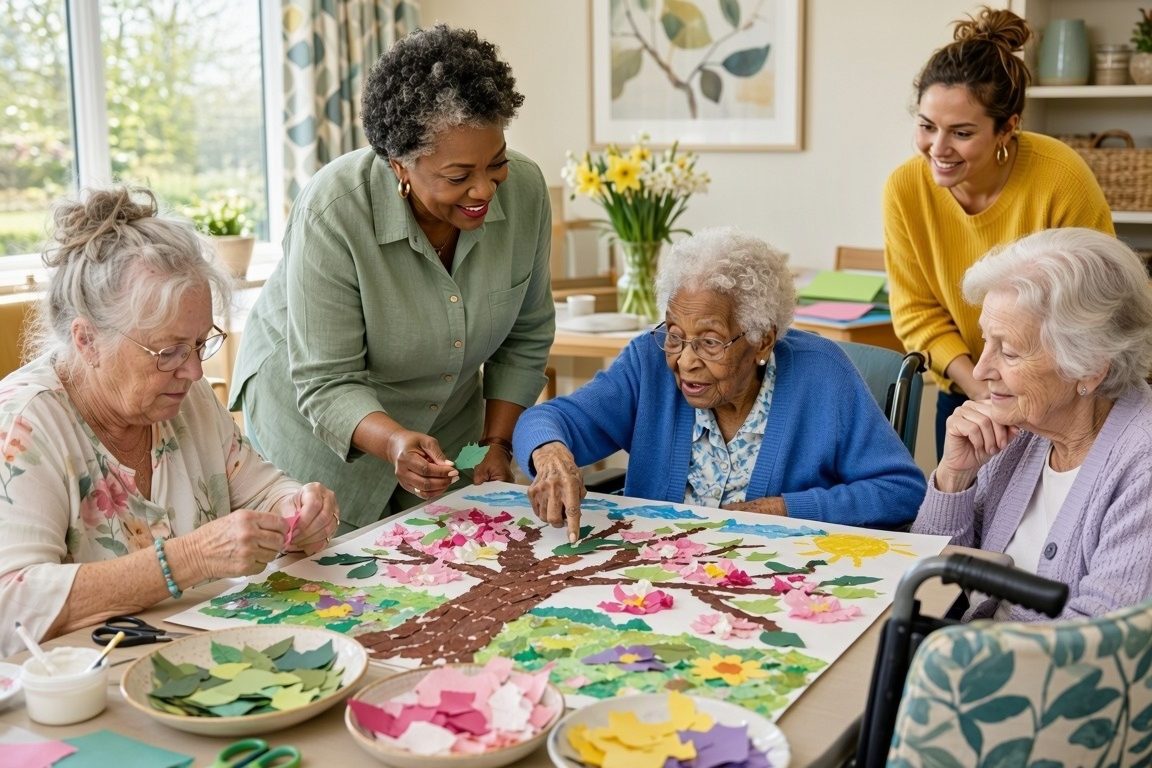
One of the most effective ways to build connection is to stand or sit beside the person, facing the same direction, and focus on a shared task. This removes the pressure of direct eye contact and conversation, which can be overwhelming when words are changing or hard to find (source 3). For example, if you are leading a group craft, you might set up materials at a table and work alongside residents, narrating what you are doing in a calm, encouraging voice. The point is not that everyone completes the craft successfully, it is that you are all doing something together.
This approach also works well when family members or other residents join in. Inviting another person to participate takes the focus off of just you and the resident, fostering new relationships and reducing any awkwardness (source 10). When the activity is process-oriented, everyone can contribute at their own level. A person who cannot hold a paintbrush might still enjoy watching colors blend or feeling the texture of clay. By celebrating the process, you create a safe space where no one feels they have failed.
Practical tools
3
Shared simple task
A tactile, low-instruction item (e.g., folding cloths, sorting large beads, watering a plant) that allows side-by-side engagement without complex steps.
Open-ended, process-focused phrases
Prepared phrases like 'Let’s try this together,' 'Feel this,' or 'What do you notice?' to invite participation without demanding correct responses.
Gentle physical cues
Light hand-over-hand guidance or a tap on the arm to model an action or redirect attention, always after pausing for the person’s readiness.
Different situations
Early-stage dementia (mild cognitive impairment)
Residents may still be able to follow multi-step instructions and engage in complex conversations. Use activities that tap into their long-term skills, like leading a discussion about a historical event, playing a simple card game, or doing a word puzzle together. Encourage them to take on leadership roles, like passing out materials or demonstrating a step. The focus should be on maintaining social skills and confidence.
Middle-stage dementia (moderate cognitive decline)
Simplify activities to one or two steps. Use repetitive, rhythmic tasks like folding towels, sorting large buttons by color, or polishing silver. Avoid anything that requires reading or writing. Use the side-by-side approach heavily. If a person becomes agitated, switch to a calming sensory activity like listening to music or holding a weighted blanket. Praise effort frequently and avoid any sense of testing.
Late-stage dementia (severe cognitive decline)
Focus on sensory and one-on-one engagement. Group activities may be too stimulating. Instead, offer gentle hand massage with scented lotion, play familiar music from their youth, or simply sit together and look at a photo album. Use a soft, slow voice and allow plenty of time for response. The goal is comfort and presence, not task completion. Watch for signs of distress and stop immediately if they appear.
Lewy body dementia (fluctuating cognition, visual hallucinations)
Be prepared for sudden changes in attention and ability. Keep activities short (5–10 minutes) and offer frequent breaks. Avoid activities with complex visual patterns (like intricate puzzles) that may trigger hallucinations. Use simple, high-contrast materials (e.g., bright red fabric on a white table). If a resident seems confused or frightened by something they see, validate their feeling ('That must be unsettling') and redirect to a different sensory input, like a familiar song.
Frontotemporal dementia (behavioral variant, language difficulties)
Residents may have preserved visual and spatial skills but struggle with social cues and language. Use activities that are hands-on and visual, like building with large blocks, sorting objects by shape, or doing a simple puzzle. Avoid activities that require turn-taking or complex social rules. Be patient with repetitive behaviors, they may find comfort in doing the same action over and over. Use short, concrete phrases and avoid open-ended questions.
For the doctor
3
- If a resident becomes consistently agitated or aggressive during group activities, discuss with the facility's nurse or doctor whether there might be an underlying medical issue (pain, infection, medication side effect) that needs addressing.
- If you want to use aromatherapy (e.g., lavender essential oil) as part of a sensory activity, check with the clinical team first, as some residents may have allergies or sensitivities, and some oils can interact with medications.
- If a resident has a history of swallowing difficulties (dysphagia), avoid any activity that involves small objects that could be a choking hazard. Discuss safe alternatives with the speech therapist or nurse.