Step by step
What not to do
- Don't overwhelm with new experiences in busy settings: avoid crowded events, loud restaurants, or large family gatherings without a quiet escape plan. Introduce new things one at a time in a familiar setting.
- Don't leave the TV or radio running as background noise all day, continuous sound is a hidden source of overstimulation. Use media intentionally: a short, familiar show or piece of music, then turn it off.
- Don't ask 'Do you remember…?' as a memory test. This highlights deficits and causes shame.Instead, offer a statement like 'I remember when we went to the beach, the sand was so warm' and see if they join in.
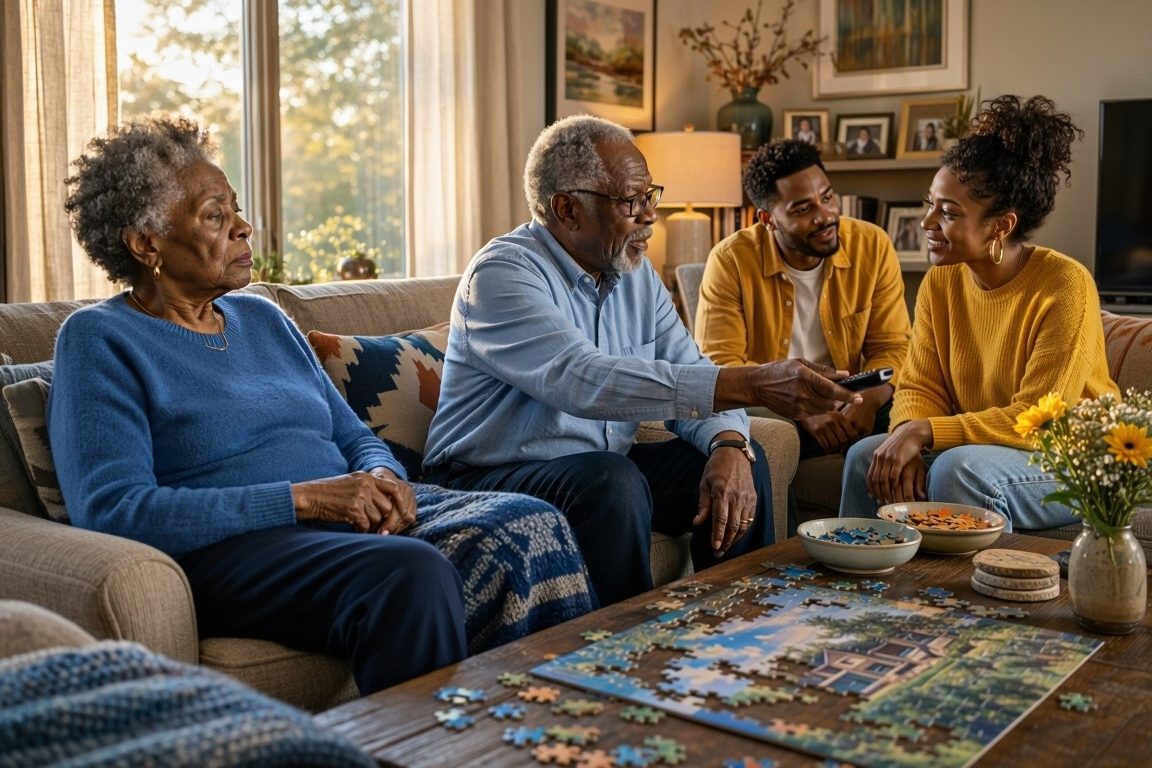
- Don't force an activity when they are resistant. If they push away a puzzle or say 'no' to a walk, respect that, pushing ahead increases distress. Try again later with a different approach or activity.
- Don't ignore physical discomfort. Pain, hunger, thirst, or needing the bathroom can look exactly like overstimulation or agitation. Always check physical needs first.
- Don't introduce multiple changes at once, a new routine, room, caregiver, and activity all in the same week overwhelms processing capacity. Make one change, let it settle, then consider the next.
Key points
- The goal is the 'Goldilocks' zone: stimulation that is engaging but not overwhelming.
- Watch for non-verbal cues like pacing, turning away, or agitation as signs of overload.
- Start with the environment: reduce noise, clutter, and multiple demands.
- Use gentle sensory tools like aromatherapy and massage to soothe, not excite.
- Incorporate reminiscence therapy and one-on-one engagement for cognitive benefit.
- Always check for physical needs (pain, hunger, bathroom) before assuming a behavior is 'psychological'.
Videos
 Ep. 126: Questions from Our ListenersThis video addresses real caregiver questions about managing daily challenges, including how to handle stimulation and activities. It provides practical, listener-driven advice that complements this guide.
 Do brain games help with dementia?This video directly tackles the common question about cognitive stimulation through games, explaining that they are just one small piece of a larger puzzle. It helps set realistic expectations.
 An Interview with Dr. Jennifer Stelter Co-Founder, CEO, & Creator of the Dementia Connection ModelDr. Stelter explains the Dementia Connection Model, which links stimuli to emotions and behaviors. This provides a theoretical framework for understanding why balancing stimulation is so critical.
 Management of Behavioral Disturbances in Dementia: Complexities in Antipsychotic UseThis video discusses the risks and benefits of medication for behavioral symptoms, reinforcing the importance of trying non-pharmacologic approaches first, as outlined in this guide.
2 more videos
 Can Increasing Daytime Activity Reduce Nighttime Sundowning In Dementia? - Dementia Help HubThis video provides a practical strategy for using daytime light exposure and activity to regulate the sleep-wake cycle and reduce sundowning, a key example of balancing stimulation.
 Hoarding Disorder in Geriatric PatientsThis video introduces the harm reduction approach, which can be applied to many behaviors. It teaches how to minimize harm from a behavior (like hoarding) without trying to eliminate it, a valuable skill for managing stimulation-related challenges.
Background
What is Stimulation and Why Does It Matter?
Stimulation is anything that engages the senses, mind, or body. For someone with dementia, the brain's ability to process and filter incoming information is compromised. What was once a pleasant background hum of conversation or a familiar TV show can become a confusing, distressing noise. The goal is not to eliminate stimulation, but to provide the 'just right' amount that supports well-being, cognition, and mood. As one source notes, 'if deprivation worsens dementia outcomes, stimulation should improve them' [6], but the key is that stimulation must be carefully calibrated to the individual's current capacity.
The 'Goldilocks' Zone: Too Little, Too Much, Just Right
Think of your loved one's brain as having a limited 'energy budget' for processing the world. When they are under-stimulated, they may become apathetic, withdrawn, or sleepy. They might start to 'shrink their circle' of activities, doing less than they used to [8]. On the other hand, over-stimulation can lead to distress. The limbic system, which houses the amygdala (emotions) and hippocampus (memories), is directly impacted by incoming stimuli [11]. Too much, and you may see pacing, agitation, or verbal outbursts. The sweet spot is an environment that is engaging but predictable, where the person feels safe and capable.
How Harmful Stimulation Shows Up
Harmful stimulation isn't just about loud noises or bright lights. It can be subtle: a cluttered room, a TV program with rapid scene changes, a conversation with too many people talking at once, or even a well-meaning family member asking too many questions. These can trigger what experts call 'challenging behaviors', which are actually the person's way of communicating distress [17]. The person might not be able to say 'this is too much,' so they show you through restlessness, aggression, or withdrawal. Recognizing these as signs of overload, not 'bad behavior,' is the first step to fixing the problem.
The Role of Sensory Stimulation: Aromatherapy and Massage
Certain types of gentle sensory stimulation can be profoundly beneficial. For example, aromatherapy using scents like lavender or lemon balm has a moderate evidence base for inducing calm and reducing agitation, with no known harmful effects [3]. Similarly, massage or therapeutic touch, applied to the back, shoulders, hands, or feet, can be very well accepted and help regulate the autonomic nervous system [3]. These approaches work because they provide positive sensory input that soothes rather than overwhelms, tapping into the emotional and memory centers of the brain in a gentle way.
Why 'Brain Games' Are Not a Cure-All
It's tempting to think that cognitive stimulation through puzzles, brain games, or apps will 'fix' the dementia. However, these are just one tiny piece of a much larger puzzle [10]. While cognitive stimulation can improve quality of life and communication, its effectiveness is limited, especially in advanced disease [9]. The real benefit comes from a holistic approach that includes physical exercise, social engagement, healthy nutrition, and managing physical health [10]. Don't put pressure on yourself or your loved one to 'perform' with brain games; instead, focus on activities that bring joy and a sense of accomplishment, no matter how simple.
Practical tools
6
The 'STOP' Phrase for Overload
When you see signs of overload, use a calm, low voice and say: 'I see you are feeling a bit overwhelmed. Let's take a break. We can sit here quietly for a few minutes.' Then guide them to a comfortable chair, offer a drink, or put on soft music. This validates their feeling and offers a concrete next step.
The 'One-Question' Rule
Limit yourself to a single question at a time. Instead of 'Do you want to go for a walk, listen to music, or look at photos?' say 'Would you like to look at this photo album with me?' and wait for their response. This reduces decision fatigue.
Aromatherapy Diffuser or Lavender Sachet
A simple ultrasonic diffuser with a few drops of lavender essential oil can create a calming atmosphere. Alternatively, tuck a lavender sachet near their pillow or in their pocket for gentle scent throughout the day. Confirm no allergy or respiratory sensitivity first.
The 'Fidget' Basket
Prepare a small basket with items offering gentle tactile stimulation:
When they seem restless or anxious, offer the basket. This redirects nervous energy into calming, repetitive action.
The 'Daily Rhythm' Chart
Create a simple visual schedule of the day's flow:
Use words plus photos or pictures. Predictability lowers anxiety and helps spot which parts of the day consistently go well or poorly.
The 'Visitor Brief' Card
A small card for guests with plain bullet points: 'Mom does best with one visitor at a time,' 'Speak slowly, avoid asking about recent events,' 'If she says something inaccurate, just go with it, don't correct.' This protects your loved one from overstimulating interactions and saves you from briefing everyone in the moment.
Different situations
For someone with Lewy Body Dementia (LBD)
People with LBD are extremely sensitive to medications and environmental stimuli. They may have visual hallucinations and severe fluctuations in attention. Avoid over-stimulating visual environments (busy patterns, bright lights). Be very cautious with any new activity, as it can trigger a sudden decline. Aromatherapy and gentle touch can be very helpful, but always start with a tiny amount.
In late-stage dementia
Focus shifts entirely to comfort and sensory soothing. Cognitive activities like puzzles are no longer appropriate. Use gentle massage, soft music from their youth, and aromatherapy. The goal is to reduce distress and provide a sense of safety. Speak in a calm, low voice. Avoid any new stimuli. The environment should be very quiet and predictable.
For a spouse vs. an adult child caregiver
Spouses may have a deeper emotional history and may feel more guilt about 'not doing enough.' They may need to be reminded that their presence is the most powerful stimulation. Adult children may need to set firmer boundaries to avoid burnout. Both should use the 'recovery time' step for themselves as well as for their loved one.
In a facility or nursing home
You have less control over the environment. Advocate for a private room or a quiet corner in the common area. Ask staff to reduce overhead paging near your loved one's room. Bring familiar items from home (a favorite blanket, photos) to create a 'safe' zone. Coordinate with staff to ensure they follow the 'one-thing-at-a-time' approach during care routines.
For someone with a history of anxiety or depression
They may be more prone to over-stimulation and may interpret neutral stimuli as threatening. Use validation therapy ('I can see this is hard for you') before any redirection. Be extra vigilant about non-verbal cues. Aromatherapy and massage can be particularly effective for managing anxiety. Discuss any medication changes with their clinician.
For the doctor
4
- If your loved one's agitation or aggression is severe, persistent, or dangerous, discuss with their doctor whether a short-term, low-dose antipsychotic might be appropriate. The FDA has not approved this use due to low-quality evidence of benefit and good-quality evidence of harm, so this must be a careful, informed decision [4].
- If you notice sudden, dramatic changes in behavior or cognition, rule out a urinary tract infection (UTI) or other medical issue. Discuss with a clinician how to monitor for and treat UTIs, as they can cause delirium-like symptoms [5].
- If your loved one has a history of falls, discuss with their doctor how to balance the need for physical activity (which is beneficial) with fall prevention strategies. A physical therapist can help create a safe exercise plan.
- If you are considering using any new supplement, essential oil, or over-the-counter remedy for stimulation or calming, discuss it with a pharmacist or doctor first, as interactions with existing medications are possible.