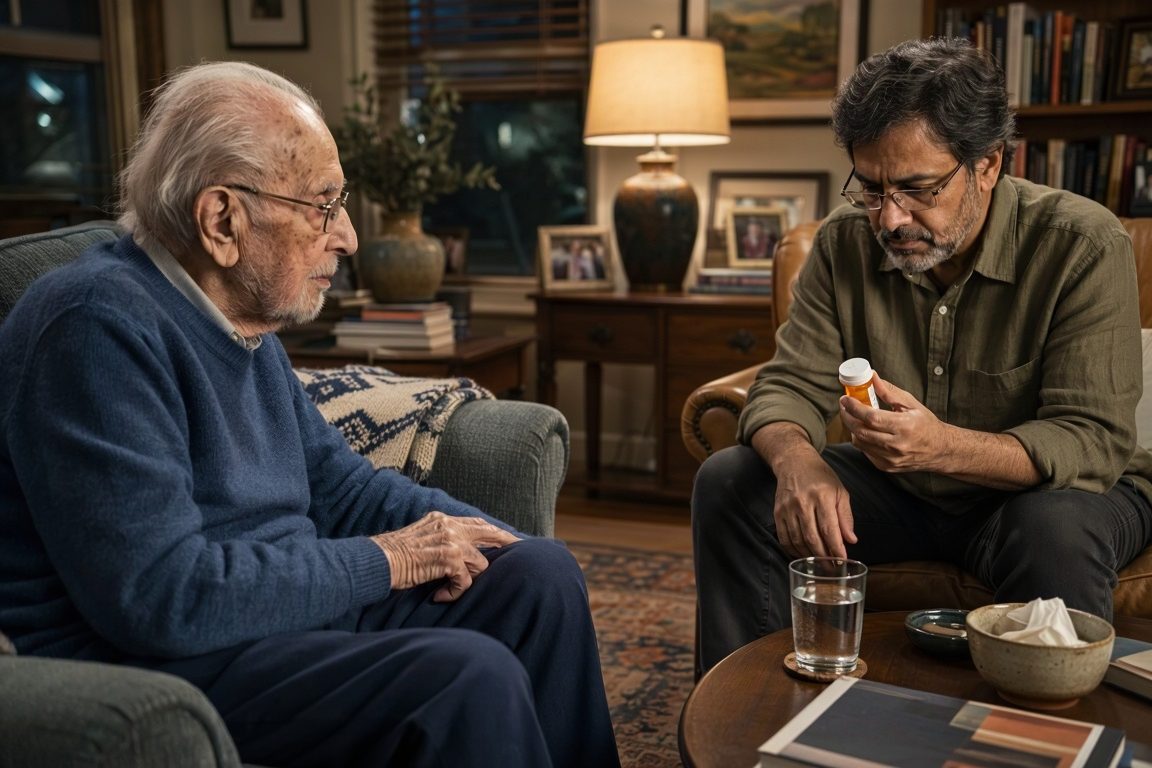
Step by step
What not to do
- Don't give a higher dose than prescribed; more can cause severe drowsiness, falls, and breathing problems.
- Don't combine alprazolam with alcohol or other sedatives (sleep aids, opioids); this risks extreme sedation, confusion, or coma.
- Don't argue with or force the medication if refused; wait 15–20 minutes, try again calmly, or offer the pill in a different food.
- Don't assume deep sleepiness means the medication is working; heavy sedation may mask pain or infection and increases fall risk, report it to the doctor.
- Don't leave the medication bottle on a nightstand or counter; the person may take extra doses or confuse it with other pills, keep it locked.
Key points
- Alprazolam (Xanax) can help with severe anxiety or agitation in dementia but carries risks of drowsiness, falls, dependence, and paradoxical reactions.
- Always give alprazolam exactly as prescribed; never change the dose or stop abruptly without doctor guidance.
- Create a calm environment and use gentle, reassuring words when offering the medication to reduce resistance.
- Monitor closely for side effects, especially in the first hour, and keep a log to share with the doctor.
- Secure all medications in a locked cabinet to prevent accidental overdose or misuse.
- Combine medication with non-drug calming strategies and seek support from the Alzheimer's Association or a support group.
Videos
 Dealing with Alzheimer's: Caregiver Stress (5 of 6)This video addresses caregiver stress, which is crucial because managing medications like alprazolam can add to your emotional burden. Understanding your own stress helps you stay calm and make safer decisions.
 6 ways to make dementia care tasks easier: Respect and Dignity in dementia careThis video offers practical tips for giving care with dignity and respect, which directly applies to administering medication. It shows how to reduce resistance and maintain a positive relationship.
 Terminal Agitation: Empowering Caregivers in End-of-Life SupportIf your loved one is in late-stage dementia, this video provides guidance on managing agitation at end of life, including medication considerations. It helps you understand when alprazolam might be used for comfort.
 Alzheimer's LA Caregiver Tips - EP. 17 'Safety In The Home'This video covers home safety, including securing medications and preventing falls, both critical when using alprazolam. It offers practical environmental adjustments.
2 more videos
 5. Medication Management for People with Dementia (Medications Management BASICS) (English)This video provides a comprehensive overview of medication management for dementia, including how to organize, administer, and monitor medications like alprazolam safely.
 Why does Dementia Sometimes Cause Hallucinations, Delusions, and Paranoia w/ Lucy Barylak Dec 14 23This video explains hallucinations and paranoia in dementia, which can be worsened by alprazolam in some cases. It helps you recognize when the medication may be causing or amplifying these symptoms.
Background
Why Alprazolam Is Prescribed and Its Risks in Dementia
Alprazolam, commonly known as Xanax, belongs to a class of drugs called benzodiazepines. Doctors may prescribe it to help manage severe anxiety, panic attacks, or agitation in people with dementia, especially when non-drug approaches have not worked. However, as noted by the Mayo Clinic, alprazolam can cause drowsiness, dizziness, and reduced alertness, which are particularly dangerous for older adults who are already at risk of falls. It can also lead to dependence, withdrawal symptoms if stopped abruptly, and paradoxical reactions like increased agitation or aggression. Because dementia patients are more sensitive to medications, even standard doses can have amplified effects.
The Caregiver's Role in Medication Safety
As a family caregiver, you are the frontline observer of how your loved one responds to alprazolam. The Alzheimer's Association emphasizes that medication management is a key part of home safety. You must check with the doctor or pharmacist about all medications your loved one takes, including over-the-counter drugs and supplements, to avoid harmful interactions. The UCLA Health resource also warns that giving medication can itself trigger aggression if the person with dementia perceives it as a threat or does not recognize you. Therefore, your approach, your tone, body language, and environment, matters as much as the pill itself.
Practical tools
4
Medication Log Template
A chart (paper or notes app) with columns for date, time, dose, giver, behavior before and after, and side effects, filled in each time alprazolam is given to share patterns with the doctor.
Locked Pill Organizer
A 7-day organizer with separate AM/PM compartments that locks shut, filled weekly by a pharmacist or family member to prevent double-dosing and keep pills inaccessible.
Calming Phrases to Say
Use warm, low-voice phrases like 'Here is something to help you feel more comfortable, let's take it together' or 'This will help your body relax; I am right here with you'; avoid commanding language like 'Take your pill.'
Side Effects & Paradoxical Reaction Watch List
A printed checklist of red-flag symptoms
posted near the medication log for quick doctor calls.
Different situations
Lewy body dementia (LBD)
People with LBD are extremely sensitive to benzodiazepines and may have severe reactions like increased confusion, hallucinations, or extreme sedation. Discuss with the clinician whether alprazolam is appropriate at all. If used, start at the lowest possible dose and monitor very closely. Non-drug calming strategies (like soft music, gentle touch, or a quiet room) should be tried first.
Late-stage dementia
In late stages, the person may have difficulty swallowing, so ask for a liquid or dissolvable form. They may also be bedridden, so fall risk is lower but sedation can interfere with eating, breathing, or alertness. Work with hospice or palliative care to ensure the medication is used only for comfort, not for convenience. The goal is quality of life, not sedation.
Spouse caregiver vs. adult child caregiver
Spouse caregivers may feel more comfortable because of long familiarity, but they may also be at higher risk of caregiver burnout and may over-rely on medication. Adult children may feel guilt or conflict about giving medication. Both should seek support groups (e.g., Alzheimer's Association) to share experiences and get emotional relief. The adult child should also ensure they have legal authority (e.g., healthcare power of attorney) to manage medications.
In a facility (nursing home or assisted living)
If your loved one is in a facility, you still have a role. Ask the staff for a copy of the medication administration record (MAR) and review it regularly. Ask: 'How is my loved one responding to alprazolam? Are there any side effects?' If you are concerned about overuse, request a medication review by the facility's pharmacist or a geriatric psychiatrist. You can also request that non-drug approaches be tried first.
Medicaid or limited resources
If cost is a concern, ask the doctor or pharmacist about generic alprazolam, which is usually covered by Medicaid. Some pharmaceutical companies offer patient assistance programs. Also, explore community resources like the Alzheimer's Association helpline (800-272-3900) for free support and guidance on medication management.
For the doctor
6
- Ask the doctor: 'Is alprazolam the safest option for my loved one's type of dementia and age? Are there non-drug alternatives we can try first?'
- Ask the pharmacist: 'Can alprazolam be safely taken with my loved one's other medications (including over-the-counter drugs and supplements)?'
- Ask the doctor: 'What is the lowest effective dose we can start with, and how should we monitor for side effects?'
- Ask the doctor: 'If my loved one has a paradoxical reaction (increased agitation), what should I do? Should I stop the medication immediately?'
- Ask the doctor: 'What is the plan for tapering off alprazolam if it is no longer needed or causes problems?'
- Ask the doctor: 'Are there any blood tests or monitoring needed while my loved one is on alprazolam?'