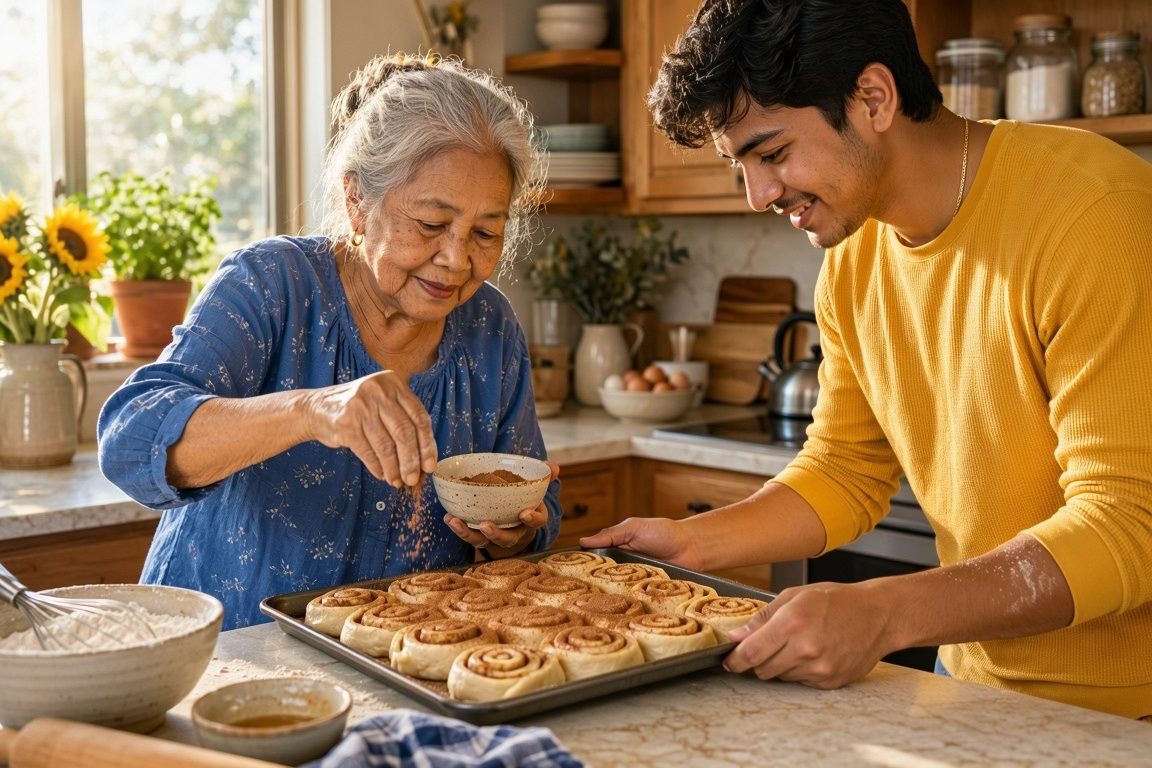
Step by step
What not to do
- Do not expect them to follow a complex recipe from memory. This sets them up for failure and frustration.Instead, write out the steps in large print or use picture cards. For middle and late stages, do the recipe yourself and invite them to help with one simple step.
- Do not correct them harshly if they make a mistake (e.g., adding salt instead of sugar). This can cause shame and withdrawal. Gently redirect: 'Let's start a fresh bowl,' and involve them in the new batch. The memory of a positive interaction is more important than the cookies.
- Do not rush the activity. Allow plenty of time. If you are stressed about timing, the person will pick up on your anxiety. Plan for a slow, leisurely session. If the cookies take twice as long, that is fine. The process is the point.
- Do not take over completely. Even if it is faster to do it yourself, resist the urge. Letting them stir, even if it is messy, preserves their dignity and sense of contribution. As one expert says, 'cue instead of do', guide them to do what they can.
- Do not use sharp knives, hot ovens, or electric mixers without supervision. For middle and late stages, pre-cut ingredients and handle the oven yourself. Safety first. If they want to help with the mixer, hold the bowl steady and let them press the button with your hand over theirs.
- Do not force participation if they are not in the mood. If they seem agitated or disinterested, try again another time. Baking should be a pleasure, not a chore. Offer a choice: 'Would you like to bake cookies or just look at the recipe book?' Respect their answer.
Key points
- Baking can be adapted for every stage by reducing steps and focusing on sensory engagement.
- Pre-measure ingredients and use two-choice questions to reduce confusion and increase participation.
- In late stage, the goal is comfort and connection, not a finished product, let them smell, touch, and taste.
- Use gentle verbal cues and praise effort, not outcome. Avoid harsh corrections.
- Safety first: handle hot ovens and sharp tools yourself; use easy-grip utensils and pre-cut ingredients.
- Personalize the activity to the person's history, use their recipes, play their music, talk about past baking memories.
Videos
 How to increase activity for someone with dementiaThis video offers general principles for adapting activities, which directly apply to baking. It shows how to break down tasks and match them to ability.
 5 Dementia Friendly Holiday Tips For 2024Includes specific holiday baking adaptations, such as using pre-made cookies and focusing on decorating, which is perfect for middle and late stages.
 Quick Tips: The Holidays and DementiaOffers quick, practical tips for including a person with dementia in holiday baking without overwhelming them.
 Dementia Friendly Activities at Home: Part 1 of 3Demonstrates how to set up a home activity station, which is directly transferable to a baking setup with pre-measured ingredients.
2 more videos
 How to keep a dementia patient busyProvides ideas for keeping the person engaged in meaningful tasks, including simple kitchen activities like wiping counters or sorting utensils.
 What Activities Are Good For Dementia Patients? Module 1Covers the philosophy of activity adaptation, emphasizing that the process matters more than the product, a core idea for baking.
Background
Why Baking Works at Every Stage
Baking is a multi-sensory activity that taps into deep, often preserved memories. The smell of vanilla, the feel of dough, the sight of a golden crust, these sensory cues can trigger positive emotions and reminiscence even when verbal skills decline. Research and expert guidance consistently show that a person who enjoyed baking earlier in life can continue to participate meaningfully at every stage, provided you adjust the activity to their current abilities. The key is to focus on the process, not the perfect product. As one expert notes, 'the size of the activity is going to continually shrink' , meaning you gradually reduce the number of steps and complexity, but you never take the activity away entirely.
What Happens in the Brain During Baking
In early-stage dementia, the person can still follow multi-step recipes with some cues. In middle-stage, short-term memory and sequencing become harder, but procedural memory (how to stir, roll, or cut) often remains intact. In late-stage, the person may not understand what they are doing, but they can still respond to sensory input: the feel of flour, the warmth of the oven, the taste of a sample. By breaking baking into its component parts, measuring, stirring, tasting, decorating, setting the table , you can find a role for your loved one at any point. The goal is to set them up for success by matching the task to their current skill level, which reduces frustration and agitation.
Practical tools
6
The 'Two-Choice' Script
Use this simple phrase to reduce decision fatigue: 'Would you like to use the blue bowl or the red bowl?' or 'Should we make chocolate chip or sugar cookies?' Offering only two options makes the choice manageable and gives the person a sense of control.
Pre-Measured Ingredient Station
Set up small bowls or cups with each ingredient already measured. Label them with large-print cards (e.g., 'flour,' 'sugar'). Place them in the order of use. This eliminates the need for measuring spoons and reduces confusion. For late stage, use just one or two bowls.
Sensory Cue Checklist
Before starting, gather items that engage the senses:
Use these to re-engage the person if they lose focus. For example, 'Here, smell this, isn't it lovely?'
Easy-Grip Utensils
Use mixing spoons with thick, padded handles (available at kitchen supply stores). For late stage, use a large, lightweight silicone spatula. If gripping is hard, try a 'universal cuff' that straps a utensil to the hand. These tools support continued participation.
The 'One-Step-at-a-Time' Prompt Card
Write or print a single step on a 3x5 card and place it in front of them. For example: '1. Stir the batter.' When done, remove it and place the next card: '2. Drop cookies on sheet.' This breaks the activity into manageable chunks and reduces overwhelm.
Pre-Made Cookie Decorating Kit
Buy
Set up a decorating station. This works for middle and late stages because it removes the baking step entirely. The person can focus on the creative, sensory part, squeezing frosting, shaking sprinkles , which is often easier and more fun.
Different situations
Lewy body dementia (LBD), middle stage
People with LBD often have visual hallucinations and fluctuating attention. Use plain white bowls and utensils (avoid patterns that might be misinterpreted). Keep the activity short (10-15 minutes). If they seem confused by a tool, switch to a different one. Avoid loud noises (like a mixer) that might trigger sensitivity. Focus on tactile steps like kneading dough, which can be grounding.
Late-stage Alzheimer's, non-verbal
The person may not be able to follow instructions or speak. Focus entirely on sensory comfort. Sit beside them and place a warm, just-baked cookie in their hand. Let them hold it, smell it, and taste it if they are able. Use gentle touch and a soft voice. Do not expect any participation, just being present with the aroma and taste is enough. If they have trouble swallowing, offer a small piece of soft, moist cake instead of a hard cookie.
Spouse vs. adult child caregiver
A spouse may have decades of shared baking memories, which can be a source of connection but also grief if the person no longer recognizes the activity. Use phrases like, 'Remember how we used to bake this for the kids?' An adult child may need to be more directive and patient, as the role reversal can be hard. Both should prioritize emotional connection over task completion. If the spouse feels overwhelmed, suggest they bake together with a friend or home care aide present to reduce pressure.
Person is in a memory care facility
Coordinate with staff to bring in a simple baking activity. Use a portable cart with pre-measured ingredients. Keep the session in a quiet corner to avoid overstimulation. If the facility has a kitchen, ask if you can use it during a slow time. Bring familiar music and a photo of the person baking in their younger years to spark recognition. The staff can help with cleanup and supervision.
Person is on a pureed or soft-foods diet (late stage)
Adapt the baking to produce soft, moist results. Make a simple pudding, a soft banana bread, or a smoothie that tastes like a favorite baked good (e.g., a 'cookie smoothie' with vanilla, banana, and a pinch of cinnamon). The person can still participate by stirring the ingredients or tasting from a spoon. Always check with the clinician about texture modifications to prevent choking.
For the doctor
4
- If the person has difficulty swallowing (dysphagia), ask the doctor or speech therapist what textures are safe. Hard cookies or dry cake may be a choking hazard. They may recommend a 'moist only' rule or specific thickeners.
- If the person has diabetes, discuss how to adapt recipes (e.g., using sugar substitutes or reducing sugar) without making the activity feel deprived. The clinician can advise on safe portion sizes.
- If the person is on blood thinners (e.g., warfarin), ask about vitamin K content in ingredients like spinach or kale (unlikely in baking, but check if adding unusual ingredients). Also, ensure no sharp tools are used that could cause cuts.
- If the person has a history of agitation or aggression, ask the clinician or occupational therapist about the best time of day for activities and whether certain sensory inputs (like loud mixers) should be avoided.