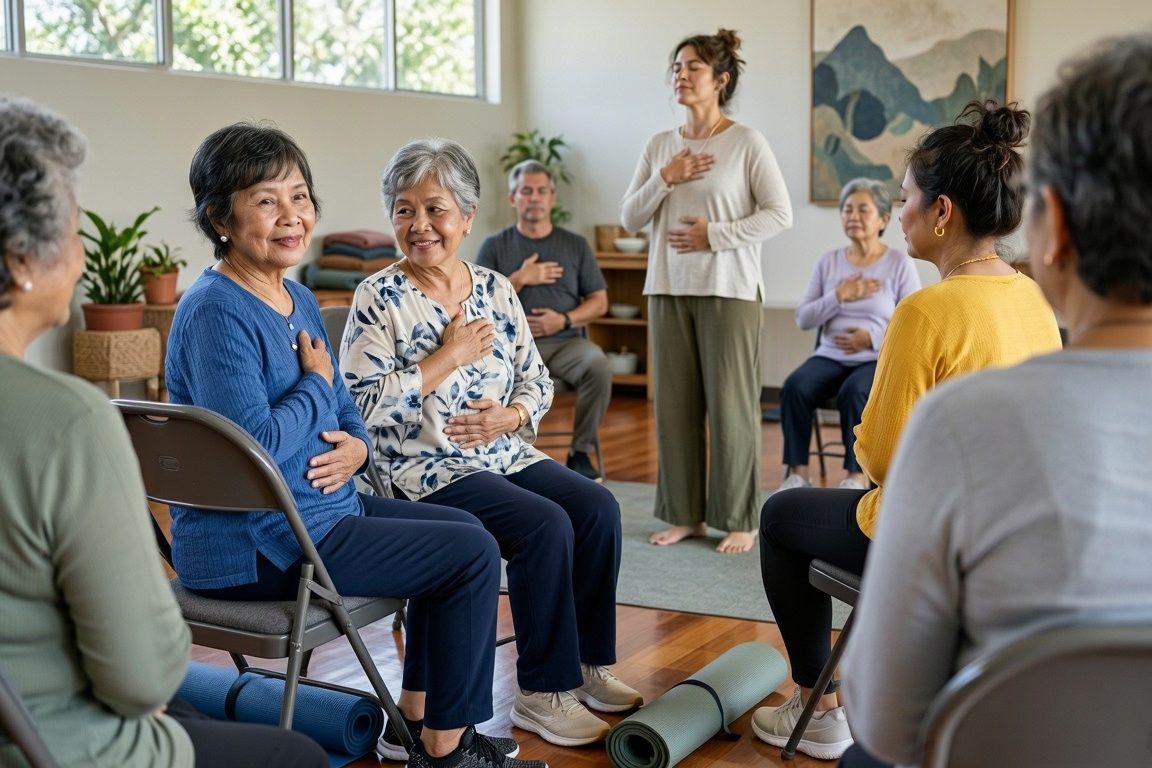
Step by step
What not to do
- Do not stop or reduce anti-seizure medication because yoga is making you feel better, yoga is a complement, not a replacement; stopping abruptly can trigger dangerous seizures.
- Do not push into difficult poses or hold your breath; the goal is relaxation, not performance. Stop and rest if you feel dizzy, short of breath, or uncomfortable.
- Do not compare your practice to others, stigma feeds on feeling different; honor your own pace and what your body needs.
- Do not practice near water, while driving, or anywhere a fall or sudden seizure could cause serious injury. If seizures are frequent or unpredictable, use a chair or soft surface and consider having someone nearby.
Key points
- A 2023 clinical trial in India found that yoga reduces stigma, seizure frequency, and anxiety in people with epilepsy.
- The key components are slow, synchronized breathing, mindful body awareness, and positive affirmations.
- Always consult your doctor before starting yoga; do not stop or change medications without supervision.
- Practice at least five times a week for 30 minutes, using a chair or mat, and keep a journal.
- Use affirmations like 'I am more than my seizures' to directly counter stigma.
- Yoga is a complementary therapy, it works best alongside medical treatment, not as a replacement.
Videos
 Interview of Dr. Herbert Benson about the relaxation responseDr. Benson explains the relaxation response, which is the core mechanism behind yoga's benefits for stigma and anxiety. Understanding this helps you appreciate why slow breathing and mindfulness work.
 Chair yoga and getting someone with dementia to be more receptive to help: Interview with YogaFlavaThis video shows chair yoga adaptations that are safe for people with balance issues or frequent seizures. It also offers tips on making yoga a positive, shared experience.
 Time with Teepa - How do you teach Yoga to someone who is living with significant brain change?Teepa Snow and Stacy Wyatt discuss how to adapt yoga for people with brain changes. Their advice on letting the person go at their own ability level is directly applicable to epilepsy stigma reduction.
Background
What Is Stigma and How Does It Affect People with Epilepsy?
Stigma is a mark of shame or disapproval that society attaches to a condition, and it can be devastating for people with epilepsy. According to the American Psychiatric Association, stigma leads to reluctance to seek help, social isolation, and fewer opportunities in work and housing. For epilepsy, this often means people hide their diagnosis, avoid treatment, or feel they are dangerous or incompetent. A study involving more than 200 individuals with mental illness found that greater self-stigma was linked to poorer recovery over two years. The same dynamics apply to epilepsy: stigma can make you feel like you are less than others, and it can stop you from living fully.
How Can Yoga Specifically Reduce Stigma?
Yoga works on stigma in two powerful ways. First, it directly reduces seizure frequency and anxiety, as shown in a 2023 study published in Neurology. When seizures decrease, you feel more in control and less like your condition defines you. Second, yoga includes key components that induce a relaxation response: slow, synchronized breathing, attention to body movements, and positive affirmations. These practices lower stress, which is linked to 60 to 90 percent of visits to health care professionals. By calming the nervous system, yoga helps you feel more grounded and less reactive to others' judgments. The study compared yoga therapy (which included loosening exercises, breathing, meditation, and affirmations) to sham yoga (which mimicked the movements but omitted the relaxation-inducing elements). Only the real yoga group showed significant reductions in stigma, seizure frequency, and anxiety.
What Does the Research Say About Yoga and Epilepsy?
In the 2023 clinical trial conducted in India, participants received either yoga therapy or sham yoga therapy over three months. The yoga therapy group attended seven supervised group sessions of 45 to 60 minutes and were asked to practice at home at least five times a week for 30 minutes. They tracked seizures and yoga sessions in a journal. After three months of therapy, participants were followed for another three months. The results showed that compared to the sham group, those who did real yoga had reduced feelings of stigma, fewer seizures, and less anxiety. The key was the inclusion of slow, synchronized breathing and mindful attention to body sensations, elements that trigger the relaxation response. This research is a strong foundation for using yoga as a tool to combat stigma, but it is important to practice under the guidance of a health care professional, as medications may need adjustment.
Practical tools
3
Breath & Affirmation Cue Card
A card beside your mat: one side shows 'Inhale 4 counts, exhale 6 counts, repeat 5–10 times'; the other has four affirmations ('I am more than my seizures,' 'I am safe in this moment,' 'My body is strong and capable,' 'I release shame and embrace peace').
Seizure and Yoga Journal Template
Daily log with: date, practice time, duration, yoga type, before/after anxiety (1–10), any seizures (time, type, duration), and stigma feelings. Review monthly with your doctor to spot patterns.
Chair Yoga Setup Checklist
Use
This setup ensures accessibility and safety, especially with balance issues or frequent seizures.
Different situations
If you have frequent seizures (more than one per week)
Practice only in a chair or lying on a soft mat. Avoid any poses that involve standing or balancing. Keep sessions short (5-10 minutes). Always have a caregiver or family member nearby. Do not practice alone. Focus on breathing and affirmations rather than physical movement.
If you are a caregiver helping a loved one with epilepsy
Do the yoga together. Use the same affirmations but adapt them: 'You are more than your seizures.' 'We are safe together.' Encourage them to go at their own ability level. Do not correct or push. As Teepa Snow advises, if all they do is stay in child's pose, that is still yoga. Your presence and patience reduce their stigma and yours.
If you have co-occurring conditions like anxiety or depression
Yoga can help, but you may need additional support. Discuss with your clinician whether yoga alone is enough or if therapy or medication adjustments are needed. The study found yoga reduced anxiety, but if you have severe symptoms, combine yoga with professional mental health care.
If you are in a clinical trial setting (like the India study)
Follow the trial protocol exactly: attend all supervised sessions, practice at home at least five times a week for 30 minutes, and keep a detailed journal. The structure of the trial is designed to maximize benefits. If you are not in a trial, you can still follow this schedule on your own.
For the doctor
4
- Ask your doctor: 'Is it safe for me to practice yoga given my specific seizure type and medication? Are there any poses or breathing techniques I should avoid?'
- Ask: 'Could yoga affect my anti-seizure medication levels? Should I monitor for any changes in side effects?'
- Ask: 'If I experience a seizure during yoga, what should I do? Should I have a rescue medication on hand?'
- Ask: 'Are there any local epilepsy yoga programs or clinical trials I can join?'