Step by step
What not to do
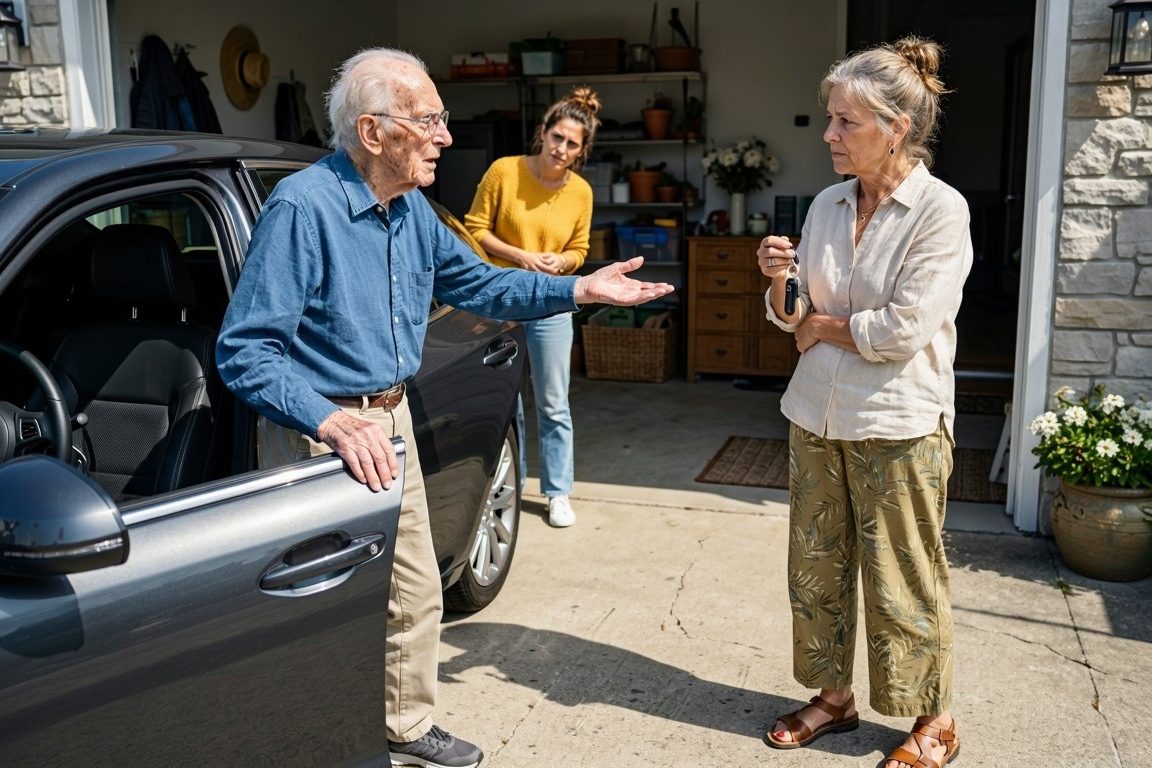
- Do not argue or try to prove they are wrong. This will not change their brain's inability to see the problem.Instead, it will damage trust and increase agitation. Use validation and redirection instead.
- Do not hide the keys and then lie about it if they ask directly. If they persist, say, 'I'm not sure where they are, let's look together.' Then guide them to another activity. Direct lies can erode trust if discovered.
- Do not take away driving privileges without offering an alternative. This can trigger a sense of loss and rebellion. Always pair a restriction with a positive replacement, like a ride to a favorite place.
- Do not involve them in conversations about their driving safety in front of others. This can feel humiliating and increase defensiveness. Have those discussions privately with family or staff.
- Do not assume that a moment of awareness means they are 'back to normal.' In Lewy body dementia, awareness can fluctuate. Use moments of clarity to gently reinforce safety, but do not expect lasting change.
- Do not ignore the risk because they seem 'fine' in other areas. As one source notes, 'Risk does not wait for a label related to mild, moderate, or late stages' (source 17). Even in early stages, driving can be unsafe.
Key points
- Anosognosia is a brain-based lack of awareness, not denial. You cannot reason it away.
- Driving feels urgent because it is tied to identity and independence, not because they are being difficult.
- Never argue or try to prove they are wrong, it damages trust and escalates conflict.
- Use environmental controls (hide keys, disable car) and redirect to positive activities.
- Frame restrictions as temporary or external (car in shop, doctor's check) to avoid blame.
- Involve their doctor or a driving specialist for objective assessments and support.
Videos
 Time with Teepa - What is Anosognosia Again?Teepa Snow explains the brain basis of anosognosia and why it is not denial, with practical communication tips.
 Why Your Loved One Doesn't Believe They Have Dementia - It's NOT DenialThis video clearly distinguishes denial from anosognosia and offers strategies for caregivers.
 How To Convince Someone With Dementia They Need HelpPractical advice on how to approach safety conversations without triggering resistance.
 Live Q & AReal caregiver questions about anosognosia and driving, with expert answers.


Background
What Is Anosognosia and Why Does It Happen?
Anosognosia is a neurological symptom, not a choice. It results from damage to the frontal and parietal lobes, areas that help us see ourselves clearly. When these regions deteriorate, a person truly cannot perceive their own cognitive decline. As one expert explains, 'I cannot self-perceive this... it's not because I'm in denial' (source 12). This is why your loved one may genuinely believe nothing is wrong, even when memory lapses, poor judgment, or safety risks are obvious to everyone else. In frontotemporal dementia, the frontal lobe damage often strikes early, making anosognosia especially pronounced. In Lewy body dementia, fluctuating cognition can cause moments of awareness followed by complete unawareness, adding confusion for both of you.
Denial vs. Anosognosia: The Critical Difference
Denial is a psychological defense mechanism. A person in denial might say, 'I don't have dementia,' but if you present clear evidence, like a doctor's report or a video of them struggling, they can eventually accept it. Denial is often short-term and can shift with time and support. Anosognosia is different: the brain's ability to process that evidence is gone. As one source puts it, 'Denial... there is the possibility that the person could come around... but with anosognosia, that part of the brain that understands awareness of a particular disease or illness no longer exists' (source 5, 8). This means no amount of reasoning, logic, or evidence will make them 'see' the problem. Trying to convince them only leads to frustration and conflict for both of you.
Why Driving Feels So Urgent and Unsafe
Driving is a deeply ingrained skill tied to identity, independence, and freedom. For someone with anosognosia, their brain tells them they are still capable because it compares current performance to past memories of successful driving. As one expert notes, 'I'm truly basing current experience on past experience' (source 12). In early to middle stages, they may still have the motor skills to turn the wheel or press the gas, but their judgment, reaction time, and visuospatial integration are impaired. This creates a dangerous gap: they feel fine, but they cannot recognize the risks they pose to themselves and others. In Lewy body dementia, visual hallucinations and fluctuating attention can make driving even more hazardous. In frontotemporal dementia, impulsivity and poor decision-making may lead them to drive despite obvious problems.
Practical tools
6
The 'Car in the Shop' Script
A simple, repeatable phrase: 'The car is having a problem and the mechanic is fixing it. I'll let you know when it's ready.' Use this every time they ask. Keep it consistent across all caregivers. This avoids linking the restriction to their dementia.
The 'I Need Your Help' Redirect
When they want to drive, say, 'I could really use your help with something else first. Can you help me sort these photos?' This gives them a sense of purpose and shifts focus away from driving. It works because it respects their desire to be useful.
The 'Doctor's Check-Up' Frame
Schedule a driving assessment with their primary care provider or an occupational therapist. Frame it as a routine check: 'The doctor wants to make sure your eyes and reflexes are good for driving.' Do not mention dementia. The results can be used to justify restrictions without blame.
The 'Keyless' Environment
At home, keep all car keys in a locked drawer or a combination safe. In a care facility, ensure keys are not in the person's room. If they ask, say, 'I think the staff is using the car today for errands.' This removes the trigger without confrontation.
The 'Social Success' Checklist
A daily list of small successes: 'Today you helped me choose the groceries. You remembered the name of the neighbor. You walked to the mailbox.' This reinforces their sense of value and reduces the need to prove themselves through driving.
The 'Redirection Toolkit'
Keep a list of their favorite activities ready: listening to music, looking at old photos, folding laundry, or walking in a safe area. When they mention driving, immediately offer one of these. Practice the switch so it becomes automatic for you.
Different situations
Frontotemporal dementia (early stage)
Impulsivity and poor judgment are often more prominent than memory loss. They may decide to drive suddenly without warning. Use environmental controls (like removing keys) proactively. Avoid reasoning, they may not process consequences. Redirect to a high-interest activity like a puzzle or music.
Lewy body dementia (middle stage)
Fluctuating cognition means they may have moments of awareness followed by confusion. Use those clear moments to gently reinforce safety, but do not rely on them. Visual hallucinations can make driving even more dangerous, they may see things that aren't there. Ensure the car is parked out of sight if possible.
Care facility setting
Work with staff to create a consistent plan. Ask them to redirect with a preferred activity whenever the person mentions driving. Ensure keys are not accessible. If the person becomes agitated, staff can use calming techniques like offering a snack or a walk. Avoid having family members be the 'bad guy', let the environment do the work.
Home setting with spouse as caregiver
The spouse may feel the loss of shared independence acutely. It's important to frame restrictions as a team effort: 'We both need to be safe.' Consider couples counseling or support groups. The spouse may need to take over driving duties and can say, 'I enjoy driving you, it gives us time together.'
Adult child as caregiver
Role reversal can be painful. Avoid a parent-child dynamic. Use respectful language: 'Dad, I need your help with this.' If they resist, involve a neutral third party like a doctor or driving specialist. Do not try to 'parent' them, it often backfires.
For the doctor
5
- Ask the doctor if a formal driving assessment is appropriate for your loved one's stage and type of dementia.
- Discuss whether medications for depression or anxiety could help reduce agitation around driving refusal.
- Inquire about state reporting requirements for dementia and driving, some states require physicians to report unsafe drivers.
- If your loved one has a history of getting lost while driving, ask about GPS tracking devices or medical alert systems that can be used as a safety net.
- For Lewy body dementia, ask about the impact of visual hallucinations on driving safety and whether any treatments might reduce them.