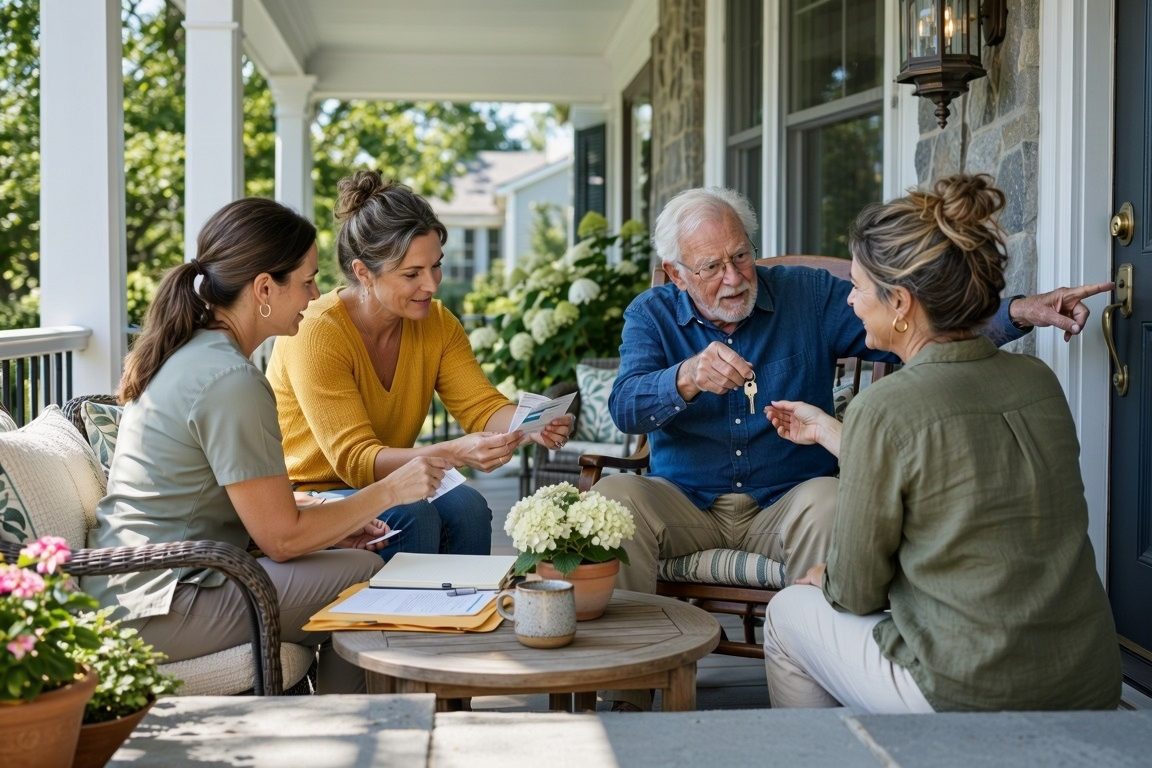
Step by step
What not to do
- Do not try to do it all alone out of guilt. Isolation leads to burnout and depression; asking for help is strong management, not failure.
- Do not wait until you are in crisis to reach out. Proactive support is far more effective than reactive scrambling.
- Do not make vague requests like 'I need more help.' Be specific: 'Could you sit with Dad for two hours on Tuesday afternoon?'
- Do not neglect your own medical care, sleep, and emotional health. Caregivers who skip checkups face higher rates of depression, heart disease, and early mortality.
- Do not assume a care facility will handle everything. Stay involved, ask about staff dementia training, and build a partnership with leadership.
- Do not blame yourself or your loved one for the difficulties of dementia. Focus your energy on what you can control: your response, your support network, and your self-compassion.
Key points
- You are not meant to do this alone. Dementia care is a community responsibility.
- Your role is to direct care, not to do everything yourself. Delegate and coordinate.
- Start by listing specific tasks that overwhelm you, then ask for help with concrete actions.
- Use free national resources: Alzheimer's Association helpline, Eldercare Locator, and local support groups.
- If your loved one is in a facility, build a partnership with leadership, not an adversarial relationship.
- Prioritize your own health and advance planning, it is essential for sustainable care.
Videos
 How Do Online Support Forums for Dementia Help Address Caregiver Stress?This video explains how online forums provide emotional relief, practical guidance, and social connections, which are vital for reducing caregiver burden.
 The Care Facility That's Transforming Dementia CareThis video shows an example of a facility that prioritizes partnership with families and innovative care approaches, which can inspire you to advocate for better care.
 BOOK REVIEW of 'The 36 Hour Day' ~ Inside A Dementia Pro's Resource GuideThis review highlights a classic caregiver resource that offers practical strategies for managing the daily challenges of dementia care.
 Dementia is not your fault, but it is your realityThis video reinforces the message that while you did not cause the dementia, you can take charge of directing care and building a support network.
2 more videos
 How To Find Local Dementia Caregiver Support Groups? - TestThis video provides step-by-step guidance on locating support groups in your area, which is a key action step in building your community care team.
 Caregiver Stress and Depression, Dr. Helen Lavretsky | UCLAMDChatThis expert talk explains the impact of caregiver stress and depression, and offers strategies for self-care and seeking professional help.
Background
The Myth of the Lone Caregiver
Many family caregivers carry the weight of dementia care as if it is solely their burden. The truth is that dementia is a complex, progressive condition that affects every aspect of daily life, from communication and decision-making to basic self-care like bathing and eating. No single person can meet all these needs alone. Research shows that between 70% and 78% of all dementia care is provided by family members, friends, or neighbors who are not professional caregivers. This means you are part of a vast, often invisible army of people doing their best with limited training and support. The key is to recognize that you are not failing if you need help; you are simply facing a challenge that requires a team.
The Community as a Care Partner
A community approach to dementia care means that responsibility is distributed across many people and organizations. This includes your immediate family, extended relatives, friends, neighbors, healthcare providers (like doctors, nurses, and social workers), local aging services, support groups, and even online forums. National organizations like the Alzheimer's Association provide resources and helplines. Local libraries, hospitals, and faith communities often host support groups or educational workshops. The goal is to create a web of support where you are not the only one making decisions or providing hands-on care. As one expert put it, 'Dementia is not your fault, but it is your problem.' However, facing that problem does not mean facing it alone.
Your Role as the Care Director
While you may not have caused the dementia, you are in a unique position to direct the care. This does not mean doing everything yourself. Instead, think of yourself as the project manager or the conductor of an orchestra. Your job is to identify what help is needed, find the right people to provide that help, and coordinate their efforts. This might mean asking a sibling to handle medical appointments while a neighbor sits with your loved one for two hours each morning. It might mean hiring a paid caregiver for specific tasks like bathing or dressing, as people in uniform often find cooperation easier from someone who is not a family member. The most effective caregivers are those who learn to delegate and accept that they cannot, and should not, do it all.
Practical tools
5
The 'Help Me Help You' Script
When asking for help, use: 'I am caring for [name], and I need your help to keep doing this well. Could you take over [specific task] on [specific day/time]? It would mean the world to me.' Removes ambiguity, which is what most people need to say yes.
The Care Coordination Notebook
Keep a notebook or shared digital document with sections for medical appointments, medication list, daily care log, and a running 'help wanted' list. Share it with anyone who steps in so care stays consistent.
The Eldercare Locator
Free government service (eldercare.acl.gov or 1-800-677-1116) to find local meal delivery, transportation, legal aid, respite care, and adult day programs.
The Alzheimer's Association 24/7 Helpline
Call 1-800-272-3900 anytime for crisis support, care consultation, and the MedicAlert + Safe Return program for wandering. Keep it posted on the refrigerator.
The Care Team Roster
A one-page chart listing every helper, their role, best contact, and a designated backup for each. Post it on the fridge and share a copy so anyone can step in seamlessly, even in an emergency.
Different situations
For a spouse caregiver living with the person at home
Focus on building a daily routine that includes breaks for you. Use adult day services or a paid caregiver for a few hours each day. Join a spouse-specific support group where others understand the unique grief of losing a partner to dementia. Also, ensure you have legal and financial plans in place, including power of attorney for both of you.
For an adult child caregiver who lives far away
Your role is more about coordination than hands-on care. Hire a geriatric care manager to oversee daily needs. Use video calls to stay connected with your parent. Delegate local tasks to a trusted neighbor or sibling. Join a long-distance caregiver support group online.
For a person with early-stage dementia who is still able to participate
Involve them in decisions about their care team and future plans. Use the 'Institute for Healthcare Improvement Conversation Starter Kit' to discuss goals. Encourage them to join a support group for people with early-stage dementia. Respect their autonomy as long as they have capacity.
For a caregiver whose loved one is in a memory care facility
Shift your focus from hands-on care to advocacy and partnership. Schedule regular meetings with the facility's leadership. Ask detailed questions about staff dementia training (e.g., 'How do you handle a person who is exit-seeking or refusing to bathe?'). Stay involved in care planning and visit often to monitor quality.
For a caregiver with limited financial resources
Prioritize free resources: the Alzheimer's Association helpline, local support groups (often free), and the Eldercare Locator. Apply for Medicaid or other state programs that may cover in-home care or respite. Many faith communities offer volunteer respite programs. Do not let cost stop you from asking for help, many services are sliding-scale.
For the doctor
5
- Ask your doctor about a referral to a memory clinic or multidisciplinary dementia service for comprehensive care coordination.
- Discuss with your clinician the best way to manage medications, especially if the person with dementia has multiple conditions or is on antipsychotics.
- If you are feeling overwhelmed or depressed, talk to your doctor about counseling, support groups, or medication for caregiver depression.
- Ask about advance care planning tools specific to dementia, such as the University of Washington's dementia-specific advance directive.
- If your loved one has behavioral symptoms like aggression or wandering, discuss non-pharmacological strategies first, and only consider medication after a thorough evaluation.