Step by step
What not to do
- Waiting until you are completely burned out to ask for help.By then, your health is already damaged, and your ability to provide quality care is compromised. Caregiver burnout can lead to depression, anxiety, and physical illness.
- Thinking that asking for help means you are not trusting God.This belief keeps you isolated and overwhelmed. Scripture shows that God uses community to carry burdens. Even Jesus allowed others to help Him.
- Refusing paid help because you feel guilty spending money or think you should do it all.Your health is worth the investment. If you cannot afford it, explore Medicaid waivers, church funds, or sliding-scale agencies.
- Assuming family members know you need help and will offer.Family members may not realize the severity of your situation or may be dealing with their own limitations, distance, jobs, health issues.
- Staying stuck in decision fatigue and doing nothing.Paralysis makes the weight heavier. You end up revisiting the same decisions at 2 a.m. without resolution.
Key points
- You cannot do this alone. Building a support team, even one person, is an act of faithful stewardship, not failure.
- Use the Caregiver Burden Inventory to name the invisible weight and track your stress over time.
- Be specific when asking for help: name one task, one time, one person. Churches and family members respond better to concrete requests.
- Respite care, whether in-home or in a facility, is essential for your health. You are not abandoning your loved one; you are preserving your ability to care.
- Imperfect action is better than paralyzed inaction. Take one small step today.
- God can use your caregiving experience to encourage others. Your struggle is not wasted.
Videos
 323. How Christian Caregivers Accept Being a Dementia Caregiver, and Mistake Acceptance for ActionThis video helps you distinguish between accepting your role and taking faithful action. It addresses the Christian tendency to passively accept suffering without seeking help.
 285. How To Make Wise Decisions As A Christian Dementia CaregiverThis video offers a biblical framework for making decisions when you feel stuck in decision fatigue. It is directly relevant to the overwhelm described in this article.
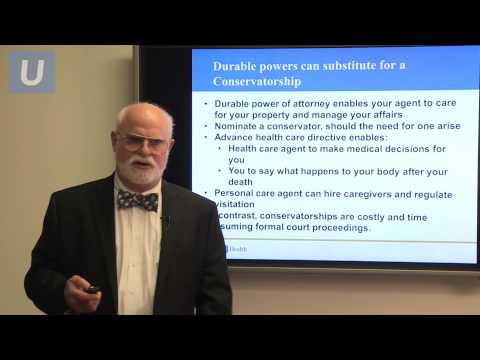 Elder Law: Protecting & Caring for Patients with Dementia | Marc B. Hankin | UCLAMDChatThis video covers legal and financial planning, including Medicaid and respite care options. Essential for caregivers who need to plan for paid help or facility placement.
 289. How To Change Caregiver Burden To Christian Stewardship In DementiaThis video reframes caregiver burden as stewardship, which is the core theological shift needed to seek help without guilt.
2 more videos
 Are You a Caregiver?A short, encouraging video that validates the caregiver experience and reminds you that you are not alone.
 Discover The Caregiving Support Network - The Non Profit Supporting Family CaregiversThis video introduces a nonprofit that provides practical support, including respite and resources. It is a concrete next step for finding help.
Background
The Invisible Weight That Builds Over Time
Most Christian caregivers do not reach the point of overwhelm overnight. It creeps in slowly, a broken record of decisions you revisit at 2 a.m., a pressure that never lifts, and the haunting sense that there is no clear finish line. You may feel you are the only one who can do this right, and that asking for help would mean you are not trusting God enough. But the truth is, staying paralyzed by fear of making the wrong choice often causes more harm than taking imperfect action. The medical world calls this 'caregiver burden', the invisible load that builds until you feel exhausted, guilty, and isolated. Scripture, however, reframes this burden as stewardship: God has entrusted you with this role, but He never intended you to carry it alone.
Why Christian Caregivers Resist Help, and Why That Backfires
Many Christians struggle with receiving help because they are better at giving than receiving. You may feel guilty saying no, or believe that you must do everything yourself. But research shows that caregiver spouses often die first from overload and stress. You are not doing your loved one any favor if you work yourself into the grave. The most loving act you can perform is to steward your own health so you can continue to provide quality care. Accepting help is not a sign of weak faith; it is a wise, biblical act of stewardship. As one caregiver shared, the negative experiences of caring for his wife became a platform to encourage others, showing that God can work even the hard parts together for good.
Practical tools
6
Caregiver Burden Inventory
A validated questionnaire that measures the invisible load of caregiving. Use it as a mirror to see where you need support. Available online for free. Take it monthly to track your stress levels.
The 'One Task' List
Write down three specific tasks you need help with this week (e.g., 'pick up groceries,' 'sit with Mom for two hours,' 'drive Dad to appointment'). Share this list with family, friends, and church members. Let them choose what they can do.
Church Care Ministry Request Script
Exact words to say to your church: 'I am caring for my [loved one] who has dementia. I am overwhelmed and need practical help. Could someone from the church visit for one hour a week so I can rest? Or could the church coordinate a meal train or respite care?' Most churches will respond.
Respite Care Directory
Call local assisted living and skilled nursing facilities and ask: 'Do you offer short-term respite stays for a week or weekend?' Many do. Also check with your local Area Agency on Aging for a list of in-home respite providers.
Christian Caregiver Support Group Finder
Search online for 'Christian caregiver support group near me' or 'dementia caregiver support for Christians podcast.' Many groups meet virtually. They offer prayer, practical advice, and a safe space to share struggles.
Safety Fix Checklist
Focus on one safety fix per week:
Ask your doctor for an occupational therapy evaluation to safety-proof the home.
Different situations
Lewy body dementia or Parkinson’s dementia
These conditions often involve hallucinations, movement issues, and fluctuating cognition. Safety fixes are critical, remove fall hazards, install locks on doors to prevent wandering. Respite care may need to be shorter and more frequent because the patient’s condition can change rapidly. Ask your doctor for an occupational therapy evaluation.
Late-stage dementia
Your loved one may need 24/7 care. Respite stays in a skilled nursing facility may be the only option for a break. You may need to consider full-time placement. Talk to an elder law attorney about Medicaid planning. Do not feel guilty, you have done faithful work.
Spouse caregiver vs. adult child caregiver
Spouse caregivers often feel a unique bond and may resist help more strongly. Adult children may have their own families and jobs. If you are a spouse, prioritize your own health, you are at higher risk of dying first from stress. If you are an adult child, communicate openly with your own spouse and children about your caregiving load.
Care recipient is in a facility
Your role shifts to advocate and visitor. You still need support, join a support group for families of facility residents. Ask the facility social worker about family councils and respite for yourself. Do not feel guilty for not providing direct care.
Medicaid or limited finances
Explore Medicaid waivers that may cover in-home care or respite. Contact your local Area Agency on Aging. Many churches have benevolence funds. Do not assume you cannot afford help, ask. Paid caregivers may be available on a sliding scale.
For the doctor
5
- Ask your doctor: 'Can you refer me to a social worker who can help me find respite care and financial assistance?'
- Ask your doctor: 'Should I have an occupational therapy evaluation to safety-proof our home?'
- Ask your doctor: 'What are the signs that my own health is being affected by caregiving stress? Should I be screened for depression or anxiety?'
- If you are considering medication for stress or sleep, discuss this with your doctor. Do not self-medicate with alcohol or drugs.
- If you are considering placing your loved one in a facility, ask the doctor: 'What level of care does my loved one need? Can you help me with the transition?'