Step by step
What not to do
- Don't argue or correct them. Saying 'This is your home!' doesn't work, brain damage prevents processing that information.Instead, validate and use a kind fib: 'The car's in the shop, let's have coffee while we wait.'
- Don't physically restrain or block the door. This triggers fight-or-flight, risking aggression or falls. Walk with them instead.
- Don't take it personally. 'I want to go home' is the disease, not rejection.
- Don't leave them unsupervised near an exit. Use a door alarm or bell if you must step away.
- Don't punish or scold afterward. They won't remember the instruction.Instead, review what triggered the behavior and adjust the environment or routine.
Key points
- The request to 'go home' is about a feeling of safety, not a physical place. Validate the feeling, don't argue the facts.
- Remove visual triggers (coats, purses, keys) and camouflage doors to reduce the urge to leave.
- Redirect to a calming, familiar activity immediately after validating their feeling.
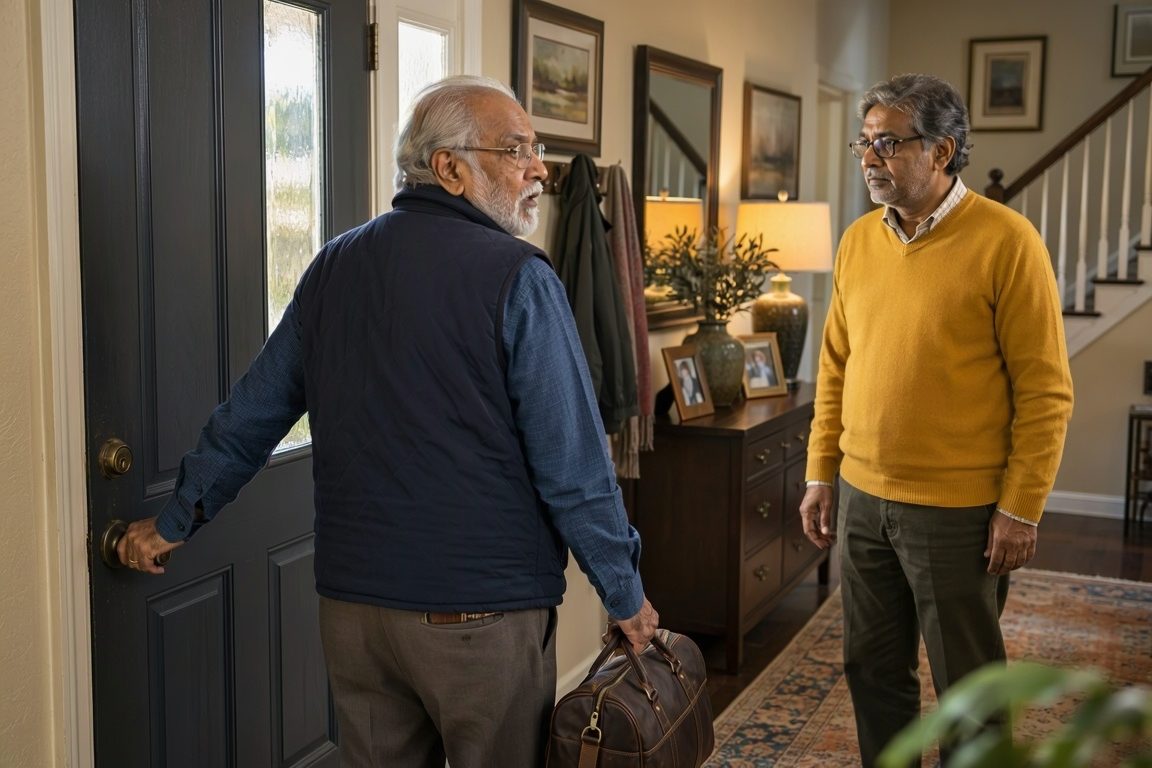
- If they are at the door, step outside with them for a short, supervised walk instead of blocking them.
- Establish a consistent daily routine, especially during high-risk times like late afternoon.
- Use environmental safety measures: door alarms, secure locks, and a plan for if they do elope.

Background
What Is Really Happening When They Want to Leave?
When your loved one insists on leaving or asks to 'go home,' it's almost never about the physical house you're in. Instead, it's a symptom of the dementia itself. Their brain is losing the ability to recognize familiar places and people, and they may be reliving an old memory, often from childhood or early adulthood, where they felt secure. They aren't trying to be difficult; they are genuinely distressed, anxious, or frightened. The request to 'go home' is a way of saying, 'I feel unsafe here, and I need to get to a place where I feel safe.' This is especially common in middle to late stages (Stage 5 or 6) when memory loss is more profound.
This behavior can be triggered by many things: seeing a coat, purse, or keys that signal 'leaving'; feeling bored or under-stimulated; needing to use the bathroom; or even a change in routine. In a facility, it might be triggered by noise or unfamiliar staff. At home, it might be triggered by a feeling of being 'trapped' or not recognizing the space. The key is to understand that this is not a logical choice, it's a brain-based reaction to a feeling of distress. Your job is not to argue them into staying, but to address the underlying feeling and redirect them to safety.
Why 'This Is Your Home' Doesn't Work
Many caregivers make the mistake of trying to reason with their loved one: 'But this is your home! You live here!' This almost always backfires. Because of the memory impairment, they genuinely do not recognize the place as home, and your insistence can feel like you're lying to them or dismissing their fear. This leads to more frustration, arguments, and agitation, for both of you. The person with dementia cannot be 'talked into' remembering where they are. Their brain has lost that ability. Instead of correcting them, you need to join them in their reality, even if it's not factually correct. This is called 'therapeutic fibbing' or 'validation,' and it's a core skill for managing exit-seeking behavior.
Your response will also need to change over time as the disease progresses. What works today might not work next month. Be prepared to be creative, mix up your approaches, and not take their requests personally. They are not rejecting you or your care; they are reacting to a brain that is failing them. Your calm, reassuring presence is the most powerful tool you have.
Practical tools
4
The 'Go Home' Validation Script
When they say 'I want to go home': (1) Pause and breathe. (2) Say, 'Tell me about your home. What's your favorite room?' (3) Listen for a memory. (4) Redirect with a connected activity: 'Let's go to the kitchen and make cookies.'
The Door Camouflage Kit
Use
The 'Let's Go for a Walk' Redirect
If they're at the door, say, 'Oh, you're ready for a walk? Me too!' Take a short, supervised walk in a safe area (yard or hallway). Walk a few minutes, the urge often passes, then gently guide back inside. Stop if they become agitated or pull away.
The Door & Window Alert System
Install
Different situations
For a person in Stage 5 or 6 (middle to late dementia)
At these stages, memory is severely impaired, and the person may not recognize you or the home at all. Use very simple, one-step instructions. Avoid any questions that require complex thinking (e.g., 'Where do you want to go?'). Instead, use direct, soothing statements: 'Let's go sit in the cozy chair.' The validation script still works, but keep it very short. Physical redirection (gently taking their arm and guiding them) may be needed more often. Door alarms and environmental modifications are essential.
For a person living in a care facility (nursing home, assisted living, group home)
The 'I want to go home' request is very common in facilities. Do NOT say, 'You can't go home, you live here now.' Instead, use the same validation and redirect techniques. You can also say, 'We can't go right now, but let's go to the activity room and see what's happening.' Work with the staff to ensure they know the person's triggers and have a plan. Ask about the facility's elopement prevention measures (alarms, door codes, etc.). If the person is asking for a specific person (e.g., 'I need to see my mother'), you can say, 'She's not here right now, but she'll be back later. Let's go look at photos of her.'
For a spouse caregiver vs. an adult child caregiver
Spouse caregivers often feel more personally hurt by the 'I want to go home' request. It's important to remind yourself that this is the disease, not a rejection of your care. Adult children may have an easier time not taking it personally, but they may struggle with guilt about not being able to 'fix' it. Both roles benefit from support groups. The practical steps are the same, but the emotional work is different. Spouses may need to practice self-compassion and seek respite care to avoid burnout.
For a person with Lewy body dementia or frontotemporal dementia
In Lewy body dementia, visual hallucinations and fluctuations in cognition are common. The person may be trying to leave because they see something frightening (e.g., a stranger in the room). Validate their fear: 'I can see you're scared. Let's go to a different room together.' In frontotemporal dementia, the person may have more impulsivity and less awareness of danger. They may try to leave without any verbal warning. Environmental safety (locks, alarms) is even more critical. Discuss with the clinician about medications that might help with agitation or hallucinations.
When considering a move to a facility or hiring in-home care
If exit-seeking becomes frequent and you cannot keep them safe at home, it may be time to consider a higher level of care. This is a very difficult decision, but safety must be the priority. If you are considering a facility, look for one with a secure memory care unit that has a 'wandering path' or enclosed garden. If you are hiring in-home care, ensure the caregiver is trained in dementia care and knows how to handle exit-seeking. Discuss with the clinician about the right timing for this transition.
Common questions
2
What locks (double-keyed deadbolt, outward-door devices) prevent elopement?
Install a double-keyed deadbolt that requires a key on both sides, keep one hidden nearby but out of your loved one's reach, or add a slide bolt lock placed high or low on the door where they won't think to look.
What device prevents exit through an outward-opening door?
Use a flip-style door lock or a childproof magnetic lock mounted near the top of the door; these slip into the gap between the door and the frame, stopping it from opening while being easy for you to release.
For the doctor
5
- If the exit-seeking behavior is accompanied by new aggression, hallucinations, or a sudden change in mood, discuss with the clinician whether there might be an underlying medical issue (e.g., infection, pain, medication side effect) that needs treatment.
- If the person is at high risk of elopement and you are considering medications to reduce agitation or anxiety, ask the clinician: 'What are the risks and benefits of antipsychotics or other medications for this behavior? Are there non-medication strategies we should try first?' Do not start or stop any medication without medical guidance.
- If you are considering a GPS tracking device or a home monitoring system, ask the clinician or a social worker: 'Can you recommend reputable products and services that respect the person's dignity and privacy? What are the ethical considerations I should be aware of?'
- If you are struggling with caregiver stress, guilt, or burnout related to this behavior, ask the clinician for a referral to a support group, counselor, or respite care program. You cannot care for them if you are not caring for yourself.
- Ask the clinician: 'Are there any home safety modifications an occupational therapist could recommend to reduce fall risks and elopement risks?'