
Step by step
What not to do
- Do not correct them loudly or repeatedly. Saying 'No, that's not a spoon, it's a fork!' multiple times only increases their shame and frustration.Instead, simply hand them the fork and say, 'Here's your fork.'
- Do not finish their sentences for them unless they are clearly stuck and upset. Jumping in too quickly robs them of the chance to communicate and can make them feel infantilized. Wait 10 seconds before offering help.
- Do not ask 'Do you remember?' questions. Questions like 'Do you remember what we did yesterday?' put them on the spot and highlight their deficits.Instead, make a statement: 'We had a nice walk yesterday.'
- Do not speak about them as if they are not there. Even if they are not responding, they may still understand some of what you say. Speaking over them to another person ('He doesn't get it') is deeply hurtful.
- Do not use sarcasm or complex jokes. The brain's ability to understand abstract language is impaired. Sarcasm can be misinterpreted as criticism. Stick to literal, kind statements.
- Do not raise your voice thinking they have hearing loss. Often, the problem is processing speed, not volume. Speaking louder can actually increase anxiety and confusion. Speak clearly and slowly instead.
Key points
- Word-finding loss and comprehension gaps are neurological symptoms, not defiance or laziness.
- Forbidden words are often the brain grabbing the nearest available word, not intentional rudeness.
- Slow down your speech, lower your volume, and wait 10 seconds before repeating or helping.
- Validate the emotion behind the word, not the word itself.
- Use visual cues, simple sentences, and the 'let's' framework to reduce pressure.
- Create a 'word bank' and communication passport to share with other caregivers.
- This is a form of ambiguous loss, grieve the lost ease of conversation, but find new ways to connect.
Videos
 Ambiguous Loss in a Time of Pandemic on Alzheimer’s Speaks RadioExplains how language loss contributes to ambiguous loss for both caregiver and person with dementia.
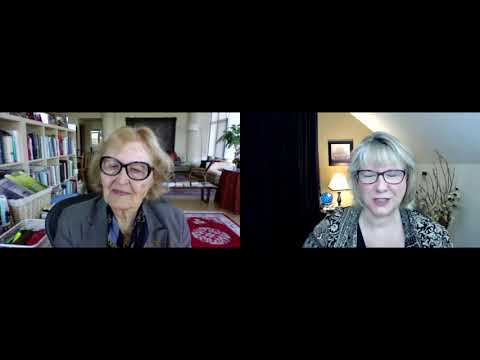 Ambiguous Loss in a Time of Pandemic with Pauline BossFounder of ambiguous loss theory discusses how communication breakdowns create frozen grief.
 Communication & Dementia: Connecting with a Person living with Memory LossPractical demonstration of how to slow down and use visual cues when words fail.
 Why Aging Parents With Dementia Can't Try HarderExplains the neurological reasons behind word-finding and comprehension gaps, reducing caregiver blame.


Background
What Is Happening in the Brain
In early dementia, the brain's language centers, areas responsible for finding the right word, understanding what others say, and organizing thoughts into speech, begin to be damaged. This is not a memory problem alone; it's a breakdown in the brain's ability to retrieve and process language. Your loved one may know exactly what they want to say but cannot access the word. They might substitute a related word (like 'thingy' for 'spoon') or a completely unrelated word (like 'dog' for 'car'). This is called anomia, and it's a hallmark of early-stage dementia. They are not being lazy or difficult; their brain is literally misfiring.
Why 'Forbidden' Words or Blanks Happen
When a person with dementia cannot find the intended word, their brain may grab the nearest available word, sometimes a swear word, a childhood name, or a word that sounds similar. This is not intentional rudeness. It's a neurological glitch. The brain's 'word retrieval' system is like a file cabinet where the labels have fallen off; the file is there, but the person can't find it. They may also use a word that feels emotionally charged because the brain's emotional centers are more intact than the language centers. So a word like 'hate' might pop out when they actually mean 'frustrated.' This can be shocking for caregivers, but understanding the mechanism helps you respond with patience rather than hurt.
The Comprehension Gap: Why They Don't Understand You
Comprehension gaps are equally common. Your loved one may hear your words but process them slowly or incorrectly. The brain's ability to decode language, to turn sounds into meaning, is impaired. They might hear 'Would you like tea or coffee?' but only catch 'tea' and 'coffee' as separate sounds, not as a choice. This is why they may answer with something unrelated or seem to ignore you. It's not hearing loss (though that can compound it); it's a language processing disorder called aphasia. They are trying to understand, but the brain's 'decoder' is broken. This leads to frustration, withdrawal, or emotional outbursts, as they feel confused and embarrassed.
The Emotional Toll on Both of You
For the person with dementia, these language failures are deeply distressing. They know they should know the word, and they feel ashamed. This can lead to social withdrawal, depression, or anger. For the caregiver, it's a form of ambiguous loss, the person you knew is still physically present but is slipping away in conversation. You may feel lonely, aggravated, or even betrayed by the disease. This rupture in communication is painful because it undermines the very foundation of your relationship. Recognizing this as a symptom of the disease, not a personal attack, is the first step toward healing.
Practical tools
6
The 'Pause and Validate' Script
When a forbidden word comes out, use this script: 'I can see you're really upset. Let's take a breath together.' Then wait. Do not address the word. This script validates the emotion and calms the nervous system, reducing the chance of a behavioral outburst.
Visual Cue Cards
Create a small set of laminated cards with pictures of common needs:
When words fail, your loved one can point to a card. This reduces frustration and gives them a non-verbal way to communicate.
The 'Slow Down' Timer
Use a simple kitchen timer or phone app set to 10 seconds. After you ask a question or make a statement, wait for the timer to go off before repeating or rephrasing. This trains you to give them the processing time they need.
The 'Emotion First' Checklist
Keep a small card in your pocket that says: '
' This helps you stay calm and follow the steps when you're stressed.
The 'Let's' Language Reframe
Replace commands with 'let's' statements. Instead of 'Brush your teeth,' say 'Let's brush our teeth.' This creates a sense of partnership and reduces the feeling of being ordered around, which can trigger resistance.
The 'Word Bank' Notebook
Keep a small notebook where you write down words your loved one frequently forgets, along with a simple drawing or photo. When they are stuck, open the notebook and point. This turns a moment of failure into a moment of collaboration.
Different situations
Lewy Body Dementia (LBD)
In LBD, word-finding issues may fluctuate dramatically from hour to hour due to cognitive fluctuations. Use the same strategies but be prepared for sudden changes. Also, LBD often involves visual hallucinations; avoid using visual cues that might be misinterpreted. Instead, use touch and gentle voice.
Frontotemporal Dementia (FTD)
FTD often affects language centers early and severely. Word-finding loss may be profound, and the person may use forbidden words more frequently due to loss of social inhibition. Do not take it personally. Use very simple, direct language and avoid abstract concepts. The 'let's' framework is especially helpful here.
Early-Stage Alzheimer's
In early Alzheimer's, word-finding is often mild but frustrating. The person may be aware of their mistakes and feel embarrassed. Use the 'word bank' and validation scripts. Avoid any hint of testing or correction. Focus on maintaining their self-esteem.
Spouse vs. Adult Child Caregiver
Spouses may feel the loss of intimate conversation more acutely. They may need to grieve the loss of shared language. Adult children may feel frustrated by the role reversal. Both benefit from joining a support group to process these feelings. The strategies are the same, but the emotional work differs.
In a Facility Setting
In a facility, staff may not know your loved one's unique word-finding patterns. Create a 'communication passport' with their common word substitutions, favorite phrases, and triggers. Share this with all staff. Also, advocate for the use of the 'slow down' approach during care routines.
For the doctor
4
- If your loved one suddenly develops severe word-finding loss or comprehension gaps that come on rapidly (over days or weeks), discuss this with their doctor to rule out stroke or other acute conditions.
- If they become aggressive or extremely agitated when they cannot find words, ask their clinician about whether a speech-language pathologist evaluation could help.
- If you notice they are withdrawing from all social interaction due to language frustration, discuss with their doctor whether a referral to a dementia support group or counseling could help.
- If they are using forbidden words that are sexually inappropriate or violent, discuss with their clinician whether this is a sign of a different type of dementia (like FTD) and what behavioral strategies are safe.