Step by step
What not to do
- Do not argue with the fixed belief. Saying 'You didn't fall? I saw you fall!' will only escalate their distress and entrench the belief.Instead, validate their feeling: 'I hear that you don't remember falling. That must be confusing. Let's sit down and rest for a bit.'
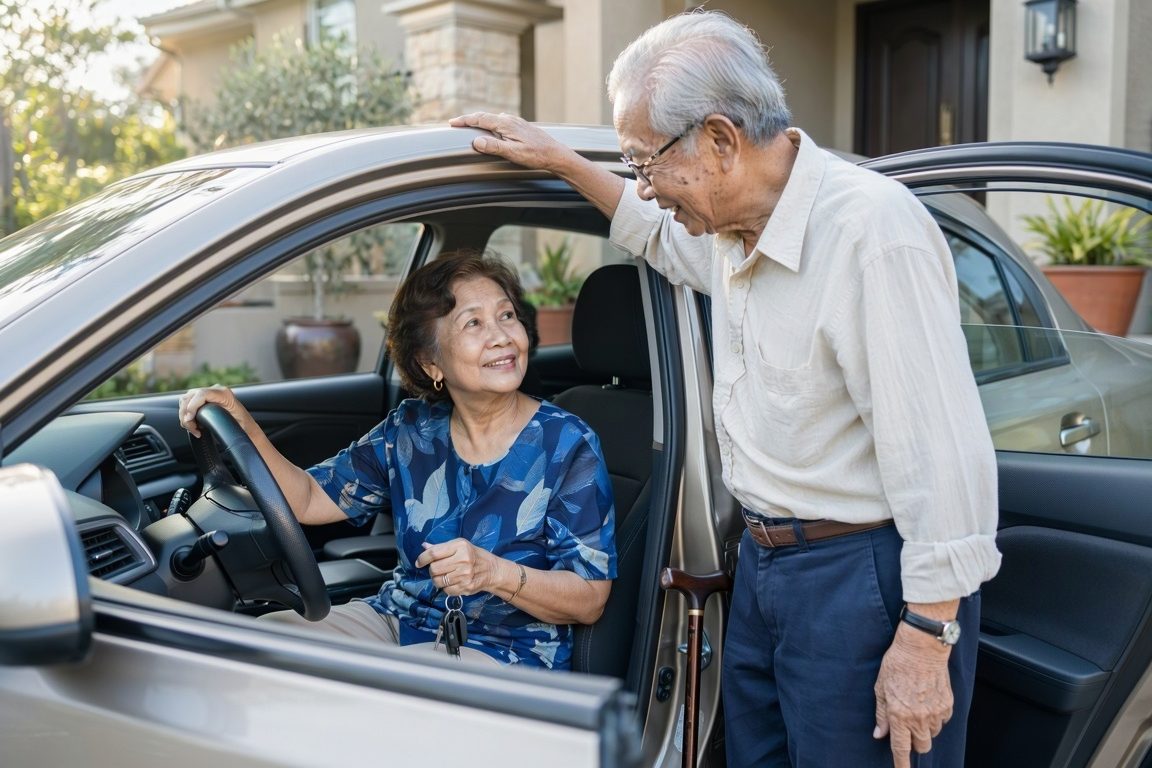
- Do not take away the keys without a plan. If you just hide the keys, they may become suspicious, agitated, or try to find them. Always have an alternative transportation plan ready before you have the conversation.
- Do not assume they are 'in denial' or 'being stubborn.' After a fall, their brain may not be able to process the event. They are not lying, they are living in a different reality. Treat them with the same compassion you would a child who is scared and confused.
- Do not let them drive 'just this once' to avoid a fight. One unsafe trip can lead to an accident, injury, or even death. The source from All Home Care Matters reminds us that falls are of epidemic proportions, and one mistake can be catastrophic.
- Do not ignore your own 'nagging doubt.' If something feels off, if their driving seems worse, if their belief seems more intense , trust that feeling. The Pamela D Wilson source says those nagging thoughts are often the most important signals to act on.
- Do not try to handle this alone. Call a friend, a support group, or a dementia care specialist. The emotional weight of taking away driving or managing a fixed belief is enormous. You need support, too.
Key points
- A sudden fixed belief or unsafe driving after a fall is a medical red flag, rule out injury, infection, or pain first.
- Do not argue with the belief. Validate the feeling and redirect to safety.
- Never take away driving without having a concrete alternative plan ready.
- Use the 'ask permission' script to open difficult conversations with respect.
- A transfer lift (like the Indie Lift) can help you get them up after a fall, but always check for injuries first and call 911 if needed.
- You are not alone, call a doctor, a support group, or a dementia care specialist for help.
Videos
 Ep. 201: Are Falls Just a Fact of Life with Dementia?This video explains why falls are not inevitable and how to prevent them, which is critical for avoiding the cascade of fixed beliefs and unsafe driving after a fall.
 Courageous Conversation with Dr. Ashwini BapatDr. Bapat offers strategies for having hard conversations about driving and safety, which directly applies to the 'fixed belief' scenario after a fall.
 Join Us for Problem Solving with PACTeepa Snow's Positive Approach to Care team demonstrates how to problem-solve around falls and behavior changes, giving you real-world techniques.
 Dementia and Sundowning: Tips to Help You Manage SundowningSundowning can worsen after a fall, making fixed beliefs more intense. This video gives practical tips for calming evening agitation.
2 more videos


Background
Why a fall can trigger fixed beliefs and unsafe driving
A fall is not just a physical event, it's a brain event. When someone with Alzheimer's falls, even if they don't hit their head, the shock, pain, and disorientation can trigger a sudden change in their thinking. Their brain, already struggling with plaques and tangles, now has to process injury, fear, and a new physical limitation all at once. This can lead to what looks like a 'fixed belief' , for example, insisting they didn't fall, that you're overreacting, or that they absolutely must drive to the store right now. This isn't denial; it's their brain's attempt to make sense of a confusing, frightening experience. They may not be able to recognize their own injury or remember the fall at all, so they fill in the gap with a story that feels true to them.
The hidden link: pain, fear, and driving
After a fall, your loved one may feel a deep, unspoken fear, fear of losing independence, fear of being a burden, fear of the world shrinking. One of the most powerful symbols of independence is the car. So when they suddenly insist on driving, it's often not about the destination , it's about proving to themselves (and to you) that they are still capable. But here's the danger: after a fall, their reaction time, judgment, and spatial awareness are likely worse than before. They may not be able to turn their head to check a blind spot because of neck pain. They may not recognize a stop sign because their brain is still processing the fall. And if they have a hidden injury like a small bleed or a fracture, driving could be catastrophic. The source material from Dementia Careblazers is clear: a sudden, significant change in behavior after a fall , especially driving , is a red flag that needs immediate medical attention, not a conversation about 'why won't you listen.'
What's really happening: a world that's become smaller and scarier
As mobility decreases after a fall, your loved one's world literally shrinks. They can't go to church, visit friends, or even walk to the mailbox without fear. This loss of social connection and purpose is devastating. The Mayo Clinic source describes how people start to wake up thinking not about what they're looking forward to, but about how they'll get to the bathroom or survive a shower day. That fear can morph into a fixed belief: 'I have to drive to feel normal again.' Or it can turn into a belief that you are trying to trap them. This is not manipulation, it's a desperate brain trying to hold onto the only identity it remembers. Your job is not to argue with the belief, but to address the underlying fear and pain, and to create a new sense of safety and purpose that doesn't require a car.
Practical tools
6
The 'Ask Permission' Script
Before any hard conversation, say: 'I'm concerned about something, and I'd like to talk with you about it. Is that okay?' If they say no, wait and try again later. This simple phrase shows respect and lowers their guard. From the Answers About Alzheimer's source.
The 'Show Me' Driving Assessment
Instead of accusing them of being unsafe, say: 'I want to make sure you're still comfortable driving. Would you take me for a drive so I can see how you're doing?' Only do this in a quiet, familiar area. If you feel unsafe at any moment, ask them to pull over immediately and switch drivers. Observe:
This gives you real data without a fight. Consider a professional driving evaluation for a more thorough assessment. From the Dementia Careblazers source.
The 'Clean, Safe, Comfortable' Mantra
After a fall, use this checklist from Hospice Nurse Julie:
This keeps you focused on what matters.
The Indie Lift (Transfer Lift)
If your loved one falls and you cannot lift them, a transfer lift like the Indie Lift can help you get them up without calling 911. It looks like a dolly, you scoot it behind them, strap them in, and press a button to lift them to chair height. Always check for injuries first. If there is any sign of pain, confusion, or inability to move, call 911 immediately. Use this lift only for non-injury falls after confirming safety. From The Caregiver's Journey source.
The 'New Normal' Routine Card
Create a simple visual schedule that replaces driving with other activities. For example: Monday, grocery trip with you. Wednesday , coffee with Beth (she picks up). Friday , library delivery. Post it on the fridge. This helps them see that life continues, just differently. From the All Home Care Matters source.
The 'Nagging Doubt' Journal
Keep a small notebook or phone note where you write down any sudden change in behavior, a fall, a fixed belief, or a driving incident. Note the date, time, and what happened. This is gold for the doctor and helps you see patterns. From the Pamela D Wilson source.
Different situations
If your loved one is in early-stage Alzheimer's (stage 2-3)
You have more time to have gentle conversations. Use the 'ask permission' approach and the 'show me' drive. They may still be able to understand and agree to a driving evaluation by an occupational therapist. The Dementia With Grace source suggests having the conversation at stage 2 or 3, not waiting until stage 4.
If your loved one is in middle-stage Alzheimer's (stage 4-5)
Reasoning will be much harder. Do not rely on logic. Use physical barriers (hide keys, disable car) and redirection. The fixed belief may be more intense. Focus on safety first, and use the 'clean, safe, comfortable' mantra. You may need to involve a doctor or a dementia care specialist to help with the transition.
If your loved one is in late-stage Alzheimer's (stage 6-7)
Driving is almost certainly not an option, but the fixed belief may still appear as agitation or attempts to 'go home.' Do not argue. Instead, validate the feeling: 'I know you want to go home. Let's sit here and rest for a bit.' Use a transfer lift if they fall. The focus is on comfort and safety, not independence.
If you are a spouse vs. an adult child
As a spouse, you may feel more guilt about taking away driving. Remember: safety comes first. As an adult child, you may face resistance from the other parent. Get a doctor's order for a driving evaluation, it takes the pressure off you. Both roles benefit from the 'ask permission' script and having a plan in place.
If your loved one lives in a facility
The facility staff should be notified immediately after a fall. Ask them to assess for pain, infection, and changes in behavior. They should also secure the car keys if the person still has a car. You can request a care plan meeting to address the fixed belief and driving concerns. The facility may have an occupational therapist who can do a driving assessment.
For the doctor
6
- Ask the doctor: 'Could this sudden fixed belief or urge to drive be a sign of a subdural hematoma, a fracture, or an infection after the fall?'
- Ask the doctor: 'Is it safe to give an over-the-counter pain reliever like acetaminophen to see if the behavior improves?'
- Ask the doctor: 'Can you order a formal driving evaluation by an occupational therapist to determine if my loved one is safe to drive?'
- Ask the doctor: 'Are there any medications that could be contributing to confusion or impulsivity after the fall?'
- Ask the doctor: 'Should we consider a neurology consult or a brain imaging study to rule out injury?'
- Ask the doctor: 'What are the signs of a hidden injury after a fall that I should watch for before using a transfer lift?'