Step by step
What not to do
- Do not scold or say 'No, don't touch that!': This creates shame and confusion because they do not understand why they are being corrected. Their brain cannot connect the warning to the action.Instead, calmly remove the object and offer a safe alternative.
- Do not try to explain why the object is dangerous: Reasoning skills are impaired, so a long explanation about why a fork should not go in their hair will only frustrate both of you. Use simple, one-step redirection: 'Let's put this down and look at this picture.'
- Do not leave medications or cleaning supplies on countertops, even 'just for a moment': Utilization behavior is automatic and immediate. A bottle of pills left out for 30 seconds can be opened and consumed. Always store these items out of sight and locked away.
- Do not assume they will 'learn' not to touch something after being told once: The brain damage that causes this behavior means they cannot form new inhibitory habits. You must change the environment, not expect them to change their behavior.
- Do not react with anger or frustration if they use an object in a bizarre way: They are not trying to be funny or difficult. The behavior is a neurological reflex. Your calm response helps keep the situation safe and reduces their distress.
- Do not leave them alone in a room with many small, tempting objects: Even if they have never shown this behavior before, it can emerge suddenly. Proactively clear spaces to prevent accidents.
Key points
- Utilization behavior is a neurological symptom where the person cannot stop themselves from using objects within sight, it is not willful or defiant.
- The primary management strategy is environmental control: remove or lock away anything dangerous, and reduce visual clutter.
- Never scold or try to reason; use calm redirection and offer a safe alternative object.
- Alcohol and certain Parkinson's medications can worsen this behavior, discuss with the clinician.
- Create a 'safe zone' with a basket of harmless, textured objects they can pick up and manipulate freely.
- Keep a log of new or worsening behaviors and share it with the healthcare provider to rule out infections or medication issues.
Videos
 Shocking Dementia Symptom: When Common Objects Become Hazards!This video directly explains utilization behavior, its other names (magnetic apraxia), and gives clear examples of how it looks in daily life. Essential viewing for understanding the symptom.
 Wandering, Rummaging, & Hoarding, Oh My!While focused on related behaviors, this video helps distinguish utilization behavior from rummaging and hoarding, which can look similar but have different causes and solutions.
 4 Tips to Avoid Difficult Dementia BehaviorsProvides general strategies for preventing challenging behaviors, including environmental modifications that are directly applicable to managing utilization behavior.
 How Do You Handle Challenging Behaviour In Dementia Patients?Offers practical redirection techniques and communication tips that work well when your loved one is already engaged in utilization behavior.
Background
What Is Utilization Behavior?
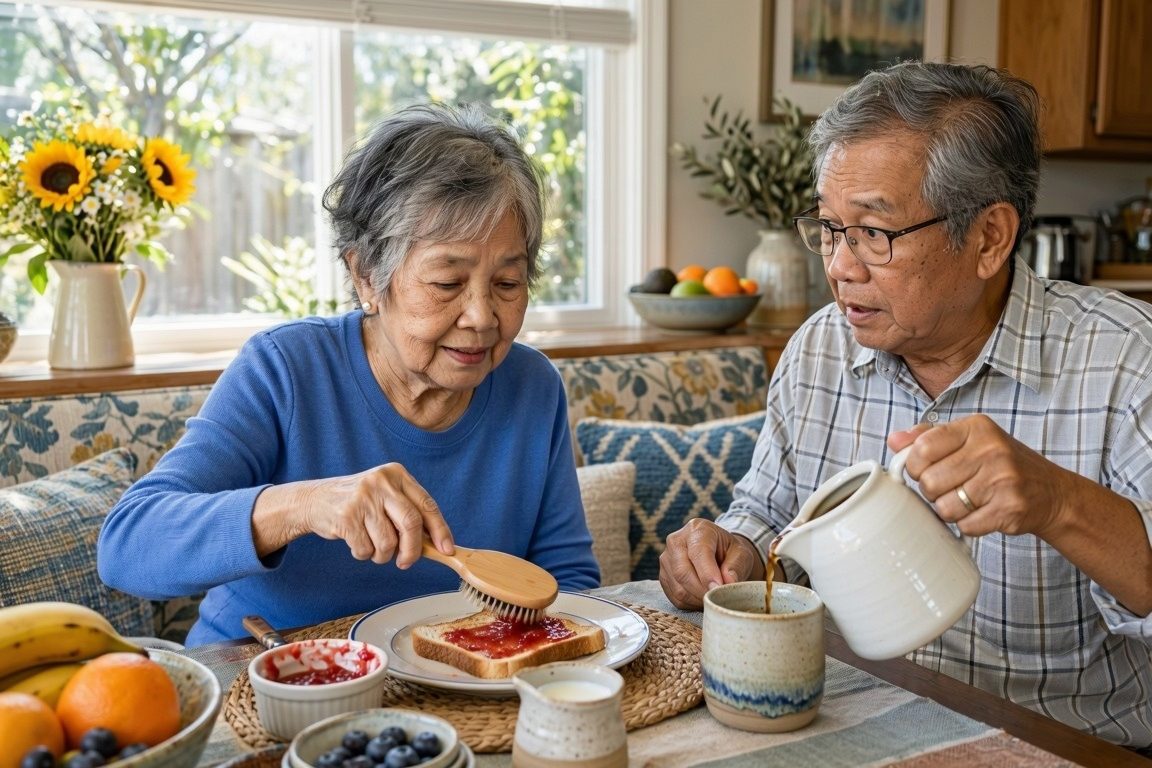
Utilization behavior is the compulsive, automatic use of objects that are within reach, regardless of the situation or context. Your loved one loses their ability to stop themselves from acting when an object is presented, it is almost like a magnet drawing them in. They might pick up a fork and start running it through their hair, or see a bottle of pills and take them even if they already had their dose for the day. This is not defiance or confusion about the object's purpose; it is a neurological symptom where the brain's 'brake pedal' fails.
Why Does It Happen in Dementia?
The brain regions responsible for inhibition, particularly the frontal lobes , are damaged in many types of dementia, including Alzheimer's, frontotemporal, and Lewy body dementia. Normally, when you see an object, your brain automatically considers whether using it is appropriate for the current situation. In utilization behavior, that check never happens. The person sees the object, and the brain immediately triggers the action without filtering. This is why it is sometimes called 'magnetic apraxia' , the object seems to pull them toward it.
What Makes It Worse?
Certain factors can amplify utilization behavior. Alcohol exposure can make it worse because it further depresses the brain's inhibitory centers. Some medications, particularly those used for Parkinson's disease that increase dopamine, can also worsen compulsive behaviors. If your loved one already has this symptom, it is important to discuss any alcohol use or medication changes with their clinician. The environment itself is a major trigger, the more objects within sight and reach, the more opportunities for the behavior to occur.
Practical tools
6
Environmental Control Checklist
Create a daily checklist:
Safe Fidget Basket
Fill a small basket or bin with safe, textured objects:
Place this basket in their favorite chair or on a low table. When you see them reaching for something unsafe, gently guide their hand to the basket and say, 'Here, feel this soft cloth.'
Visual Barrier Curtain or Screen
Use a tension rod and a lightweight curtain to block the view of a kitchen counter or a bathroom vanity. Out of sight reduces the magnetic pull. You can also use a room divider or a large piece of furniture to block access to areas with many objects.
Medication Lock Box
Purchase a lockable medication box or a small safe. Keep all daily and PRN medications inside. Only take out one dose at a time, and immediately lock the box again. This prevents accidental double-dosing or misuse.
Redirection Phrases Card
Write down 3-4 simple phrases on an index card and keep it in your pocket: 'Let me take that, and here is something soft for your hands.' 'Oh, look at this picture, do you see the bird?' 'Let's go for a walk and see the garden.' 'Here, help me fold this towel.' Practice these phrases so they come naturally in the moment.
Safe Dining Setup
At meals, use only one utensil at a time. Pre-cut food so a knife is unnecessary. Remove salt and pepper shakers, napkin holders, and condiments from the table. Serve food in a bowl rather than a plate to reduce the number of items within reach. If they pick up the bowl, gently guide their hand back to the spoon.
Different situations
In early-stage dementia (mild cognitive impairment)
Utilization behavior may be subtle and infrequent. Focus on observation and environmental tweaks. Avoid over-restricting their independence, instead, keep dangerous items out of sight but allow them to handle safe objects like books or magazines. Discuss the behavior with their clinician early to rule out medication side effects.
In late-stage dementia (severe cognitive decline)
The behavior may become more frequent and intense. Use constant supervision and a highly controlled environment. Consider using a medical alert system if they might ingest something dangerous. Work with an occupational therapist to create a safe, low-stimulation living space. You may need to remove all objects from their immediate reach except for a single safe item.
For frontotemporal dementia (FTD)
Utilization behavior is more common in FTD because the frontal lobes are heavily affected. The behavior may be more compulsive and harder to redirect. Be extra vigilant about removing all hazardous items. Consider using a locked cabinet for everything from food to toiletries. The person may also show other disinhibited behaviors, so coordinate care with a neurologist who specializes in FTD.
For Lewy body dementia (LBD)
In LBD, utilization behavior can fluctuate with alertness and may be worse during periods of confusion or after sleep. Be aware that some Parkinson's medications can worsen compulsive behaviors. Discuss any medication changes with the clinician. Also, LBD patients are sensitive to antipsychotics, so never use them for behavior control without a doctor's guidance.
For a spouse caregiver vs. an adult child caregiver
Spouse caregivers may feel more personally responsible or embarrassed by the behavior in public. Remind yourself that this is a brain symptom, not a reflection on your care. Adult children may find it easier to implement environmental changes (like locks) without emotional resistance. Both roles benefit from joining a support group to share strategies and reduce isolation.
For the doctor
5
- Ask the doctor: Could my loved one's utilization behavior be worsened by any current medications, especially those for Parkinson's or other dopamine-related conditions?
- Ask the doctor: Is there a possibility of an underlying infection (like a UTI) or pain that is making this behavior more frequent?
- Ask the doctor: Are there any safe medications that might help reduce the compulsive urge, or should we focus solely on environmental management?
- Ask the doctor: If the behavior leads to ingestion of a non-food item, what are the first steps I should take (e.g., call poison control, go to ER)?
- Ask the doctor: Should we consider a referral to an occupational therapist for a home safety evaluation?