Step by step
What not to do
- Do not wait for a crisis like a fall or a wandering episode to start exploring options. Begin touring facilities and sorting out finances early, even if you are not sure you will need them.
- Do not sacrifice your own sleep, medical appointments, or mental health in an attempt to be a 'super caregiver.' Burnout makes nursing home placement more likely, and admitting you need help is a sign of wisdom, not weakness.
- Do not assume that nursing home placement hastens death. Research shows mortality rates are nearly identical for people with dementia in nursing homes versus at home, the disease itself is the deciding factor, not the setting.
- Do not postpone conversations about end-of-life wishes. The earlier you discuss these with your loved one while they can still express preferences, the easier it becomes to honor them as the disease progresses.
- Do not choose a facility without asking about dementia-specific staff training. Ask directly: 'What dementia training do your nurses and aides receive?' before making a decision.
- Do not overlook hospice eligibility in late-stage dementia. If your loved one has severe functional decline, ask the doctor for a hospice evaluation, hospice can provide extra nursing visits, supplies, and emotional support.
Key points
- The strongest predictors of nursing home placement are caregiver strain, the person’s physical decline (falls, incontinence, swallowing problems), and dangerous behaviors (wandering, aggression).
- Start exploring options early, before a crisis, to avoid rushed decisions and limited choices.
- Placement does not mean the person will die sooner; death rates are similar for those at home and in nursing homes when dementia is the primary condition.
- Prioritize your own health as a caregiver; burnout is a major predictor of placement.
- For Lewy body dementia, placement often happens much sooner (within 2 years) due to complex symptoms.
- Financial and legal planning (especially for Medicaid) should begin months before you think you need it.
Videos
 Decisions About Putting A Parent Into a Nursing HomeThis video directly addresses the emotional and practical factors that tip the scale toward nursing home placement, including caregiver burnout and the person's care needs.
 Is It Time to Move Mom/Dad to Assisted Living? 4 Questions Families Can Answer TodayProvides a simple framework for evaluating whether it is time to transition, which aligns with the predictors discussed in this article.
 How Long Does Someone With Dementia Live?Helps caregivers understand life expectancy, which is a key factor in timing placement and hospice decisions.
 Little Known Nursing Home LawExplains legal rights and protections that families should know when considering or already using a nursing home.
2 more videos


Background
Why Nursing Home Placement Happens: The Core Predictors
Deciding to move a loved one with dementia into a nursing home is rarely a single event but rather the result of several accumulating pressures. Research consistently identifies three broad categories of predictors: the caregiver’s own health and capacity, the person’s physical and cognitive decline, and the presence of difficult behaviors. For example, studies show that when a caregiver experiences high burden, depressive symptoms, or has limited support from other family members, the risk of nursing home admission increases significantly. This is not about failing as a caregiver, it is about recognizing that the demands of care have outstripped what one person can safely manage.
The Person’s Physical and Cognitive Changes as Predictors
On the person’s side, specific changes strongly predict placement. Difficulty walking, getting out of bed, eating, or swallowing, along with incontinence and the risk of bedsores, are major flags. Falls, which can lead to hospital visits and further decline, are another critical predictor. Additionally, the stage of dementia matters: people diagnosed at a younger age (before 65) often have a longer disease course, while those diagnosed later may have fewer years ahead, but both groups face increasing care needs. For those with Lewy body dementia, the time to nursing home placement can be much shorter, sometimes only two years after diagnosis, due to complex symptoms like hallucinations and motor issues.
Behavioral and Safety Concerns as Predictors
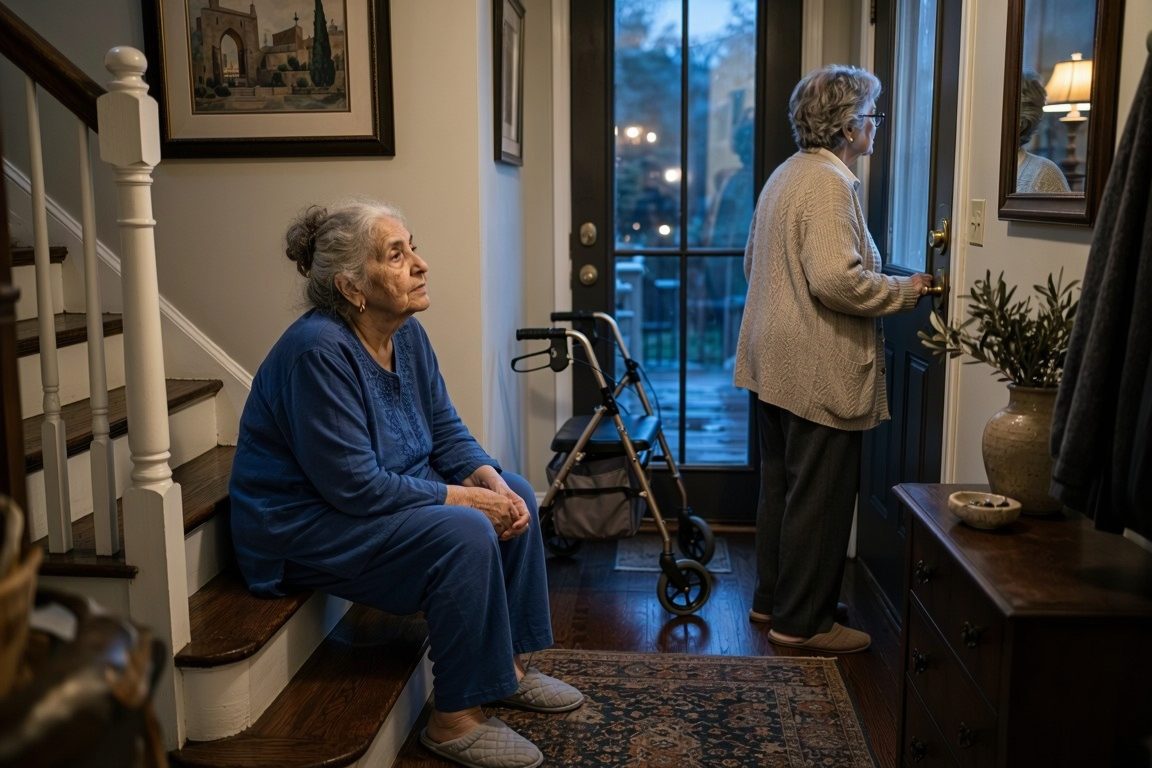
Challenging behaviors are among the most powerful predictors. Wandering, exit-seeking, aggression (such as hitting or choking), and paranoia can make home care unsafe for both the person and the caregiver. The stress of a loved one wandering off for hours or days, or becoming physically aggressive, often becomes the tipping point. These behaviors are not the person’s fault, they stem from brain changes, but they do require a level of supervision and security that many home environments cannot provide. As one expert notes, it is wise to begin exploring options early, before a crisis forces a rushed decision.
Practical tools
6
Caregiver Stress Self-Checklist
Use a weekly checklist to rate
If scores worsen for two consecutive weeks, it is a red flag to seek respite or begin placement conversations.
Behavior and Safety Incident Log
Keep a small notebook or phone note for each wandering episode, aggressive outburst, or fall. Record the date, time, possible trigger, and your response. This log helps doctors track progression and strengthens the case for higher-level care when needed.
Facility Tour Question List
Bring these questions to every tour:
Three-Month Financial Planning Rule
Begin Medicaid or long-term care insurance paperwork at least three months before you anticipate needing placement. Your local Area Agency on Aging offers free counseling that can prevent last-minute panic.
Family Meeting Script
Open with: 'I am finding it harder to keep Dad safe at home. I need your help to think about what is best for him and for me. Can we talk about options like home care or a nursing home?' This framing reduces blame and invites collaboration.
Hospice Eligibility Check
If your loved one can no longer walk, speak meaningfully, or eat without assistance, ask the doctor: 'Does my loved one meet hospice criteria? Can we get a hospice evaluation?' Hospice adds nursing visits, supplies, and emotional support in any setting.
Different situations
Lewy body dementia
Placement often occurs much sooner, sometimes within two years of diagnosis, due to complex symptoms like hallucinations, motor problems, and sleep disturbances. Prioritize facilities with experience in Lewy body care and ask about their approach to managing visual hallucinations and Parkinson-like symptoms.
Late-stage dementia (FAST stage 7)
Focus on comfort and hospice eligibility. The person may be bedbound, unable to eat, and at high risk for infections. Discuss palliative care and hospice with the doctor. The goal shifts from preventing decline to ensuring dignity and pain management.
Spouse vs. adult child caregiver
Spouses often delay placement longer due to emotional bonds and a sense of duty, but they also face higher health risks. Adult children may feel guilt about ‘abandoning’ a parent. Both groups need to recognize that placement can be an act of love, not failure. Spouses should prioritize their own health checkups.
Already in a facility
Focus on adjustment and advocacy. Visit often, bring familiar objects, and build a relationship with staff. Monitor for signs of depression or withdrawal. If the person seems distressed, request a care plan meeting to address their needs.
Medicaid planning
Start the application process early, it can take months. Consult an elder law attorney to protect assets while qualifying. Do not assume you will not qualify; many middle-class families do. Also, ask facilities if they accept Medicaid, as not all do.
For the doctor
4
- Ask the doctor: ‘Based on my loved one’s current stage and symptoms, what is your estimate of their life expectancy? This helps with planning for placement and hospice.’
- Discuss: ‘Are there medications or therapies that could reduce wandering or aggression? I want to know if these are safe for my loved one.’
- Inquire: ‘My loved one has had a fall. Should we get a home safety evaluation or consider a higher level of care?’
- Ask: ‘Does my loved one meet the criteria for hospice? If so, how do we start that process?’