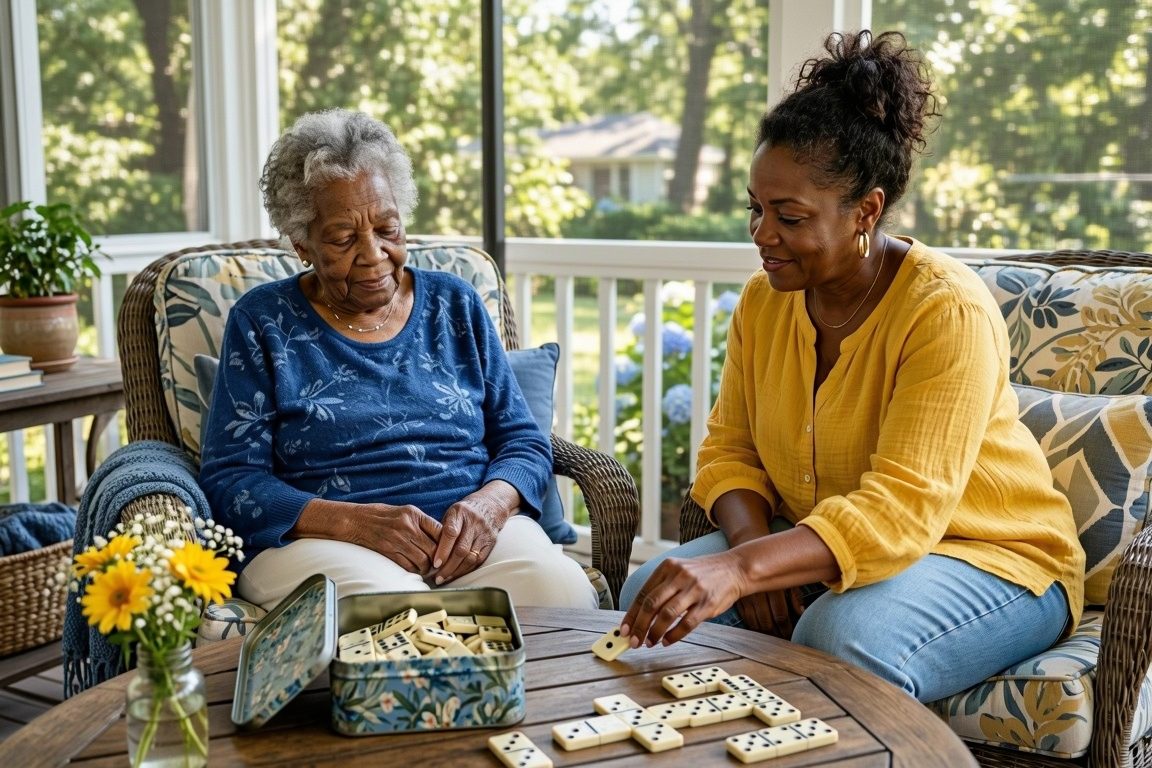
Step by step
What not to do
- Don't assume apathy is depression and start antidepressants without a medical evaluation. Apathy and depression look similar but call for different responses.
- Don't pressure, nag, or argue. 'Come on, you used to love this!' raises anxiety and deepens resistance. Offer a no-pressure invitation instead.
- Don't fill every waking moment with activity. Constant stimulation exhausts them and deepens withdrawal. Stop well before distress sets in.
- Don't take the withdrawal personally. It is a symptom of brain disease, not a reflection of your love or care. A caregiver support group can help you carry the grief.
- Don't let activities stop completely. Total inactivity worsens apathy and leads to muscle weakness, falls, and pressure sores. Even five minutes of gentle sensory contact is meaningful.
Key points
- Apathy is a symptom of Alzheimer’s, not laziness or depression. It stems from brain changes that reduce motivation.
- Distinguish apathy from depression: apathy lacks sadness or guilt. If you see emotional distress, discuss depression with the doctor.
- Use gentle invitations, not commands or questions. Lower your expectations and focus on connection, not task completion.
- Create a calm, predictable environment with short, sensory-based activities (music, touch, familiar objects).
- Keep a log of behaviors and share it with the doctor to rule out medical causes and guide treatment.
- Take care of yourself: apathy can feel isolating. Join a caregiver support group and seek respite to prevent burnout.
Videos
 10 Warning Signs of Early Alzheimer's Disease – HOP ML PodcastHelps you recognize early signs, which can inform your understanding of how apathy may emerge as the disease progresses.
 Caring for Someone with Alzheimer's - Family Caregiver Webinar SeriesOffers general caregiving strategies that apply to managing apathy, including communication and activity planning.
 What Are The Stages Of Alzheimer's?Explains the progression of Alzheimer’s, helping you understand why apathy becomes more common in moderate to severe stages.
 5 Tips for Managing Medications in Alzheimer’s DiseaseProvides practical advice on medication management, which is important if the doctor prescribes drugs to address apathy.

Background
What Is Apathy in Alzheimer’s?
Apathy is one of the most common behavioral changes in moderate to severe Alzheimer’s disease. It shows up as a persistent lack of interest, initiative, or emotional response, not because the person is sad or angry, but because the brain areas that drive motivation and goal-directed behavior are damaged. Unlike depression, which often includes sadness, guilt, or hopelessness, apathy is a flat, ‘don’t care’ state. The person may sit for hours, stop starting conversations, lose interest in hobbies, and seem indifferent to things that once mattered. This is not a choice; it is a symptom of the disease.
Why It Happens and How to Tell It Apart from Depression
In Alzheimer’s, apathy arises from changes in the frontal lobes and deeper brain circuits that control motivation and reward. As the disease progresses, these areas become less active, making it harder for the person to initiate or sustain activities. Distinguishing apathy from depression is critical because the approaches differ. Depression often includes crying, expressions of worthlessness, sleep or appetite changes, and a sad mood. Apathy lacks that emotional distress, the person simply does not seem to care. If you suspect depression, discuss it with the doctor, as it may respond to medication or therapy. For apathy, the main tools are environmental and behavioral, not pharmacological.
The Caregiver’s Emotional Challenge
Watching a loved one become apathetic can feel deeply painful and frustrating. You may feel rejected, lonely, or guilty for not ‘trying hard enough.’ It is important to remember that apathy is a symptom, not a reflection of your relationship or care. Your role shifts from expecting reciprocal engagement to creating gentle invitations that respect the person’s current abilities. Accepting this shift can reduce your stress and help you approach each interaction with patience and creativity.
Practical tools
4
Gentle Invitation Script
Three go-to phrases: 'Let's…' (e.g., 'Let's look at this photo'), 'I could use your help with…' (e.g., folding napkins), and 'Would you hold this for me?' Use a warm, slow tone and wait at least 10 seconds for a response.
Apathy Log Template
A simple daily grid with columns for Date/Time, What they were doing, What you tried, Their response, and Notes. Keep it for 3–5 days, then bring it to the doctor to help rule out pain, infection, medication effects, or depression.
Engagement Menu
A short, rotating list of activities needing only 5–10 minutes: sensory items (soft scarf, smooth stone, lavender sachet, music box, pet's photo) and muscle-memory tasks from their past (holding a trowel for a gardener, stirring dry ingredients for a cook). Offer one at a time and watch for any sign of response.
Routine Visual Schedule
A picture strip using real photos for the day's anchors, breakfast, walk, music time, lunch, rest. Post it at eye level and point to it gently. Show only 2–3 steps at a time in moderate to severe stages.
Different situations
Moderate vs. severe stage
In moderate Alzheimer’s, the person may still follow simple instructions and participate in short conversations. Use more verbal prompts and offer choices between two options (e.g., ‘Would you like to listen to music or look at photos?’). In severe stages, focus entirely on sensory and physical comfort: gentle touch, familiar smells, soft music. Expect no verbal response; look for subtle signs like a change in breathing or a slight turn of the head.
Spouse vs. adult child caregiver
A spouse may feel a deeper sense of loss and loneliness, as the relationship has changed dramatically. It can help to join a support group for spouses of people with dementia. An adult child may struggle with guilt or role reversal. Remind yourself that you are doing your best. Both roles benefit from respite care, ask other family members or hire a trained aide for a few hours a week to recharge.
Living at home vs. in a facility
At home, you have more control over the environment, reduce clutter, control noise, and set routines. In a facility, work with staff to ensure the person’s room is calm and familiar (bring personal items). Ask staff to include the person in group activities that match their ability, but also request quiet time if the person becomes overstimulated. Visit during activity times to model gentle engagement for staff.
Co-occurring conditions (e.g., Parkinson’s, Lewy body dementia)
Apathy may be even more pronounced in Lewy body dementia or Parkinson’s disease dementia. These conditions also affect movement and alertness. Adjust activities to account for physical limitations (e.g., seated exercises, hand-over-hand activities). Be aware that these individuals may be more sensitive to medications. Always discuss any new symptom with a neurologist familiar with these conditions.
For the doctor
5
- If the person shows sudden or severe apathy, especially with confusion, fever, or a fall, seek immediate medical evaluation to rule out infection (like a UTI) or delirium.
- Ask the doctor whether current medications (including over-the-counter drugs) could be contributing to apathy. Some sedatives, antihistamines, and anticholinergics can worsen motivation.
- Discuss whether a trial of a cholinesterase inhibitor (donepezil, rivastigmine) or memantine is appropriate. These may provide modest improvement in apathy for some people, but benefits vary.
- If you suspect depression (sadness, crying, sleep/appetite changes), ask about a referral to a geriatric psychiatrist. Do not start or stop antidepressants without medical guidance.
- Ask about non-drug interventions like structured activity programs or occupational therapy. Some clinics offer ‘cognitive stimulation therapy’ that can help with apathy.