
Step by step
What not to do
- Do not argue or try to reason. Avoid saying things like 'You almost hit that car' or 'You got lost last week.' The person's brain cannot process this feedback, and it will only make them defensive and more determined to prove they can drive.Instead, use a white lie or a gentle redirection.
- Do not hide the keys in a place where the person might find them and then feel betrayed. If they discover the keys in a drawer, they may become suspicious and angry. Better to remove them entirely from the home or use a decoy set that looks real but doesn't work.
- Do not take the keys in a moment of anger or frustration. If you are upset, your tone and body language will escalate the situation. Wait until you are calm. As one expert advises, 'be the calmest person in the room.' Your calmness can help de-escalate their anxiety.
- Do not leave the car keys visible on a hook, counter, or in a purse. Visual cues trigger the desire to drive. If the person sees the keys, their brain will automatically think 'I need to go somewhere.' Keep keys in a locked drawer, a safe, or on your person at all times.
- Do not physically restrain or grab the person if they try to get into the car. This can cause a catastrophic reaction, including hitting, kicking, or screaming.Instead, step back, use a calm voice, and redirect: 'Oh, I forgot my purse, let's go back inside for a minute.' Then remove the car from the situation.
- Do not make the change permanent in one conversation. The person may need to hear the story multiple times. Be patient. Each time, use the same gentle excuse. Over days or weeks, they may forget they ever drove, especially if the car is out of sight and they are engaged in other activities.
Key points
- The goal is to prevent driving without triggering a fight. Use white lies, decoy keys, and environmental changes rather than confrontation.
- Out of sight, out of mind is your most powerful tool. Hide the car, hide the keys, and remove visual triggers like a purse or wallet near the door.
- Always redirect to a pleasant activity immediately after taking the keys or moving the car. A prepared activity kit can save the moment.
- Involve a neutral authority (doctor, DMV) if the person is resistant. This takes the blame off you and puts it on a professional.
- Be patient and consistent. The person may forget and ask again. Repeat the same gentle story each time without adding new details.
- Your calmness is contagious. If you stay relaxed and confident, the person is more likely to accept the change without distress.
Videos
 Dementia Expert Live On Tik Tok!This video offers real-time, practical advice from a dementia expert on handling difficult moments like taking the keys, with emphasis on using diversion and staying calm.
 When Should a Person with Dementia Stop DRIVING? ~ ABCs of Dementia FAQsThis video covers the signs that it's time to stop driving and provides a gentle framework for having the conversation, including the 'temporary' story approach.
 Beverley Glazer Founder of Reinvent Impossible Inc. & Host of 'Aging with Purpose & Passion' PodcastBeverley shares a personal perspective on the emotional impact of losing driving privileges and offers strategies for maintaining dignity during the transition.
 Dementia Advice On YouTube & TikTok!This video compiles short, actionable tips from various experts, including the 'kill switch' idea and the importance of not leaving keys visible.
2 more videos
 Dementia and Driving: The Tough Decision to Give Up the Keys ~ How and When to Have the TalkThis video walks through the entire process of having 'the talk' about driving, with specific phrases to use and common pitfalls to avoid.
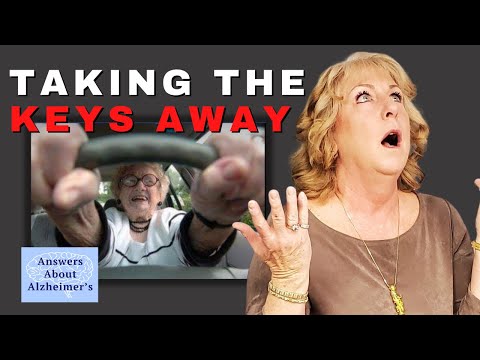 Dementia and Driving IIA follow-up video that dives deeper into the practical steps of hiding the car, using decoy keys, and managing the person's emotional response.
Background
Why This Is So Hard: The Blow to Independence
For most people, driving is more than transportation, it's a symbol of freedom, adulthood, and self-sufficiency. When you try to take that away, you're not just removing a set of keys; you're threatening a core part of who they are. As one expert put it, 'not driving anymore, that's a huge blow to their independence.' Imagine if someone told you that you could no longer drive, you would fight it too. This is why a direct confrontation often backfires: the person's brain, already struggling with changes, goes into fight-or-flight mode. They may argue, accuse you of controlling them, or even become physically agitated because they feel their very identity is under attack.
The Brain's Reaction: Why Logic Doesn't Work
In dementia, the part of the brain that handles reasoning, insight, and impulse control is damaged. So even if you present clear evidence, like a fender bender or getting lost, the person may not be able to process it. They may genuinely believe they are a good driver, because their brain is filling in the gaps with a story that protects their sense of self. This is not stubbornness; it's a symptom. Trying to 'prove' they are unsafe will likely escalate distress. Instead, you need to work around the logical brain and appeal to emotion, habit, and the need for connection. The goal is to prevent them from driving without making them feel like a failure or a prisoner.
The Power of Out of Sight, Out of Mind
One of the most effective strategies is to simply remove the visual triggers that prompt the desire to drive. If the car keys are on a hook by the door, the brain sees them and thinks, 'I need to go somewhere.' If the car is parked in the driveway, the person may fixate on it. By hiding the keys, moving the car out of sight (even parking it at a neighbor's house), and removing the purse or wallet that might contain keys, you can dramatically reduce the number of times the person even thinks about driving. This is not deception, it's environmental management. As one caregiver group shared, 'out of sight, out of mind' is a powerful principle. You are not taking away freedom; you are removing a trigger that causes anxiety and confusion.
Practical tools
6
The Decoy Key Set
Get an old set of keys that look similar to the real car keys (or a key fob with a dead battery). Place them in the usual spot, on the hook, in the purse, on the dresser. When the person picks them up, they feel they have 'their' keys. The car won't start, but they don't know that until they try. This can prevent many arguments. Replace the real keys with the decoy set when the person is not looking.
The 'VIP Chauffeur' Script
When you need to drive, use this exact approach: Grab the keys confidently, walk to the driver's side, and say with a smile, 'I'm your personal chauffeur today! You're the VIP, just sit back and enjoy the ride.' Or, 'I love driving with you. Let me take the wheel so I can focus on the road.' This frames you as the helper, not the enforcer. Do not mention their driving ability at all.
The 'Car in the Shop' Story
Have a simple, repeatable story ready. For example: 'Your car is at the mechanic, they're fixing a recall on the brakes. It'll be a few days. In the meantime, I'll drive you anywhere you need to go.' Write this story down and keep it consistent. If the person forgets and asks again, repeat the same story calmly. Do not add new details that might confuse them.
The Kill Switch or Battery Disconnect
Have a mechanic install a hidden kill switch that disconnects the battery or ignition. The car looks normal, but it won't start. Alternatively, simply remove the battery cable or the ignition fuse. This is a physical barrier that doesn't require a conversation. It's especially useful if the person is determined and might try to drive with a spare key.
The 'Doctor's Orders' Letter
Ask the person's primary care physician or neurologist to write a letter stating that the person should not drive due to medical reasons. Show this letter to the person as a neutral authority: 'The doctor said for your safety, we need to stop driving for now. It's not my decision, it's the doctor's.' This can reduce the personal conflict. You can also send the letter to the DMV to revoke the license.
The Activity Diversion Kit
Prepare a small bag or box of activities that you can pull out immediately after taking the keys. Include things they love:
The moment you take the keys or move the car, say, 'Hey, I just made some tea, let's look at these photos.' The diversion must be immediate and engaging.
Different situations
Early-stage Alzheimer's (still aware and independent)
Use the 'temporary' story approach more often. The person may still have insight, so a direct but gentle conversation can work if you validate their feelings first. Say, 'I know this is hard. You've been driving for 50 years. But I'm worried about your safety. Can we try a week where I drive you everywhere, just to see how it feels?' Offer to be their driver for a trial period. If they agree, use that week to show them how much easier it is to be a passenger.
Middle-stage dementia (confused, easily agitated)
Focus on environmental changes: hide the car, use a decoy key set, and remove all visual triggers. Do not try to reason or have a long conversation. Use simple, repetitive stories like 'the car is in the shop.' Be prepared for the person to forget and ask again, just repeat the same story calmly. If they become agitated, redirect immediately to an activity. The kill switch or battery disconnect is very useful at this stage.
Lewy body dementia (visual hallucinations, fluctuating cognition)
Be extra cautious because people with Lewy body dementia may have sudden changes in alertness and may not recognize the car or keys. They may also have visual hallucinations that make driving even more dangerous. Use the 'out of sight, out of mind' strategy aggressively. Do not leave keys visible. If the person is fixated on a car that isn't theirs (e.g., a neighbor's car that looks similar), explain that 'that car belongs to someone else.' Avoid arguing about what they see.
Spouse vs. adult child caregiver
If you are the spouse, you may have more leverage because you have a long history of shared decision-making. Use 'we' language: 'We need to think about our safety together.' If you are an adult child, the person may resent being told what to do by their child. In that case, use the 'doctor's orders' or 'DMV' route to take the blame off you. You can also enlist a neutral third party, like a neighbor or a friend, to help with the conversation.
Person lives in a facility or with a caregiver
If the person is in a facility, the car should be removed from the property entirely. The facility staff can help by not allowing the person access to keys or vehicles. If the person lives with you, you have more control over the environment. In both cases, ensure that spare keys are locked away and that the person cannot access a neighbor's car or a taxi service without supervision.
For the doctor
5
- Ask the doctor: 'At what stage of dementia is it medically unsafe for my loved one to drive? Are there specific tests you can do to assess their driving ability?'
- Ask the doctor: 'Can you write a letter to the DMV recommending a driving test or license revocation? If so, what information do you need from me?'
- Ask the doctor: 'Are there any medications my loved one is taking that could impair their driving, such as sedatives or dizziness-causing drugs? Should we adjust the dosage or timing?'
- Ask the doctor: 'If my loved one continues to insist on driving despite our efforts, what are the legal steps I can take to prevent them from driving? Can you help me report them to the DMV?'
- Ask the doctor: 'Are there any local resources, such as occupational therapy driving assessments, that can provide an official evaluation of their driving safety?'