Step by step
What not to do
- Don't trust the stove or oven to be turned off, even once, forgetting is a symptom of the disease, not a one-time lapse.
- Don't leave loose rugs, runners, or threshold mats anywhere; the shuffling gait of Stage 5 turns every rug into a trip hazard.
- Don't argue with hallucinations or dismiss paranoid fears, validate feelings and redirect to a calming activity.
- Don't leave any medications within reach or expect your loved one to manage their own doses.
- Don't assume they can use the bathroom safely alone, keep the door unlockable from outside and check in regularly.
- Don't try to reason your loved one into following safety rules, adjust the environment instead of relying on their judgment.
Key points
- Stage 5 is a critical safety turning point: the person cannot live alone and needs supervision for cooking, medications, and wandering prevention.
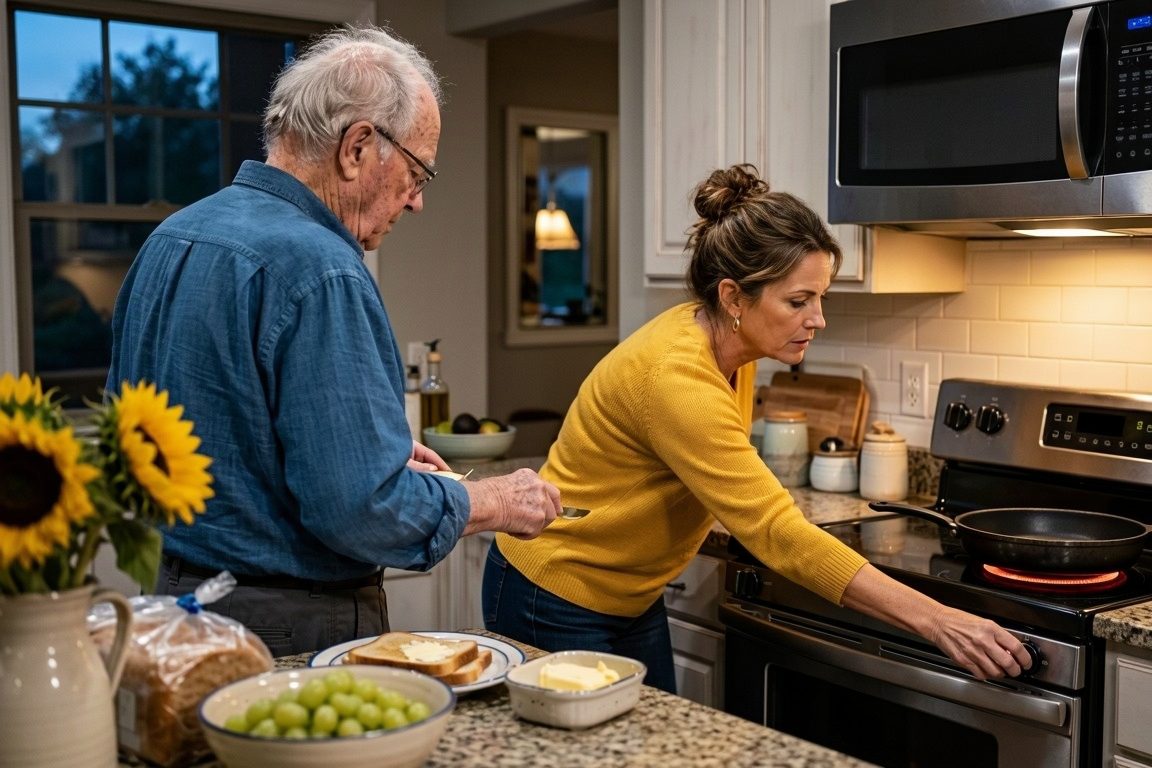
- Kitchen fires are a top risk, use stove knob covers and automatic shut-off devices, and never leave the person alone while cooking.
- Falls are a leading cause of injury, remove all loose rugs, install grab bars, and use non-slip flooring.
- Wandering is common, use door alarms, GPS tracking, and register with the Alzheimer's Association MedicAlert + Safe Return program.
- Medication errors can be deadly, use a locked pill organizer and set alarms; discuss with the clinician if a medication dispenser is needed.
- Do not argue with hallucinations or delusions, validate feelings and redirect to a calming activity.
Videos
 Kitchen Hazards for Those With Alzheimer's DementiaThis video walks through specific kitchen hazards like stoves, microwaves, and slippery floors, and shows practical fixes.
 What Are The Stages Of Alzheimer's?Explains Stage 5 in detail, including the loss of independence and common safety risks, helping you understand what to expect.
 Grandpa, Do you Know who I am? (Dementia Tips)Offers compassionate communication strategies that can help reduce agitation and prevent unsafe behaviors during Stage 5.
Background
What Is Stage 5 and Why Safety Becomes Critical
Stage 5 is often called 'moderately severe cognitive decline' or 'decreased independence.' According to the Alzheimer's Association, during this stage the person begins to forget close friends and family, struggles to learn new skills, and may forget to perform basic tasks like getting dressed or turning off the stove. They can no longer live alone safely because they cannot reliably respond to their environment, for example, knowing what to do if the fire alarm goes off or if they smell smoke. This is the stage where independence becomes harder and the need for supervision grows. The person may still maintain some functionality, such as bathing and toileting independently, but their judgment and memory are deeply compromised.
Why Kitchen Hazards Are a Top Concern
The kitchen is one of the most dangerous rooms in Stage 5. A person with Alzheimer's may start cooking and then simply walk away, forgetting they left a burner on. This is how many fires start. One caregiver described how her mother-in-law left a pot on the stove and walked away, causing a blaze that nearly destroyed the kitchen. The glass turntable in the microwave can also be a hazard if someone tries to heat something in a metal container. Garbage disposals and wet linoleum floors add slip and trip risks. The person may shuffle their feet as they walk, making them more likely to catch a toe on a loose rug or a mat and fall. Removing these hazards is not about taking away independence, it is about preventing a tragedy.
Falls, Wandering, and Medication Risks
Falls are a leading cause of injury in Stage 5. Dementia impairs balance, weakens muscles, and affects vision. The person may shuffle or scuff their feet, making them more likely to trip on loose rugs, cords, or uneven flooring. Wandering is another serious concern, the person may leave the house and become lost, unable to find their way back. They may also forget to take medications or take them incorrectly, leading to dangerous health consequences. According to the Mayo Clinic, falls and medication errors are among the common causes of death in Alzheimer's. The person may also experience hallucinations, delusions, or paranoia, which can lead to confusion and unsafe behaviors, such as trying to 'escape' from imagined threats.
Practical tools
6
Stove knob covers with motion-sensor auto shut-off
Childproof knob covers prevent burner use without you; motion-sensor device automatically turns off burner if no movement is detected for a set time.
Locked timed medication dispenser
A dispenser with a lock and timer that opens only at the correct dose time, often with an audible alarm; keeps medications secure and removes the burden of remembering.
Door and window alarms plus a wearable GPS tracker
Bathroom safety hardware set
installed together to address the most common Stage 5 fall site.
Smart smoke and carbon monoxide detectors
Detectors that send alerts directly to your phone, so you are warned of a forgotten pot or burner even when you are not in the kitchen; test monthly and keep a fire extinguisher within reach.
Personal emergency response pendant with fall detection
A wearable pendant that automatically calls for help if it detects a fall, giving both you and your loved one a way to summon assistance if you cannot be in the same room.
Different situations
If the person has Lewy body dementia (LBD)
LBD often includes more severe hallucinations, delusions, and paranoia, as well as movement problems like stiffness and shuffling. Safety risks are higher for falls and for reacting to imagined threats. Use very soft lighting to reduce shadows that can trigger hallucinations. Avoid arguing about what they see. Discuss with the clinician about medications that may help with hallucinations but be aware that some antipsychotics can worsen movement symptoms.
If the person is in late Stage 5 (approaching Stage 6)
As the person loses more independence, they may need help with toileting, dressing, and eating. Safety risks increase for choking, falls, and infections. Use a bed alarm to prevent nighttime falls. Consider a hospital bed with side rails (with clinician guidance). Puree foods if swallowing becomes difficult. Increase supervision to 24/7.
If you are a spouse caring for the person at home
You may be at risk for caregiver burnout. Safety risks include your own health declining. Use respite care services, adult day programs, or in-home help to give yourself breaks. Join a caregiver support group. Keep a list of emergency contacts for yourself. Consider a medical alert system for yourself as well.
If the person lives in a facility (assisted living or memory care)
The facility should already have safety measures in place, but you should still advocate. Ask about their fall prevention program, wandering prevention (e.g., door alarms, secure exits), and medication management. Visit often and observe for hazards like loose rugs, poor lighting, or unsecured cleaning supplies. Report any concerns to the facility manager immediately.
If the person has other health conditions (e.g., diabetes, heart disease, osteoporosis)
These conditions increase the risk of complications from falls (e.g., fractures) and medication errors. Coordinate with the clinician to simplify medication schedules. Use a pill organizer and a medication log. For diabetes, monitor blood sugar closely and have a plan for hypoglycemia. For osteoporosis, use extra padding on floors and consider a hip protector garment.
For the doctor
8
- Ask the clinician if a medication dispenser with a lock and timer is appropriate for your loved one's medication regimen.
- Discuss whether a bed alarm or bed rails are safe for your loved one, given their fall risk and mobility.
- Ask about the risks and benefits of using a GPS tracking device for wandering, especially if the person is prone to removing it.
- Inquire about any medications that might help with hallucinations or paranoia, and whether they are safe given the person's other health conditions.
- Ask the clinician about a referral to a physical therapist for a home safety evaluation and fall prevention exercises.
- Discuss the person's swallowing ability and whether a speech therapist should evaluate for aspiration risk.
- Ask your doctor: 'Are childproof knob covers on doors safe for my loved one, and when should I stop using them if they cause distress or pose an emergency exit risk?'
- Ask your doctor: 'What is the safest way to manage wandering, should I use door alarms, GPS tracking, or constant supervision, and how do I decide when to switch methods?'