Step by step
What not to do
- Don't wait until you're completely burned out to take a break. By then, it's much harder to recover.Instead, take small breaks regularly, even if it's just five minutes of deep breathing.
- Don't feel guilty for taking time for yourself. Guilt is common, but it's not helpful. Remind yourself that self-care is a responsibility, not a luxury. You deserve care too.
- Don't compare your self-care to others'. What works for someone else may not work for you. Focus on what feels doable and meaningful in your current situation.
- Don't try to do everything at once. Break tasks into small steps and prioritize the most important ones. Trying to do it all leads to overwhelm and burnout.
- Don't neglect your physical health. Skipping meals, not sleeping, and relying on fast food will drain your energy. Even small changes, like eating one healthy meal or going to bed 30 minutes earlier, can help.
- Don't isolate yourself. Reaching out to friends, family, or support groups can reduce feelings of loneliness and provide practical help. You don't have to do this alone.
Key points
- Self-care doesn't have to be time-consuming or expensive. Small, daily acts like deep breathing or a short walk count.
- Guilt is common but unhelpful. Remind yourself that self-care is a responsibility, not a luxury.
- Use respite care, even for short periods, to get a real break. It's okay to ask for help.
- Combine self-care with other tasks to save time, a 'twofer' approach works well.
- Join a support group to connect with others who understand your struggles.
- Forgive yourself when you slip up. You're doing the best you can.
Videos
 Self-Care Hacks Every Caregiver Needs to KnowThis video offers practical, time-saving self-care tips for busy caregivers, including the 'twofer' strategy and how to use small moments for yourself.
 All Home Care Matters & Christina Keys Preview Upcoming New Show, 'Real Talk with Real Caregivers'Christina Keys shares her personal journey of redefining self-care as a caregiver, including the guilt and the need for small, manageable actions.
 The Caregiver's Journal with Lance A. Slatton with Cindy & Christina 'From Caregiver to Podcaster'This conversation explores how caregivers can find time for self-care by combining activities and using respite care.
 'HOW do I Take Care of ME?' SELF CARE 1:1:1 || TOOLS for a Dementia CaregiverA step-by-step guide to creating a simple self-care plan using the 1:1:1 method (one minute, one hour, one day).
2 more videos
 Elizabeth Miller Founder and Owner of Happy Healthy CaregiverElizabeth Miller discusses the importance of self-compassion and how to fit self-care into a busy caregiving schedule.
 27. The Realities of Caregiver Self-Care: Four Essential Tips / Alzheimer’s and Other DementiasThis video provides four essential self-care tips for dementia caregivers, including the importance of setting boundaries and using respite care.
Background
Why Traditional Self-Care Feels Impossible
Many caregivers hear about self-care and picture bubble baths, manicures, or weekend getaways. But when you're in the thick of caregiving, you often have no time, no energy, and no money for those things. You might also feel guilty taking any time for yourself, as if it somehow takes away from your loved one. This guilt is common and can make you push your own needs aside until you're running on empty. The truth is, you can't pour from an empty cup, if you don't care for yourself, you won't be able to care for anyone else.
Redefining Self-Care as 'Life Care'
Instead of thinking of self-care as a luxury, think of it as 'life care', the small, everyday actions that keep you going. This might be a five-minute walk, a deep breath before a tough conversation, or choosing a healthy snack instead of fast food. These tiny acts add up and don't require extra time or money. They are about staying in the present moment instead of worrying about the future or replaying past mistakes. When you redefine self-care this way, it becomes something you can actually do, even on your busiest days.
The Real Cost of Not Taking Care of Yourself
When you neglect your own needs, you risk burnout, depression, and physical illness. Studies show that 50% of dementia caregivers experience depression, and many develop stress-related health problems. If you become ill, who will care for your loved one? Taking care of yourself isn't selfish, it's a responsibility. It helps you stay strong enough to provide the best care possible. Even small acts of self-care can make a big difference in your ability to cope.
Practical tools
6
The 'Twofer' Strategy
Combine self-care with another activity. For example, listen to a podcast while folding laundry, or do gentle stretches while watching TV with your loved one. This makes self-care feel less like an extra task.
The 5-Minute Reset
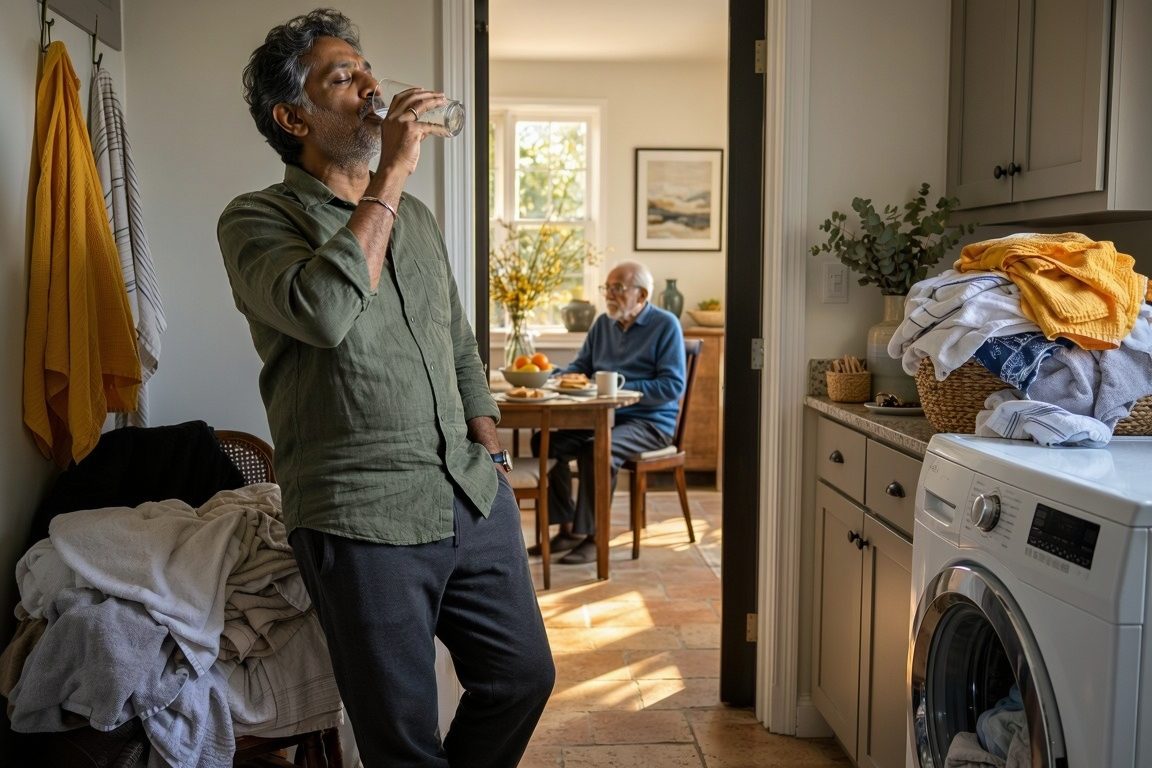
When you feel overwhelmed, stop everything and take five minutes to breathe deeply, step outside, or drink water. Set a timer if needed. This small reset can lower stress and help you refocus.
Respite Care Checklist
Write down local respite options:
Call at least three places to ask about availability and costs. Keep this list handy so you can act quickly when you need a break.
The 'Time Bucket' Exercise
Draw four buckets: time, energy, money, and emotional support. Write down where most of your stress comes from. Then brainstorm one small change for that bucket. For example, if time is the issue, ask a neighbor to pick up groceries. If energy is low, order meal delivery once a week.
Self-Compassion Mantra
When guilt or frustration hits, say to yourself: 'I am doing my best. I am allowed to take care of myself. My needs matter too.' Repeat it until you feel a little lighter.
The 'One Thing' Rule
Each day, choose one small act of self-care and do it. It could be as simple as drinking a cup of tea in silence, taking a short walk, or calling a friend. Mark it off on a calendar to build momentum.
Different situations
If you are caring for someone with Lewy body dementia or Parkinson's disease dementia
These conditions often involve more unpredictable behaviors, hallucinations, and sleep disturbances. Your self-care may need to be even more flexible. Try short, frequent breaks (5-10 minutes) rather than longer ones, and use relaxation techniques like deep breathing or progressive muscle relaxation to manage sudden stress.
If you are an adult child caring for a parent
You may feel additional guilt about taking time away from your own family or career. Set clear boundaries with siblings about sharing caregiving duties. Use the 'twofer' strategy to combine self-care with family time, like going for a walk with your kids while your parent rests.
If you are a spouse caring for a partner
You may feel a deep sense of duty and loss of companionship. It's especially important to maintain your own social connections and hobbies. Schedule regular phone calls with friends or join a support group for spousal caregivers. Consider using adult day services so you can have time alone at home.
If your loved one is in a facility or using Medicaid
Even if your loved one is in a facility, you still have caregiving responsibilities like managing finances, attending appointments, and advocating for care. Use the time when they are in the facility to focus on your own health and activities. Don't feel guilty about taking that time, it's necessary for you to be an effective advocate.
If you are in the late stages of the disease
Your loved one may need more hands-on care, making it harder to find time for yourself. Focus on micro-moments of self-care, like taking three deep breaths while waiting for a medication to kick in, or doing a quick stretch while they nap. Accept help from others, even if it's just for 15 minutes.
For the doctor
4
- If you feel persistently sad, hopeless, or unable to get out of bed, ask your doctor about a depression screening. Many caregivers experience depression, and treatment can help.
- If you have trouble sleeping, talk to your doctor about sleep hygiene strategies or whether a short-term sleep aid might be appropriate.
- If you have physical symptoms like headaches, chest pain, or digestive issues that won't go away, see your doctor to rule out stress-related conditions.
- If you are considering taking a leave from work, discuss your options with your employer and a social worker to understand your rights under the Family and Medical Leave Act (FMLA).