Step by step
What not to do
- Do NOT say, 'But Mom died 10 years ago, remember?' This causes fresh grief and confusion.Instead, validate the feeling and redirect to a memory or activity.
- Do NOT argue or try to prove the person is dead. This leads to agitation and erodes trust.Instead, use a gentle redirect like, 'Let’s look at her photo together.'
- Do NOT ignore the request or change the subject abruptly. This can feel dismissive.Instead, acknowledge the emotion first: 'You miss her, don’t you?'
- Do NOT use logic or reasoning. Dementia impairs the brain’s ability to process new information. Your logical explanation will not stick and may increase frustration.Instead, use emotional connection.
- Do NOT feel guilty about using a 'therapeutic fib.' This is not lying; it is compassionate care. The goal is to reduce distress, not to deceive for personal gain.
- Do NOT try to 'reality orient' them by showing a death certificate or grave. This is traumatic and unnecessary.Instead, focus on comfort in the present moment.
Key points
- The request is about a feeling (safety, love, comfort), not about the literal person. Respond to the feeling, not the fact.
- Never correct or remind them of the death. It causes fresh grief and confusion every time.
- Use a gentle redirect: a photo, a sensory cue, a simple activity, or a comforting phrase.
- Have a 'script card' ready with 2-3 go-to phrases to reduce your stress in the moment.
- Consistency is key: use the same redirects every time, and share them with other caregivers.
- Take care of your own emotions afterward. These interactions are hard, and you are doing your best.
Videos
 Dementia Care Partner Podcast #46: How to Respond When Someone Asks for a Deceased Parent or SpouseThis video directly addresses the topic with expert advice from Teepa Snow’s team, offering practical scripts and the emotional rationale behind them.
 When someone with dementia remembers someone is deadThis video covers the flip side, when your loved one suddenly remembers a death, and gives strategies for that situation, which complements the 'asking for deceased' scenario.
 Dealing with Difficult Behaviors in DementiaThis video provides a broader framework for handling challenging behaviors, including repetitive questions and requests, which is helpful context for this specific topic.
Background
Why They Ask: It’s Not About the Person: It’s About a Need
When someone with dementia asks for a deceased parent or spouse, it’s rarely a simple request to see that person. In their mind, the loved one may still be alive because their memory of the death has faded or never fully formed. As dementia progresses, the brain loses the ability to hold onto recent information, including the fact that someone has died. So when they ask, “Where’s Mom?” or “I want to see my husband,” they are not trying to be difficult, they are expressing a genuine, present-moment need for comfort, connection, or reassurance. The request is a signal that they are feeling something: loneliness, confusion, fear, or a desire for the safety that person once represented. Your job is not to correct their reality but to meet the underlying need.
The Emotional Trap for Caregivers
For you, the caregiver, this moment can be heartbreaking. You know the truth, and you may feel torn between honesty and protecting your loved one from pain. But here’s the key insight from dementia care experts: telling them the person has died often triggers a fresh wave of grief every time, they may not remember the death, so they experience the shock and sorrow anew. This can lead to agitation, crying, or a downward spiral that lasts for hours. On the other hand, lying outright can feel wrong, but in dementia care, we use a technique called “therapeutic fibbing” or “compassionate communication.” The goal is not to deceive but to redirect their focus to something that brings comfort. You are not betraying the truth; you are choosing to prioritize their emotional well-being in a moment when the full truth would cause harm.
It’s About the Feeling, Not the Fact
Experts like Vicky from Dementia With Grace emphasize that the request is often less about wanting to see the person and more about the feeling that person represents, safety, love, or familiarity. For example, if your mother asks for her deceased mother, she may be feeling scared or lost. The request is a way of saying, “I need to feel safe.” If your father asks for his deceased wife, he may be feeling lonely or disoriented. By recognizing this, you can respond to the feeling rather than the literal request. You might say something like, “You miss your mom, don’t you? She was so kind. Tell me about her.” This validates the emotion without trying to produce the person. It shifts the conversation from a problem to solve to a memory to share.
Practical tools
6
The 'Photo Redirect' Script
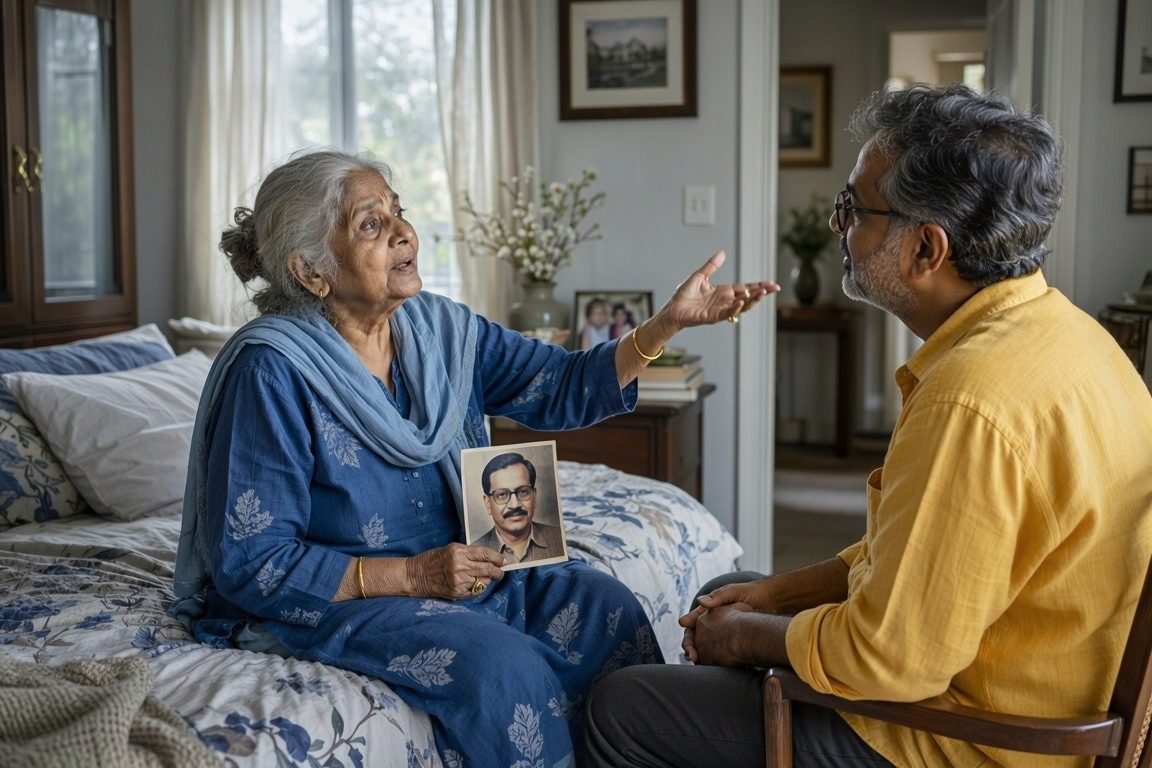
Keep a small photo album or a framed photo of the deceased relative in an easy-to-reach place. When the request comes, say, 'Oh, you want to see your mom? Let’s look at her picture right here. Look how happy she looks. What a beautiful smile.' Then ask a simple question about the photo: 'What color was her favorite dress?' This shifts focus from the impossible request to a shared memory.
The 'Sensory Bridge' Technique
Use a familiar scent, sound, or object associated with the deceased person. For example, if your loved one asks for their deceased spouse, say, 'I remember how he loved the smell of fresh coffee. Let’s make a cup and sit in his chair.' The sensory cue can trigger a comforting memory and reduce the urgency of the request.
The 'Yes, And' Script
When they insist, say, 'Yes, she is wonderful. And right now, she would want you to have a snack. Let’s go to the kitchen and find something good.' This agrees with their reality (she is wonderful) while gently moving them to a new activity. Use a warm, matter-of-fact tone.
The 'Memory Box' Tool
Create a small box or basket with items that remind your loved one of the deceased person:
When the request arises, say, 'Let’s look at your memory box together. I found something special in it.' This gives them a tangible, safe way to connect.
The 'Activity Redirect' Checklist
Have a short list of simple, calming activities ready: folding towels, looking at a bird feeder, sorting socks, or listening to a familiar song. After validating the feeling, say, 'Let’s do this while we talk about her.' The activity occupies their hands and brain, reducing the fixation.
The 'Caregiver Script Card'
Write down 2-3 go-to phrases on an index card and keep it in your pocket or on the fridge. Examples: 'You miss her, don’t you? Tell me about her.' 'She can’t come right now, but let’s look at her photo.' 'Let’s have a cup of tea in her honor.' Having the script ready reduces your stress in the moment.
Different situations
Early-stage dementia (still aware of the death but forgets intermittently)
In early stages, your loved one may remember the death most of the time but have moments of confusion. When they ask, you can gently remind them once: 'I know it’s hard, but Mom passed away a few years ago. I miss her too.' If they become upset, immediately switch to a redirect: 'Let’s look at her photo album together.' Do not repeat the reminder if they ask again in the same conversation.
Middle-stage dementia (frequent confusion about time and people)
At this stage, it is usually best to avoid mentioning the death at all. Use the 'Photo Redirect' or 'Sensory Bridge' tools consistently. The person may not remember the death from one moment to the next, so each request is a fresh opportunity to redirect. Do not try to teach or remind.
Late-stage dementia (limited verbal ability, may use gestures or sounds)
In late stages, the request may come as a repetitive sound, a reaching motion, or calling out a name. Respond with physical comfort: hold their hand, stroke their arm, or sit close. Say, 'I’m here with you. You are safe.' Use a familiar song or a soft object (like a stuffed animal) to soothe. The goal is comfort, not conversation.
Lewy body dementia (hallucinations and fluctuating cognition)
In Lewy body dementia, the person may actually see or hear the deceased person as a hallucination. Do not argue about whether the person is real. Instead, validate the experience: 'I see you’re looking at someone. Is that a friendly presence?' Then redirect to a safe activity. If the hallucination is distressing, consult the clinician about medication adjustments.
Spouse vs. adult child caregiver
If you are the spouse, the request for a deceased parent may feel less personal than if they ask for you (if you are still alive). If they ask for a deceased spouse (you), it can be deeply painful. Use the same techniques but also give yourself permission to step away for a moment if you need to. Say, 'I need a minute,' and take a breath. If you are an adult child, the request for a deceased parent may stir your own grief. Acknowledge your feelings privately, then focus on your loved one’s need.
In a facility or with hired caregivers
Share the specific redirects with staff or hired caregivers. Write them down: 'When Mom asks for her deceased mother, say, “Let’s look at her photo,” and show the album in her room.' Consistency across caregivers reduces confusion. If the facility uses a different approach (like reality orientation), gently advocate for a compassionate redirect instead.
For the doctor
3
- If the request for a deceased person is accompanied by severe agitation, aggression, or persistent crying that does not respond to redirects, discuss with the clinician whether a medication review or a referral to a dementia specialist is needed.
- If the person is having visual or auditory hallucinations of the deceased that are distressing or leading to unsafe behaviors (like trying to leave the house), ask the clinician about non-pharmacological strategies and whether medication adjustments might help.
- If the person is on medications for dementia or other conditions, ask the clinician whether any of them could be contributing to confusion or hallucinations that make these requests more frequent or intense.