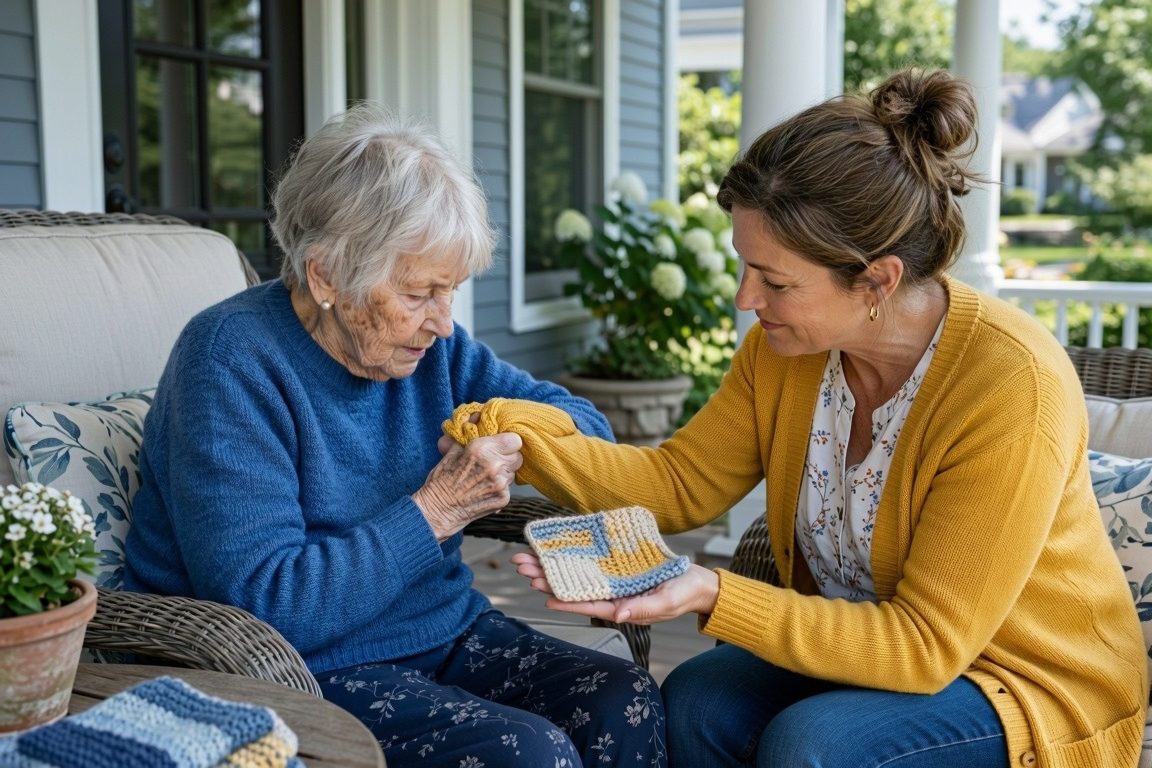
Step by step
What not to do
- Do not yank the item away. This can trigger a 'fight or flight' response, leading to grabbing back, yelling, or hitting.Instead, use the substitution technique described above.
- Do not argue or say 'no, that's mine.' Arguing only escalates the behavior because the person cannot process your perspective.Instead, use a neutral, warm tone and redirect.
- Do not agree with a false belief. If they say 'someone stole my wallet' and they are holding a napkin, do not say 'yes, they stole it.' Instead, say 'I don't see anyone taking it. Let's look together after we finish this.' This avoids reinforcing paranoia.
- Do not leave expensive or sentimental items within easy reach. Prevention is easier than redirection. Keep your phone, wallet, and jewelry in a zippered pocket or a drawer out of sight.
- Do not assume the grab is 'bad behavior.' It is always a form of communication. If you punish or scold, you may miss an underlying need like pain, hunger, or fear.
- Do not use the same substitute every time. Variety keeps the brain engaged. Rotate objects: different textures (soft, bumpy, smooth), colors, and shapes. If they 'mess up' a substitute (e.g., crinkle a magazine), that's okay, it's sensory exploration.
Key points
- Grabbing is a brain-driven impulse, not bad behavior, always look for the unmet need behind it.
- Substitution works better than removal: offer a safe, interesting object before or as you redirect the original item.
- Keep a 'gather basket' of cheap, varied substitutes ready in every room where you spend time.
- Never yank, argue, or punish, this escalates distress. Use a warm tone and a gentle trade.
- If grabbing is new or intense, rule out pain, hunger, thirst, or bathroom needs first.
- Prevention is key: remove tempting items from sight and use environmental setup to reduce triggers.
Videos
 Coping with Amber Distress | Teepa's ClipsTeepa demonstrates how to read amber-state distress and offers redirection techniques that apply directly to grabbing behavior.
 Challenging Behaviors and DementiaThis video explains how all behaviors are communication, reinforcing the need to look for unmet needs behind grabs.
 Dementia: How to Create Moments of Joy for People in an Amber GEMS® StateLearn how to use sensory objects and simple activities to turn a grab into a positive, joyful interaction.
 Paranoia and False Accusations ~ WHY it happens and HOW to Manage ItIf grabbing is tied to paranoia (e.g., 'you stole my wallet'), this video offers redirection strategies that avoid arguing or agreeing.
2 more videos
 How To Tell If A Dementia Patient Is In Pain?Use this to rule out pain as a cause of grabbing, especially if the behavior is new or accompanied by moaning or grimacing.
 DEMENTIA BEHAVIOR of Repeating Phrase OVER and OVER ~ P is for PerseverationGrabbing can be a form of perseveration (repetitive behavior). This video shows how to redirect without frustration.
Background
Why Grabbing Happens in the Amber State
In the amber GEMS state, the brain processes visual information differently. The person is drawn to what they see, a shiny object, a colorful piece of fabric, or even your glasses , because their brain says 'that's interesting, I want it.' They may not recognize that the item belongs to someone else or that grabbing it could cause harm. This is not defiance; it's a primal 'hunt and gather' drive. As Teepa Snow explains, human beings are drawn to what they see or move away from what they don't like, and in dementia, that impulse is magnified because the brain's 'stop and think' filter is weakened.
The Real Need Behind the Grab
Every behavior is a form of communication. A grab might mean 'I'm bored and need something to do with my hands,' 'I'm in pain and I'm trying to get your attention,' or 'I'm anxious and this object feels grounding.' Sometimes it's as simple as 'I see something I like and I want to explore it.' If you immediately take the item away, you may meet resistance, because the person's brain is still locked onto that object. Instead, pause and ask: What is this person trying to accomplish? Are they cold? Hungry? In need of sensory input? Once you identify the unmet need, you can offer a substitute that meets that need safely.
Why Substitution Works Better Than Removal
When you take something away, the person's brain registers a loss, and in dementia, loss can feel like a threat. That can trigger grabbing back, yelling, or even hitting. Substitution works because it honors the impulse: 'You want something in your hands? Here is something safe and interesting.' The key is to offer the substitute before or at the same moment you redirect the original item. You are not saying 'no' , you are saying 'yes, and here's a better option.' This approach reduces agitation and builds trust.
Practical tools
6
The 'Gather Basket'
Keep a small basket or box filled with safe, interesting objects:
When a grab happens, you can quickly pull out a substitute from the basket. This is especially helpful for repetitive grabbing. You can print a free 'gather tool' checklist from dementiawithgrace.com.
The 'Trade and Talk' Script
Memorize this phrase: 'Oh, you found that! Here, let me show you something else.' Then offer the substitute with a gentle smile. If they resist, try: 'I need your help, can you hold this for me?' This turns the interaction into a collaborative request rather than a confrontation.
Sensory Substitutes for Body Grabs
If the person grabs your arm or hair, keep a 'sensory buffer' nearby, a small stuffed animal, a piece of velvet, or a weighted lap pad. Gently place it between your body and their hand, saying 'Feel this , it's so soft.' This can break the grab without pulling away.
The 'Out of Sight, Out of Mind' Setup
Rearrange the environment to reduce grabbing triggers. Put away clutter, keep countertops clear, and store tempting items (like remote controls or phones) in closed cabinets. Use a tablecloth that matches the table to reduce visual contrast. This reduces the number of 'grabbable' objects in their line of sight.
The 'One-Minute Rule' for Precious Items
If they grab something precious (like your phone), give them one minute to hold it while you prepare a substitute. Say 'Let me just grab something for you' and then trade. This avoids the shock of immediate removal and gives you time to find a good substitute.
Pain Check Tool
If grabbing is new or accompanied by moaning, grimacing, or restlessness, use a pain assessment checklist (like the PAINAD scale, available online). Common causes:
Always discuss persistent pain with a clinician.
Different situations
Lewy body dementia
Visual hallucinations are common. The person may grab at things that aren't there (e.g., reaching for a 'bug' on the wall). Do not argue or agree, say 'I don't see it, but let's look over here' and redirect to a real object. Also, movement fluctuations mean they may grab suddenly during a 'good' moment and then drop things when stiffness returns. Keep substitutes lightweight and easy to hold.
Late-stage dementia (blue/sapphire GEMS)
Grabbing may be a reflexive response to touch or pain. The person may not be able to see or understand a substitute. In this case, use gentle touch and a soft cloth to soothe. If they grab your hand, do not pull away, let them hold it, and use your other hand to offer a soft object. Always rule out pain first.
Spouse vs. adult child caregiver
Spouses may feel personally hurt by grabbing ('Why is she taking my things?'). Remind yourself: It's the disease, not her. Adult children may feel frustrated by the repetition. Use the 'gather basket' to keep your patience. Both roles benefit from taking a 5-minute break after a grab episode to reset your own emotions.
In a facility setting
Staff may need to be trained on substitution techniques. Ask the care team to keep a 'grab kit' in the person's room. If the person grabs at staff, provide a substitute (like a soft ball) before the interaction. Advocate for a pain assessment if grabbing is new or frequent.
Medicaid or limited budget
Substitutes don't need to be expensive. Use household items: a clean sock filled with rice (for weight), a plastic container with a lid (to open and close), a magazine with colorful ads. Thrift stores are great for textured scarves or wooden spoons. The key is variety, not cost.
For the doctor
4
- If grabbing is accompanied by new signs of pain (grimacing, moaning, guarding a body part), ask the doctor about a pain assessment and possible medication adjustment.
- If the person grabs at their own body (e.g., scratching or pulling at skin), discuss whether this could be a side effect of medication or a sign of skin irritation or infection.
- If grabbing leads to falls or injury (e.g., pulling you down), ask the occupational therapist about safe transfer techniques and environmental modifications.
- If the person grabs at food or non-food items (pica), discuss with the doctor to rule out nutritional deficiencies or medication side effects.