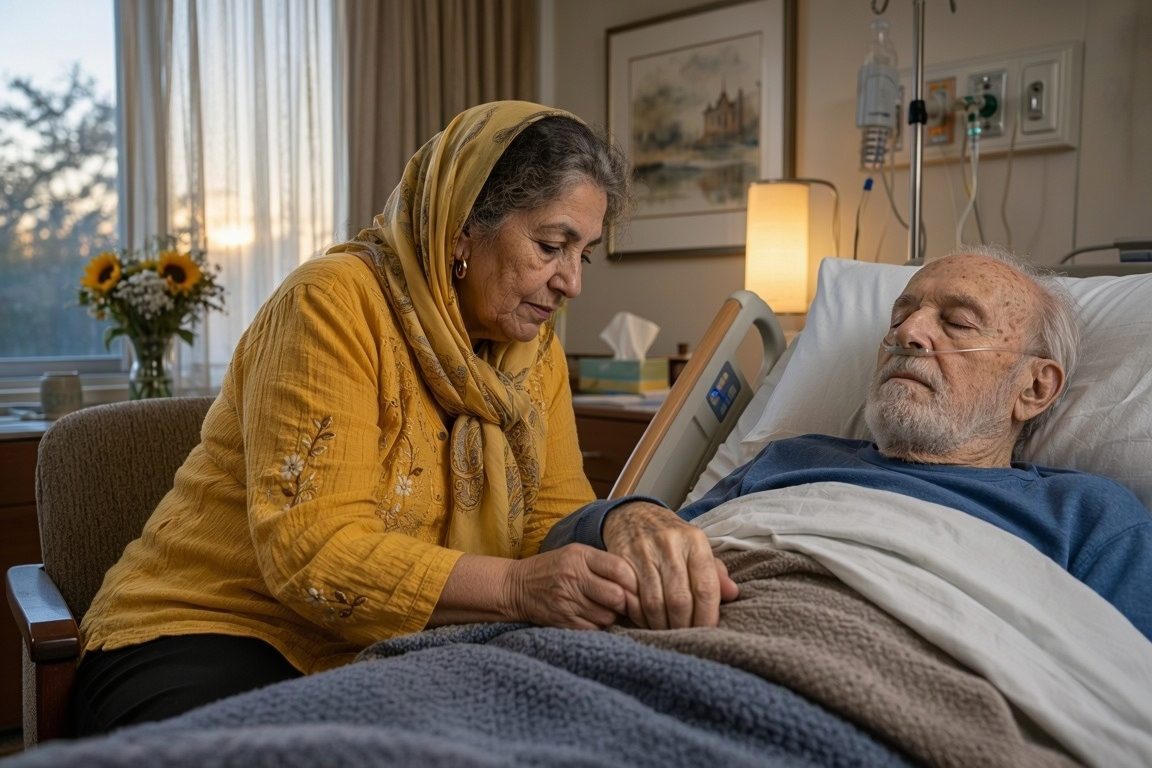
Step by step
What not to do
- Do not speak loudly or use a demanding tone. This can startle the person and cause an intense reflex reaction, like jerking away or grimacing.Instead, use a soft, low voice and speak slowly.
- Do not rush into the room or touch them abruptly. Quick movements can trigger a protective reflex and increase agitation. Always pause at the door, announce yourself, and wait before touching.
- Do not try to wake them up or force them to eat or drink. At this stage, the body is shutting down, and forcing intake can lead to choking or aspiration. Offer small sips of water or ice chips only if they are awake and able to swallow safely.
- Do not assume they cannot hear you. Hearing is often the last sense to go. Avoid having negative conversations in their presence, even if you think they are unaware. Speak as if they can hear every word.
- Do not leave them alone for long periods. Even if they are sleeping, they may wake and feel frightened or confused. Check on them every 15-30 minutes, even if just to sit quietly nearby.
- Do not use harsh or abrasive bedding or clothing. Their skin is fragile and prone to breakdown. Use soft, breathable fabrics and keep the bed free of wrinkles or crumbs.
Key points
- The Pearl state is a natural, peaceful withdrawal at the very end of life. Your loved one is conserving energy, not suffering.
- Approach slowly, use a stable touch, and speak in a soft, low voice. Avoid loud or quick movements.
- Use the PAINAD scale to assess pain regularly, as the person cannot tell you they are hurting.
- Provide mouth care and reposition every two hours to prevent discomfort and pressure sores.
- Hearing is often the last sense to go. Speak as if they can hear you, and avoid negative conversations in their presence.
- Hospice care is essential at this stage. It is covered by Medicare/Medicaid and provides medical, emotional, and spiritual support for both the patient and the family.
Videos
 Ep. 219: Dementia and Palliative CareThis video explains the difference between palliative care and hospice, and when to start having these conversations. It helps you understand the Pearl state in the context of end-of-life planning.
 Time with Teepa - Caregiving to Care Partnering, 22 Years Makes a Difference.Teepa Snow demonstrates the slow, calm approach and the 'hand-under-hand' technique. Seeing it in action makes it easier to replicate at the bedside.
 Teepa Watching Teepa | Teepa's ClipsTeepa reflects on her own teaching and the importance of being present. This video reinforces the mindset shift from 'doing' to 'being' with your loved one in the Pearl state.
 The Baffled Brain: Demystifying Dementia Episode 23 May 1 ,2021This episode covers the gem states in detail, including the Pearl state. It provides a clear visual of how the brain changes and why the person withdraws.
2 more videos
 Quick Tips: When Siblings Don't Agree (Tips for Family Caregivers)Family conflict can arise at end of life. This video offers practical tips for communicating with siblings who may not understand the Pearl state or the need for comfort-focused care.
 4 things to know about the stages of dementiaThis video clarifies common misconceptions about dementia stages, including the fact that the Pearl state is not a 'level' but a state that can come and go. It helps set realistic expectations.
Background
What Is the Pearl State?
The Pearl state is the final gem state in Teepa Snow's Positive Approach to Care framework. At this point, the person with dementia has used up nearly all their physical and neurological resources. They are 'inside the shell of their body,' as Teepa describes it, profoundly internally focused and only dimly aware of the outside world. Their reflexes become intense and protective, a last line of defense. They may be dehydrated and malnourished in a clinical sense, but their body is using everything it has left to sustain life. This is not a state of suffering; it is a natural, peaceful withdrawal.
Why Does It Happen?
The brain has lost its ability to guide and direct the body. The person can no longer process the world around them in a meaningful way. They are like a baby in reverse, sleeping more, unable to hold up their head, needing total care. The Pearl state is the body's way of conserving energy for the final transition. It can come and go, like drifting in and out of sleep. Loud, demanding voices or quick, intrusive touches can startle them into a reactive state, but calm, slow, stable approaches can bring them out of themselves just enough to feel comforted.
How Is It Different From Other Late-Stage States?
Unlike the earlier Ruby state (where the person might still be physically strong but confused and wandering), or the Amber state (where they are anxious and need reassurance), the Pearl state is marked by near-total withdrawal. The person is not agitated or restless; they are quiet, still, and deeply internal. They may still notice voices and gentle touch, but they cannot engage in conversation or purposeful movement. This is the stage where hospice care becomes essential, as the focus shifts entirely to comfort and dignity.
Practical tools
6
PAINAD Scale (Pain Assessment in Advanced Dementia)
A simple, validated tool to assess pain in people who cannot speak. It scores five categories:
Print it out and keep it near the bedside. Use it every time you notice a change in behavior. Available free at answersaboutalz.org under 'Free Resources.'
The 'Slow, Stable Touch' Script
Before entering the room, say softly: 'I'm here. It's [your name]. I'm going to sit with you for a while.' Place one hand on their shoulder or arm and hold it still. Count to ten slowly. Then say: 'You're safe. I'm right here.' Wait. If they seem restless, add: 'I'm going to stay with you until you feel calm.'
Mouth Care Kit
Assemble a small container with:
Use every two hours. Gently swab the inside of the cheeks, gums, and tongue. Apply lip balm to prevent cracking. This simple act provides immense comfort and prevents infection.
Comfort Positioning Checklist
Every two hours, check:
Use a turning sheet if available to reduce friction. Write the time and position on a whiteboard near the bed so all caregivers know when the last turn was.
The 'One Voice' Rule
When multiple people are in the room, designate one person to speak. Multiple voices can be overwhelming. The designated person uses the slow, calm approach. Others remain silent or whisper only if necessary. This reduces sensory overload and keeps the environment peaceful.
Hospice Communication Log
Keep a notebook by the bed. Every shift, note: time of last repositioning, mouth care, any pain behaviors (using PAINAD), food/fluid intake, and any changes in breathing or skin color. Share this log with the hospice nurse during visits. It helps them adjust the care plan quickly.
Different situations
Lewy body dementia (LBD) at end of life
People with LBD may have more pronounced fluctuations in alertness and may experience visual hallucinations even in the Pearl state. Approach even more slowly, and avoid sudden movements that could trigger a startle. Use a nightlight to reduce shadows that might be misinterpreted. Discuss with the hospice team about medications for agitation, as LBD patients can be sensitive to antipsychotics.
Late-stage Alzheimer's with a history of agitation
If the person has a history of hitting or kicking when touched, use the 'hand-under-hand' technique: place your hand under theirs, palm up, and let them hold your hand if they choose. Never grab their hand. If they become agitated, step back, give them space, and speak softly until they calm. Do not try to restrain them.
Adult child caregiver vs. spouse caregiver
Adult children may feel guilty or unsure about their role. Remind yourself that your presence is enough, you don't need to 'fix' anything. Spouses may need extra support to grieve the loss of their partner's personality. Allow yourself to cry or talk to a counselor. Both roles benefit from taking breaks, ask hospice for respite care if needed.
Person is in a skilled nursing facility or memory care
Visit at the same time each day to create a predictable routine. Bring a familiar item, like a favorite blanket or photo. Speak with the nursing staff about the Pearl state and ask them to use the same slow, calm approach. Leave a copy of the PAINAD scale and the comfort positioning checklist at the nurses' station. If the facility allows, bring in a CD player with soft music.
Medicaid or limited insurance coverage
Hospice is covered by Medicare Part A and most Medicaid plans. If you are unsure, call the hospice provider and ask them to verify coverage. They often have social workers who can help with paperwork. If hospice is not yet appropriate, ask about palliative care, which can be provided alongside regular medical treatment and is often covered by insurance.
For the doctor
5
- Ask the hospice nurse about the appropriate use of morphine or other opioids if the person shows signs of pain or shortness of breath. Do not start any pain medication without a doctor's order.
- Discuss the use of anticholinergic medications (like atropine) to reduce secretions (death rattle). These are not always needed and can have side effects.
- If the person has a feeding tube or is receiving IV fluids, ask the doctor about the risks and benefits at this stage. Forcing fluids can cause fluid overload and worsen breathing.
- Ask about the signs of active dying and what to expect in the final 24-48 hours. Knowing what is normal can reduce fear.
- If the person has a history of seizures, ask about a rescue medication (like rectal diazepam) to have on hand in case of a seizure at end of life.