
Step by step
What not to do
- Don't ignore, minimize, or numb your feelings with food, alcohol, or other substances. Telling yourself 'I shouldn't feel this way' or having 'one more glass of wine to get through the evening' only deepens the exhaustion.Instead, acknowledge it: 'I feel angry right now, and that's okay, it doesn't make me a bad caregiver.'
- Don't dismiss early signs, snapping easily, numbness, resentment, going through the motions , as feeling sorry for yourself or a character flaw. Treat them as a warning to act, not something to hide.
- Don't try to be the 'perfect caregiver' who never needs rest or help. That tireless, endlessly patient ideal is a myth that burns people out fast. You are human, you have limits, and meeting your own needs is part of doing this job well.
- Don't power through without breaks or neglect your own body, skipping meals, losing sleep, missing your own medical appointments. Pushing harder when depleted compromises both you and the quality of care. Protect sleep, hydration, and at least one real meal a day.
- Don't compare your inside to someone else's outside. Every dementia situation and every caregiver's reserves are different; believing you're the only one struggling only adds shame.
- Don't pull away from friends, family, or peers because you feel no one understands. Isolation is one of the strongest fuels for compassion fatigue. A single text, 'This is hard today' , can break the loneliness open.
- Don't bottle up anger, guilt, or resentment, and don't wait until you're in crisis to ask for help. Find a safe outlet now and line up support early, while recovery is still easier.
Key points
- Compassion fatigue is deep exhaustion from absorbing your loved one's suffering, distinct from burnout, and it requires its own specific strategies to heal.
- It is not a personal failure; it is a natural response to prolonged exposure to suffering without enough chance to refuel.
- Catch it early by checking in with yourself one to three times a day, using the HALT prompt and naming the exact feeling.
- Create a written protection plan listing your early warning signs, daily refueling activities, and support contacts.
- Practice self-compassion daily: speak to yourself as you would a dear friend, and remember many caregivers feel exactly this way.
- Set clear boundaries around one draining task and ask for specific help, you cannot pour from an empty cup.
- Take a regular Sabbath-style break to recharge and remind yourself you are a whole person beyond your caregiving role.
- Connect with other dementia caregivers to reduce isolation and share practical tips; needing a break is never weakness.
Videos
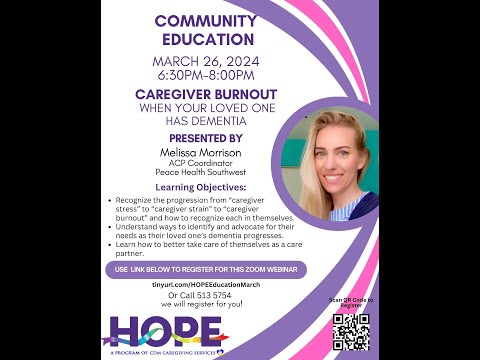 Caregiver Burnout when your Loved One has DementiaThis video explains the difference between ordinary stress and the deeper exhaustion of compassion fatigue, with practical tips for dementia caregivers.
 Dementia Caregiver Compassion Fatigue and ways to copeOffers specific coping strategies for dementia caregivers, including how to recognize early warning signs and build a support network.
 The Dance of Caregiving: Acknowledging I am not Invisible with Dr. Edward Smink (Part 1 of 3)Explores the emotional and spiritual aspects of caregiving, including how to acknowledge your own needs and prevent invisibility in the caregiving role.
 How to Manage Compassion Fatigue in Caregiving | Patricia Smith | TEDxSanJuanIslandA powerful TEDx talk that defines compassion fatigue clearly and offers a roadmap for recovery, including the importance of self-care and community.
5 more videos
 Experiencing Caregiving as Spiritual Practice with Dr. Edward Smink (Mini-Series Part 3 of 3)Reframes caregiving as a spiritual practice, helping you find meaning and connection even in the midst of exhaustion.
 Zinnia Dementia Caregiver Support Webinar: Self-Care Toolkit and Self-CompassionProvides a practical self-care toolkit and teaches the three elements of self-compassion (mindfulness, common humanity, self-kindness) to combat compassion fatigue.
 Conscious Caregiving with L & L 'Compassion, Kindness, & Seniors'This video explores how kindness and compassion can be sustained through conscious caregiving practices, reinforcing the article’s tools for maintaining connection without depleting yourself.
 231. What Is The Burden Of Dementia Caregiving Really? Decision FatigueThis video highlights decision fatigue as a specific form of exhaustion in dementia caregiving, which is a key component of compassion fatigue. It offers strategies to reduce overwhelm.
 4 Things MAY Mean YOU have Caregiver Burnout PLUS 3 Things to Do TODAY to HELP!Lists early warning signs of burnout and gives immediate actions you can take today to start feeling better.
Background
Understanding the situation
Compassion fatigue is not the same as burnout. Burnout usually grows from an environment that doesn't support you, too many tasks, too little help, or feeling that your efforts don't matter. Compassion fatigue is the deep exhaustion that comes from internalizing another person's pain, fear, and suffering, sometimes described as 'contagious' or vicarious trauma. For dementia caregivers it can show up as feeling numb when your loved one is upset, snapping over something tiny (one caregiver realized she had it when she became irrationally furious over a misplaced salt shaker), or sensing you've lost the ability to feel for yourself. Dementia caregivers are especially vulnerable because the disease is long, progressive, and unpredictable: you watch someone slowly lose memory, personality, and independence, you manage agitation or repeated questions, and you do it for years while juggling work, family, and finances. Research finds family caregivers display many of the same markers seen in professional caregivers , depression, anxiety, hopelessness, emotional disengagement, and apathy. Recognizing this early is the first and most powerful step toward protecting yourself.
Practical tools
13
HALT Self-Check
Several times a day, pause and ask 'Am I Hungry, Angry, Lonely, or Tired?' Notice your state without judgment, the answer names the small need to meet before you can keep giving.
Precision Naming (Emotion Label)
Instead of 'I'm tired,' name the specific exhaustion, 'tired of guilt,' 'tired of trying and it not working,' 'tired of bad days.' The precise label points you to a targeted strategy and softens the emotion's grip.
Kristin Neff's Self-Compassion Practice
When overwhelmed or after a mistake, say this three-part phrase aloud: 'This is hard right now. I am not alone in this. May I be kind to myself in this moment.' It blends mindfulness, common humanity, and self-kindness to counter harsh self-judgment.
Protection Plan
Write a short plan listing your early warning signs and three things that genuinely refill you (e.g., a 10-minute walk, a supportive friend, an unrelated book). Schedule at least one into every day as a non-negotiable appointment, as serious as a doctor's visit.
Pause and Breathe Card
Write on an index card: 'They are not doing this on purpose. It's dementia. I can take three breaths.' Keep one in your pocket and one on the fridge. Read it aloud when frustration spikes to interrupt the reactive cycle, especially valuable for Lewy body or frontotemporal dementia behaviors.
One Good Thing Journal
Keep a small notebook by your bed. Each night, write down one small thing you did that made a moment better for your loved one. Over time this record counters the feeling that nothing you do matters.
'What Specifically Wears Me Out' List
Take five minutes to write the specific things that drain you most, e.g., 'feeling guilty when I take a break' or 'trying to reason with Dad when he's confused.' Once named, find a strategy that targets each one directly (for guilt, practice saying, 'I am allowed to rest because I am human, not a machine').
Weekly 'Soul Check' Question
Once a week, ask yourself, 'What is my soul telling me I need right now?' The answer might be rest, connection, silence, or play. Listen to it and give yourself at least a small version of what you need.
5 more tools
Sabbath-Style Rest
Take a full or half-day off every week (at minimum one hour) completely away from all caregiving, worship, nap, hike, anything unrelated to dementia. Use it to refuel, not to run errands; it reinforces your identity beyond the caregiver role.
Respite Care Contact List
List three people or services for a short break:
Save it in your phone for overwhelmed moments.
Visible Support Contact List
Write the names and numbers of people and resources to call when you feel yourself slipping
Post it on your fridge or bathroom mirror, because in the hardest moments you may not have the energy to search for help.
One-Page Care Receiver Profile
Create a single page with your loved one's preferences, routines, and triggers:
Keep it by the door so anyone who gives you a break can step in smoothly.
Peer Connection Network
Stay in regular contact with other dementia caregivers through a support group, online forum, or one trusted friend who understands. Hearing 'me too' normalizes your struggles and breaks the isolation that worsens compassion fatigue.
Different situations
Adult child caring for a parent: You may carry extra guilt over not 'fixing' the situation or over the role reversal, plus the strain of juggling work and your own family. Set boundaries like 'I can help with appointments and finances, but I cannot provide daily personal care,' involve siblings in specific tasks, and schedule short, frequent breaks (even 10 minutes between tasks) when longer ones aren't possible. Watch for 'I should be doing more' thoughts.
Spouse caring for a partner: You're grieving the person you once knew while still providing care, which can deepen loneliness and compassion fatigue. Protect a separate identity by keeping a hobby or social activity just for you, and connect with at least one friend who listens without judgment. A spousal support group helps because others understand this particular grief, and you may need extra permission to take breaks without feeling you're 'abandoning' your partner.
Loved one in a facility (nursing home or memory care): You can still experience compassion fatigue from visiting, worrying, and advocating, even without hands-on care. Set a sustainable visiting schedule (e.g., three times a week for one hour) and stick to it, leaving time before and after each visit to decompress. Use your check-ins to notice numbness or hopelessness. Your emotional health still matters.
Lewy body dementia: Hallucinations, fluctuating cognition, and movement problems make care unpredictable and frightening to witness. Watch closely for helplessness and fear, take breaks more often, and lean hard on the Pause and Breathe Card. Add a quick grounding technique after a hallucination episode , step outside for a minute or splash cold water on your face , and learn the symptoms so you can separate the disease from your loved one's true self.
Frontotemporal dementia: Personality changes and challenging behaviors can trigger strong frustration or fear. Build de-escalation into your protection plan (stepping away for 10 minutes) and consider professional behavioral health support.
Early-stage dementia: Your loved one may still be aware of their diagnosis and express fear or sadness, which can pressure you to 'perform' cheerfulness while feeling empty. Validate their feelings while protecting your own boundaries, and let yourself be honest in safe spaces like with a counselor or trusted friend.
Late-stage dementia: The physical demands (feeding, turning, toileting) are exhausting, and compassion fatigue may show up as numbness or detachment. Accept help from home health aides or hospice, prioritize physical rest, and find small mindful moments of connection , a gentle touch, a familiar song, holding hands in silence. Your role remains meaningful even when gratitude can't be expressed.
Live-in vs. distance caregiver: If you live with the person, create physical boundaries such as a private room and a scheduled 'off-duty' time each day. If you caregive from afar, focus on self-compassion and realistic expectations , coordinating services and phone check-ins are real contributions, and guilt about not 'being there enough' is worth naming and easing.
Limited financial resources: If paid respite is out of reach, lean on free options: dementia support groups (often free), faith-community volunteers, family members trading hours, a free meditation app, or a 10-minute walk. Contact your Area Agency on Aging about sliding-scale or grant-funded respite. A protection plan can be entirely low-cost.
Common questions
5
Decision fatigue is part of the load, reducing the number of small choices you face each day (simplify meals, set routines) can ease overall exhaustion.
A regular break is essential, not a luxury; protect it as fiercely as you protect your loved one's medication schedule.
Keep your most important tools where you'll actually see them, the Pause and Breathe Card on the fridge, your support contacts on the bathroom mirror , because in hard moments you won't have energy to search.
Let the answer to your self-check guide your next action: if you're hungry, eat; if lonely, text one person; if tired, rest even briefly, meet the small need before trying to keep giving.
Use the One Good Thing Journal and the 'What Specifically Wears Me Out' List together: one reminds you of your impact, the other targets exactly what's draining you.
For the doctor
1
- If you've felt depressed, anxious, numb, hopeless, or disconnected for more than two weeks, talk to your doctor about whether therapy or medication could help, compassion fatigue can develop into clinical depression. If you are using alcohol, tobacco, cannabis, or other substances to cope, or are skipping meals and your own medical appointments, raise this so your provider can suggest healthier strategies or refer you to a social worker or counselor specializing in caregiver burnout. Ask about sleep hygiene if worry and racing thoughts keep you awake, and mention physical symptoms like headaches, stomach problems, or chronic fatigue that don't improve with rest. Never start or change any medication for anxiety, depression, or sleep without first confirming with your clinician, especially while managing your loved one's medications too. If your loved one's behaviors (aggression, wandering) are making care unsafe, ask their doctor whether medication adjustments or added services are appropriate. If you are having thoughts of harming yourself or your loved one, seek immediate help by calling or texting 988 (Suicide and Crisis Lifeline) or going to your local emergency room , you are not alone and help is available.