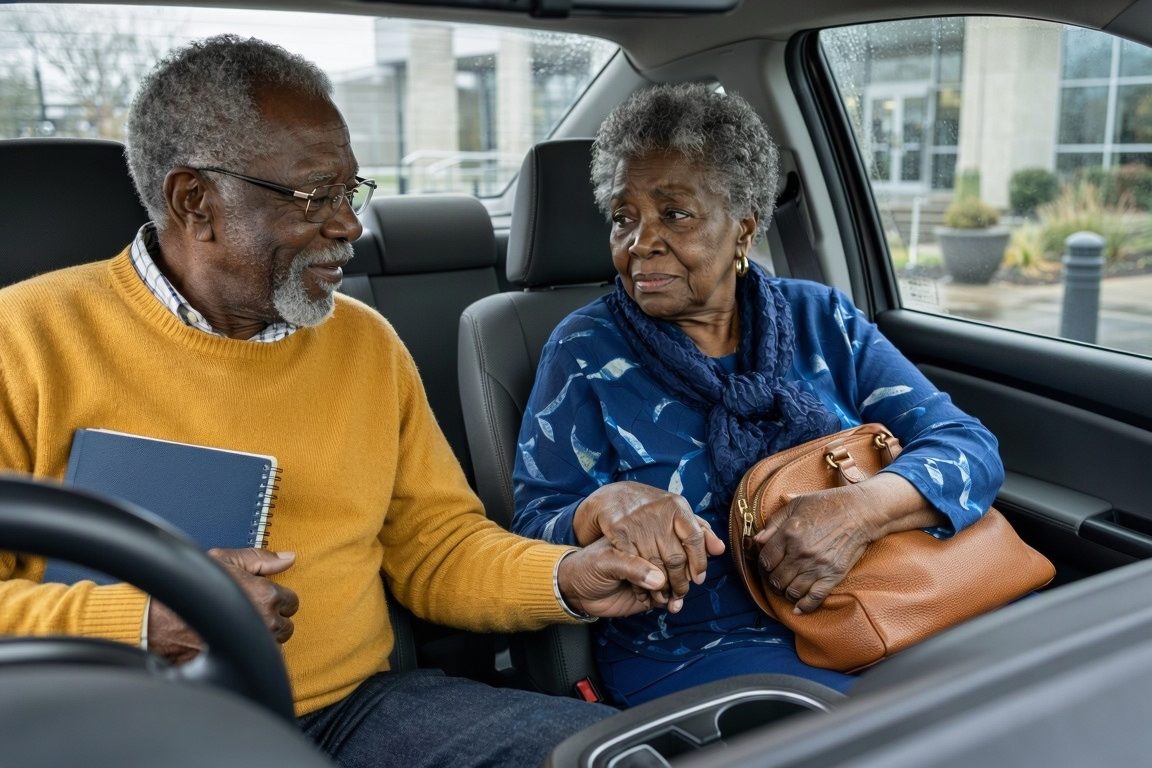
Step by step
What not to do
- Do not spring the appointment on your loved one at the last minute. This can trigger panic, refusal, or a meltdown.Instead, give a simple, reassuring heads-up a few hours before, or frame it as a routine errand. If they are likely to refuse, consider using a 'white lie' that feels compassionate, such as 'The doctor wants to check your blood pressure.'
- Do not argue or correct your loved one if they say something inaccurate to the doctor. For example, if they say 'I cook all my own meals' when you know they haven't in months, do not say 'No, you don't.' This can cause shame and escalate tension.Instead, gently add: 'We enjoy cooking together sometimes, and I help with the stove.' The doctor will understand the subtext.
- Do not overwhelm the doctor with a long, rambling story. Clinicians have limited time. Stick to your written list of concerns and be concise. If you need to share more detail, ask if you can send a follow-up email or schedule a longer appointment. A focused, organized presentation is more likely to be heard and acted upon.
- Do not ignore your own stress during the visit. If you feel frustrated or tearful, it is okay to step out for a moment. Ask the nurse to stay with your loved one. Your calm presence is essential, and taking care of yourself in the moment is part of being an effective advocate.
- Do not assume the doctor knows about dementia-specific communication needs. If your loved one is anxious, you can say to the doctor: 'She does better with short sentences and a calm voice. Can we slow down a little?' Most clinicians appreciate this guidance and will adjust.
Key points
- Prepare a written list of your top three concerns and a 'day-in-the-life' log to give the doctor real-world data.
- Use the 'Permission Script' to ask your loved one if it's okay to talk about them, this restores dignity and reduces defensiveness.
- Schedule the appointment at your loved one's best time of day and request a quiet exam room to minimize stress.
- Bring a comfort kit with snacks, a familiar object, and a simple activity to help your loved one stay calm during the wait.
- Do not correct or argue with your loved one in front of the doctor; instead, gently add your observations.
- After the visit, ask for a written summary of the plan and schedule a follow-up to review next steps.
Videos
 How to Prepare for a Doctor AppointmentThis video offers practical tips for organizing your thoughts and questions before the visit, which is exactly what this guide emphasizes.
 How to get someone with dementia to go to the doctorThis video addresses the common challenge of a loved one refusing to go to the doctor, providing gentle strategies to increase cooperation.
 Traveling with someone who has dementia- 5 tipsEven a short trip to the doctor is a form of travel. This video's tips on preparation, realistic expectations, and managing stress apply directly to the clinic visit.
 6 Tips for Successful Holiday Visits!While focused on holidays, this video's advice on planning ahead, using calm communication, and creating a positive experience translates well to medical appointments.
2 more videos
 The Do's and Don'ts of Visiting a Loved One with DementiaThis video covers essential communication do's and don'ts that are directly applicable to interactions with your loved one before, during, and after the doctor visit.
 How Often Should You Visit A Loved One In Memory Care?If your loved one lives in a facility, this video offers insights on coordinating with staff and planning visits that minimize disruption, useful for medical appointments too.
Background
Why the doctor often misses the real picture
When a person with dementia enters a doctor's office, everything changes. The unfamiliar environment, bright lights, strange sounds, and the pressure of being questioned can trigger anxiety or withdrawal. Your loved one may suddenly become quiet, cooperative, or even charming, a phenomenon sometimes called 'showtiming.' The doctor sees a calm, agreeable patient and may underestimate the memory lapses, agitation, or confusion you witness every day. Meanwhile, you may feel frustrated that your concerns aren't taken seriously. This gap between the clinic visit and real life is not your fault; it's a predictable result of the way dementia affects a person's ability to cope with new situations.
Your role as the bridge between home and clinic
You are the expert on your loved one's daily reality. The doctor relies on your observations to make accurate diagnoses and treatment decisions. But simply showing up and hoping the doctor 'sees it' is not enough. You need to prepare a clear, organized summary of changes in behavior, memory, mood, sleep, appetite, and any new difficulties with daily tasks. Think of yourself as a detective and a reporter: you gather the clues from home and present them in a way the clinician can use. This preparation also helps you stay calm and focused during the visit, so you can ask the right questions and leave with a plan.
The emotional weight of the visit for your loved one
Your loved one may feel embarrassed, scared, or defensive about seeing a doctor. They might not understand why they are there, or they may fear being judged or 'found out.' Some people with dementia refuse to go at all. This is not stubbornness; it is a protective response to a situation that feels threatening. By preparing with empathy and using gentle, respectful language, you can reduce their distress and increase the chances of a calm, productive visit. Remember, your goal is not to force cooperation but to create a sense of safety and partnership.
Practical tools
6
The 'Three Concerns' Card
Before the visit, write down your top three concerns on an index card or a note in your phone. Use this format: '1. Since [date], [loved one] has [specific behavior]. Example: [one concrete example]. 2. I am worried about [impact on safety/health]. 3. I would like to know [your question].' Hand this to the doctor at the start. It keeps the visit focused and ensures nothing is forgotten.
The 'Permission Script'
Use this exact phrase when you are in the exam room with your loved one: 'Is it okay if we talk about how things are going at home? I want to make sure we help you feel your best. You are in charge here.' Say this while making gentle eye contact and holding their hand. This script, adapted from advice in the source material, restores dignity and reduces the feeling of being 'ganged up on.'
The 'Day-in-the-Life' Log
For three days before the appointment, keep a simple log on paper or in a notes app. Each day, jot down: wake time, meals eaten, mood (calm, anxious, tearful, angry), any falls or near-falls, how they slept, and any moments of confusion (e.g., 'Could not find the bathroom'). Bring this log to the appointment. It provides concrete data the doctor can use to adjust medications or recommend therapies.
The 'Comfort Kit'
Pack a small bag with:
Use these during the wait or during the exam if your loved one becomes restless. Avoid anything that requires fine motor skills or complex instructions.
The 'Doctor's Office Prep' Checklist
Before the visit, call the clinic and ask:
Write down the answers and bring them with you.
The 'Redirect Phrase'
If your loved one becomes anxious or confused during the exam, use a gentle redirect: 'Look at this picture on the wall. Isn't it pretty?' or 'Let's take a deep breath together. In through your nose, out through your mouth.' Practice this at home so it feels natural. Avoid saying 'Calm down' or 'Don't worry,' which can increase anxiety.
Different situations
Lewy body dementia
People with Lewy body dementia are extremely sensitive to medications, especially antipsychotics and some Parkinson's drugs. They may also have visual hallucinations, fluctuating alertness, and severe sensitivity to noise and crowds. Before the visit, ask the doctor to review all current medications for potential interactions. During the visit, keep the room very quiet and dim if possible. Watch for signs of distress like sudden rigidity or confusion, and be ready to leave early if needed. Provide reassurance during hallucinations by saying 'I see you are upset. I am here with you. You are safe.' Do not argue about what they see.
Late-stage dementia
In late stages, your loved one may be nonverbal, bedbound, or unable to follow simple instructions. The visit should be as brief as possible. Bring a list of current medications, feeding tube or catheter details, and any skin breakdown or pain signs. Ask the doctor to come to the waiting area or exam room quickly. You may need to speak for your loved one entirely. Use the 'Permission Script' even if they cannot respond, it honors their dignity. Focus on comfort, pain management, and preventing infections. Consider a telehealth visit if travel is too stressful.
Spouse vs. adult child caregiver
If you are the spouse, the doctor may assume you are coping well or may not realize the full strain on you. Be honest about your own stress and ask for resources like respite care or support groups. If you are an adult child, you may need to balance your parent's authority with your role as advocate. Use phrases like 'Mom, I am here to help you, not to take over.' Bring a sibling or friend for support if possible. In both cases, ask the doctor for a written care plan that includes your role clearly.
In a memory care facility
If your loved one lives in a facility, coordinate with the nursing staff before the visit. Ask them to provide a written summary of any changes in behavior, falls, or medication adjustments. They may also be able to accompany you to the appointment. Bring a recent photo and a list of current medications from the facility. If the visit is at the facility itself (e.g., a mobile clinic), ask for a private room and limit interruptions. Notify staff of the visit time so they can avoid unnecessary disruptions.
Medicaid or limited resources
If you are on Medicaid or have limited income, ask the clinic about transportation assistance, sliding-scale fees, or telehealth options. Some states offer non-emergency medical transport for Medicaid recipients. If you cannot afford a specialist, ask your primary care doctor if they can manage dementia care or refer you to a community health center. Bring a list of all medications and supplements to avoid costly duplicate tests. You can also ask the doctor for samples of medications if available.
For the doctor
5
- Ask your doctor: 'Are there any medications my loved one is taking that could be making their confusion or agitation worse? Should we consider a medication review?'
- Ask your doctor: 'What are the signs that my loved one's dementia is progressing to a stage where we need to consider hospice or palliative care? What would that look like?'
- Ask your doctor: 'If my loved one refuses to take their medications at home, what are our options? Are there liquid or patch forms available?'
- Ask your doctor: 'My loved one has had a fall recently. Should we consider a home safety evaluation or physical therapy to prevent future falls?'
- Ask your doctor: 'Are there any clinical trials or new treatments for dementia that might be appropriate for my loved one? What are the risks and benefits?'