Step by step
What not to do
- Do NOT argue or try to prove them wrong. Saying 'There is no smell, you're hallucinating' will only make them feel confused, frightened, and defensive. It damages trust.Instead, validate their feeling: 'I know that smell is very real to you.'
- Do NOT laugh or make jokes about the smell. Even if the smell seems absurd (like 'burning popcorn'), the experience is real and distressing for them. Treat it with the same seriousness you would if they smelled a real fire.
- Do NOT immediately assume it is a sign of a worsening disease. While it can be, a sudden change in hallucinations can also be caused by a treatable medical issue like a urinary tract infection, constipation, or a medication side effect. Always rule out physical causes first by consulting a doctor.
- Do NOT use strong air fresheners or scented candles to 'cover up' the phantom smell. This can confuse the person further and may even trigger a different hallucination. Stick to neutral, familiar scents like fresh air, coffee, or a plain lemon.
- Do NOT leave them alone if they are very distressed by the smell. Your presence is the most powerful tool. Sit with them, hold their hand, and speak in a calm, soothing voice. Your reassurance that they are safe is more important than the smell itself.
Key points
- Phantosmia is a real sensory experience for the person, not a lie or a sign of stubbornness. Always validate their feeling first.
- Never argue or try to prove the smell isn't there. This will only increase their distress and damage trust.
- Always rule out a real source (smoke, gas, spoiled food) before treating it as a hallucination.
- Use redirection to a different sense (a pleasant smell, a familiar activity) to help their brain 'reset.'
- Keep a log of episodes to share with the doctor, especially noting timing, triggers, and the person's level of distress.
- A sudden onset of hallucinations can be a medical emergency (like a UTI). Always consult a doctor for a new or worsening symptom.
Videos
 Why Does Dementia Cause Hallucinations, Delusions, and Paranoia with Lucy Barylak, MSWProvides a broad understanding of why hallucinations happen in dementia, which helps you approach phantosmia with more empathy and less fear.
 Understanding the signs of paranoia, hallucinations and delusional behaviors w/ Lucy BarylakHelps you distinguish between a hallucination (sensory) and a delusion (belief), which is key to responding correctly to phantosmia.
 Dementia Care Partner Talk Show: Ep. 99 - Hallucinations and Delusions, Is There a Difference?A practical discussion that clarifies the difference between these two common symptoms, helping you tailor your response.
 Dementia Hallucinations: Don’t Argue: Do This Instead (What to Say & Do) | Dr. Khuhsboo VermaOffers specific phrases and actions to use when a hallucination occurs, directly applicable to handling a phantosmia episode.
2 more videos
 Hallucinations and DementiaA clear, concise overview of hallucinations in dementia, reinforcing the importance of not arguing and using reassurance.
 The Baffled Brain: Demystifying Dementia Episode 23Explores the brain changes behind hallucinations, giving you a deeper understanding of why phantosmia occurs in conditions like Lewy body dementia.
Background
What Is Phantosmia and Why Does It Happen?
Phantosmia is a type of hallucination that affects the sense of smell. The person's brain is creating a smell that isn't actually present in the room. As one expert explains, a hallucination is when the brain tricks itself into thinking something is there when it is not, and it can impact any of the five senses. For phantosmia, the perceived odors can be foul or pleasant, and they may be constant or come and go. The person may notice the smell in one or both nostrils. This is not the person being difficult or confused about a real odor; it is a genuine sensory experience generated by changes in the brain.
Why Does This Happen in Dementia?
The underlying cause is damage to the brain regions that process smell. In Lewy body dementia, this is especially common and can be one of the earliest signs. One source notes that people with Lewy body dementia can have 'really nasty hallucinations like they smell feces in their food' or 'dead animals in the house,' and these can be very distressing. In Alzheimer's disease, hallucinations are less common overall, affecting only about 13% of people, and typically appear in the middle or later stages. However, any type of dementia can potentially cause phantosmia. It is also important to remember that a sudden onset of hallucinations can be a sign of a medical issue like a urinary tract infection, a medication side effect, or even a problem with the person's teeth or gums, so a medical check-up is always a good first step.
How Phantosmia Differs From a Real Smell or a Delusion
It is crucial to distinguish phantosmia from a real environmental smell or from a delusion. A delusion is a fixed, false belief, like thinking someone is poisoning their food. Phantosmia is a sensory experience, the person actually smells something. They are not making it up or being paranoid. As one source explains, a hallucination is 'a physical experience' for the person. If your loved one says they smell smoke, they are truly smelling it. Your job is not to convince them they are wrong, but to address the distress the smell is causing. If the smell is always the same and seems to come from nowhere, it is more likely phantosmia than a real odor.
Practical tools
5
The 'Safety Check' Script
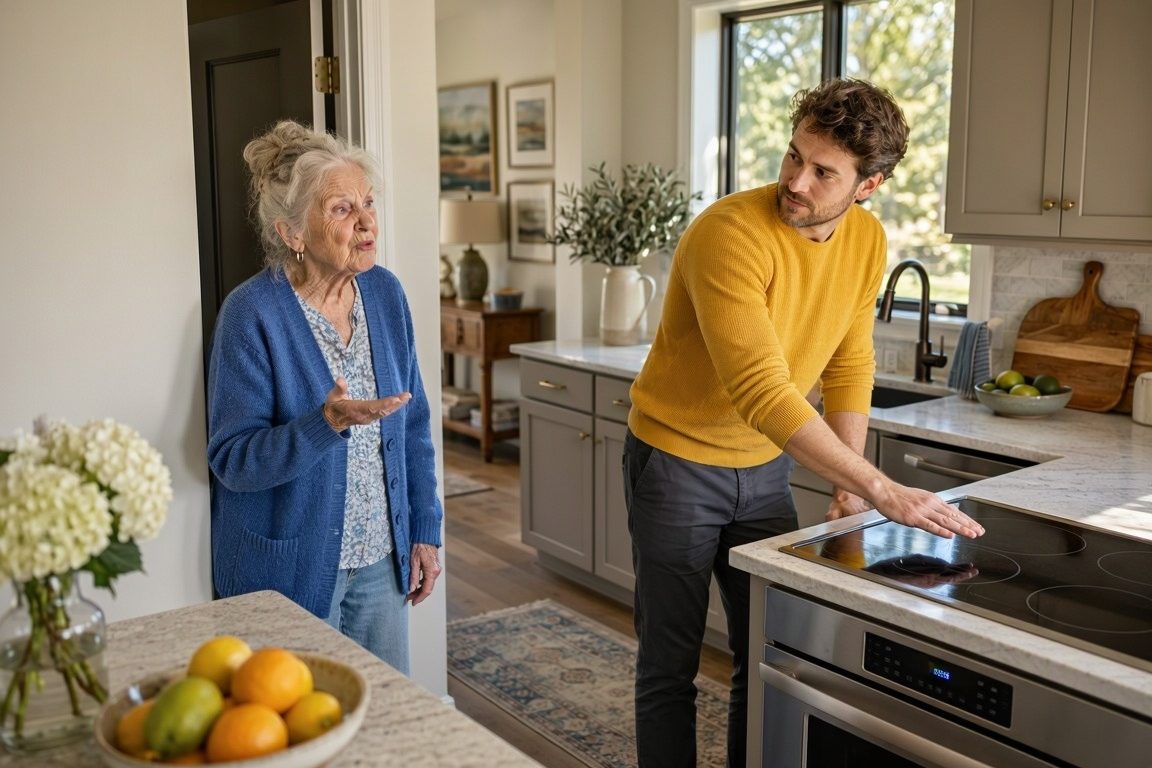
A simple, two-part phrase to use every time. Part 1: 'I hear you. That smell must be really bothersome.' Part 2: 'Let me just do a quick check around the house to make sure everything is okay.' Then, after a brief, visible check (even if you know it's a hallucination), return and say, 'I checked everywhere. We are safe. There is no smoke or gas. Let's sit down together.' This script validates, reassures, and provides a sense of control.
The 'Scent Switch' Kit
Prepare a small basket with a few items that have strong, pleasant, and familiar scents. Examples: a fresh lemon or orange, a small container of ground coffee, a sprig of mint or lavender, a bar of their favorite soap. When a phantom smell occurs, offer one of these items and say, 'Here, smell this. It's so nice and fresh.' This can help 'override' the hallucination with a real, positive sensory input.
The 'Distraction Menu'
Create a short, written list of 3-5 simple, calming activities that you can offer immediately after a phantosmia episode. Examples: 'Let's go look at the birds at the window,' 'Can you help me fold these napkins?' or 'Let's listen to that song you love.' Having a menu ready prevents you from having to think on your feet when you are stressed.
The 'Phantom Smell Log'
A simple notebook or a note on your phone. Track: Date, time, what the person said they smelled, their level of distress (mild/moderate/severe), what you did, and if it helped. Also note any other symptoms (like confusion, fever, or a change in appetite). This log is invaluable for the doctor to see patterns and rule out other causes.
Environmental Check: Ventilation and Odor Sources
Before assuming a smell is a hallucination, do a quick, systematic check:
Check for any spoiled food, a dirty diaper, or a musty towel. If you find a real source, remove it. If not, you can confidently proceed with the hallucination protocol.
Different situations
Lewy Body Dementia (LBD)
Phantosmia is much more common and can be an early symptom. The smells are often foul and distressing (e.g., rotting meat, feces). They may be worse in the evening or at night. Be extra vigilant about ruling out a real cause, but also be prepared for frequent episodes. Do not dismiss early, mild hallucinations as 'just a medication side effect', they can be a key diagnostic clue. If the person is very distressed, discuss with the neurologist, as some antipsychotic medications may help, but only under close supervision as they can be dangerous in LBD.
Alzheimer's Disease
Phantosmia is less common and usually appears in the middle or later stages. The person may have less insight into the hallucination, meaning they may be more confused or frightened. Your reassurance and redirection are even more critical. Because Alzheimer's affects memory, they may forget the episode quickly, so a gentle distraction can be very effective. Focus on keeping them calm in the moment.
Early-Stage vs. Late-Stage Dementia
In early stages, the person may still have some insight and be able to tell you they know it's probably not real but it still bothers them. You can work with them as a partner: 'I know this is happening. Let's try this trick together.' In late stages, they may lack insight entirely and will believe the smell is 100% real. Do not try to explain it. Just focus on their emotional state and safety. Use simple, one-step directions: 'Come with me. Let's go to the kitchen.'
Spouse vs. Adult Child Caregiver
As a spouse, you may have decades of shared history and a deep emotional bond. Use this to your advantage. A gentle touch and a familiar, loving tone can be very grounding. Say, 'Honey, I'm right here. You're safe.' As an adult child, you may need to be more directive and less emotional. You can say, 'Dad, I just checked the whole house. There's no smell. Let's go sit on the porch.' Avoid a tone that sounds like you are correcting a child.
In a Facility or with Paid Caregivers
Ensure the care team knows about the phantosmia and the specific strategies that work. Write down a brief plan: 'If Mom says she smells smoke, do NOT argue. Say, 'Let me check,' then redirect to a snack or a walk.' Consistency is key. Also, make sure the staff knows to check for real sources (like a soiled brief) before assuming it is a hallucination.
For the doctor
5
- If the phantosmia is new, sudden, or accompanied by other symptoms like fever, confusion, or a change in behavior, discuss with a doctor immediately to rule out a urinary tract infection or other medical cause.
- If the hallucinations are very frequent, distressing, or causing the person to become agitated or aggressive, ask the doctor if a medication review or a referral to a neurologist or geriatric psychiatrist is appropriate.
- If the person is on any medications (including over-the-counter), ask the pharmacist or doctor if phantosmia could be a side effect. Do not stop or change any medication without professional guidance.
- If the person has Lewy body dementia and the phantosmia is severe, discuss the risks and benefits of any antipsychotic medication with a specialist, as these drugs can have serious side effects in LBD.
- If the person also has a dental issue or complains of a bad taste in their mouth, ask the doctor about a dental check-up, as oral infections can sometimes cause phantom smells or tastes.