Step by step
What not to do
- Don't push for a PET scan before completing standard workup (MRI, cognitive testing, bloodwork), many diagnoses are clarified without it, and skipping ahead adds cost and anxiety.
- Don't pay cash without first checking insurance coverage, filing an appeal if denied, and searching for clinical trials that may cover the scan at no cost.
- Don't try to book a PET scan without a neurologist's referral, imaging centers require a doctor's order based on documented medical necessity.
- Don't overlook newer blood-based tests like PrecivityAD that can predict amyloid PET findings at lower cost and less invasiveness, ask your clinician if appropriate.
Key points
- PET scans (FDG-PET and amyloid PET) can clarify an Alzheimer’s diagnosis when standard tests are inconclusive, especially in early-stage or atypical cases.
- Medicare covers FDG-PET for diagnostic uncertainty but generally does not cover amyloid PET; out-of-pocket costs can be high.
- Clinical trials and research studies are a viable way to access free PET scans, search ClinicalTrials.gov and use the Alzheimer’s Association TrialMatch.
- Prepare the person with dementia for the scan with simple explanations and practice to reduce anxiety and ensure a successful procedure.
- Always discuss the emotional and practical implications of a positive result with your clinician before proceeding.
- Explore alternatives like the PrecivityAD blood test or lumbar puncture, which may be cheaper or more accessible.
Videos
 Posterior Cortical Atrophy Lecture with neurologist Victoria PelakThis video explains how PET scans are used in atypical Alzheimer’s like PCA, where MRI may be normal. It provides context for when PET is most valuable.
 Why Getting a Dementia Diagnosis Is So Hard (And How to Make It Easier)This video discusses the diagnostic journey, including the role of imaging and blood tests, and offers practical tips for navigating the process.
 Free Alzheimer's/Dementia Caregiver-Support Resources: Money, Info, More!This video covers financial resources and support options, which can help offset the cost of PET scans or find alternative funding.
 Alzheimer’s Diagnosis with a Blood Test? Full Scientific ReviewThis video reviews the PrecivityAD blood test as an alternative to PET scans, helping you understand your options.
Background
What PET Scans Reveal and Why They’re Used
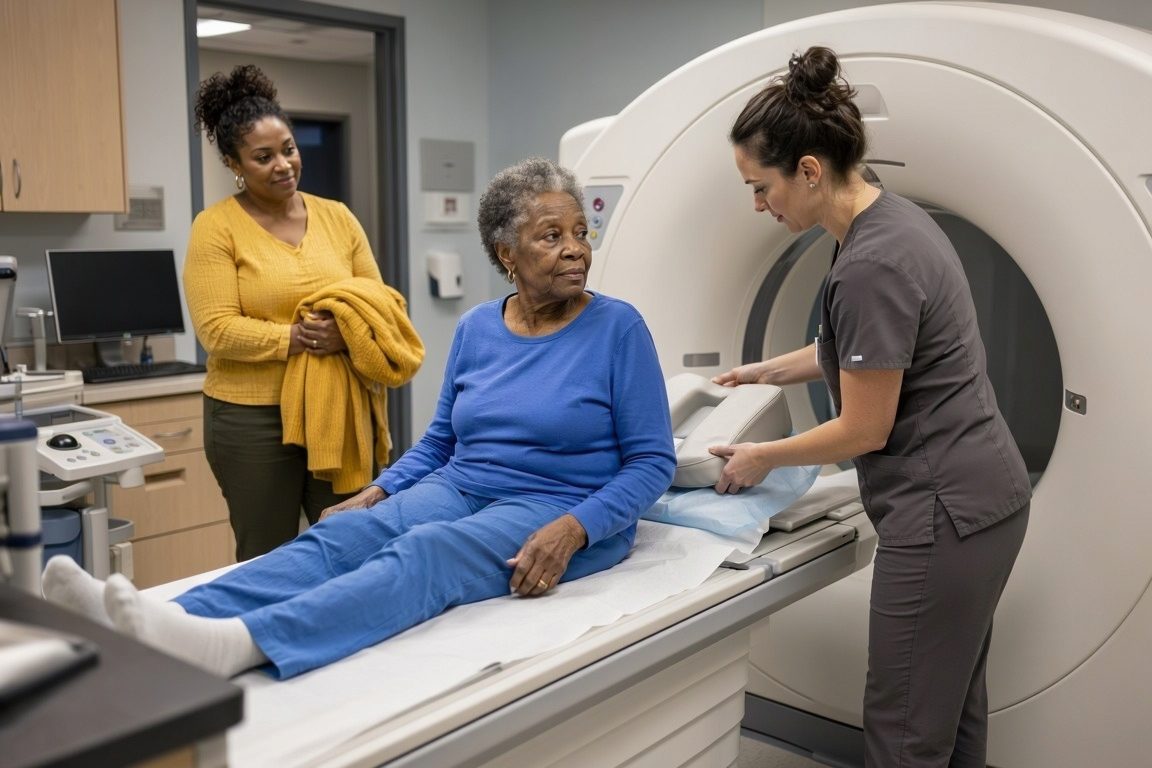
PET scans for Alzheimer’s come in two main types: FDG-PET and amyloid PET. An FDG-PET scan measures how well brain cells are using glucose (sugar) for energy. In Alzheimer’s, certain brain regions show reduced glucose use, creating a pattern that can suggest the disease. An amyloid PET scan goes a step further by detecting amyloid plaques, sticky protein clumps that are a hallmark of Alzheimer’s pathology. As one neurologist explains, an amyloid PET scan is ‘a very, very precise way of trying to establish whether there is Alzheimer amyloid pathology present or not’ (source: PCA Lecture Series). These scans are not routine; they’re typically ordered when a diagnosis remains uncertain after a thorough history, cognitive testing, and a standard brain MRI. For example, in early-stage or atypical forms like posterior cortical atrophy (PCA), the brain MRI may look nearly normal, making it ‘almost impossible to tell that there’s anything unusual going on’ (source: PCA Lecture Series). In such cases, a PET scan can provide clarity that changes the care plan.
The Coverage Gap: Medicare and Out-of-Pocket Costs
Access to PET scans is complicated by insurance coverage. For people with Medicare, an FDG-PET scan may be covered if it’s deemed medically necessary, for instance, when the diagnosis is still in doubt after standard evaluation. However, amyloid PET scans are generally not covered by Medicare for routine Alzheimer’s diagnosis. As one source notes, ‘amyloid PET scans are not covered by [Medicare]’ (source: PCA Lecture Series). For those under 65 who are not yet Medicare-eligible, both types of PET scans would typically need to be paid for out of pocket, which can cost several thousand dollars. This financial barrier can feel overwhelming, but there are pathways to explore, such as clinical trials, research studies, or negotiating with imaging centers. The key is to understand that coverage depends on your specific situation, your doctor’s documentation, and the type of scan ordered.
Why a PET Scan Might Be Worth Pursuing
Even with the cost and hassle, a PET scan can be invaluable for early-stage patients and their families. An accurate diagnosis helps rule out other causes of cognitive decline, like stroke, vitamin deficiencies, or other dementias, that might be treatable. It also opens the door to targeted treatments, such as anti-amyloid therapies (like lecanemab or donanemab), which require confirmation of amyloid plaques before use. For caregivers, knowing the exact diagnosis can reduce uncertainty and anxiety, allowing you to plan for the future with more confidence. As one caregiver advocate put it, getting a clear diagnosis ‘helps in not only understanding what is going on but how to help the person’ (source: Teepa Snow’s Positive Approach to Care). However, it’s important to weigh the benefits against the emotional impact: a positive amyloid PET result can cause significant anxiety, and there’s no guaranteed way to prevent or delay Alzheimer’s progression. Discuss these trade-offs with your clinician.
Practical tools
4
Insurance Call Checklist
Clinical Trial Search Guide
Go to ClinicalTrials.gov, search 'amyloid PET', filter by 'recruiting' and your location. Then call 800-272-3900: 'I'm looking for a study providing free PET scans for diagnosis.' Note each trial's coordinator, eligibility criteria, and location.
Cost Comparison Worksheet
Create a table with columns:
Call three centers and ask 'Do you offer a self-pay discount or payment plan?' Some cut cash prices 20-50%.
Insurance Appeal Letter Template
Request denial reason in writing. Ask neurologist to write a medical necessity letter citing diagnostic uncertainty (e.g., normal MRI, atypical presentation). Include denial letter, doctor's letter, clinical notes, and a caregiver statement on why diagnosis matters. Submit via certified mail.
Different situations
Early-stage Alzheimer’s vs. mild cognitive impairment (MCI)
For MCI, the decision to get a PET scan is more nuanced. The evidence for intervening after a positive amyloid PET in MCI is limited, and the result may cause anxiety without clear benefit. Discuss with your clinician whether the scan will change management, for example, if you’re considering anti-amyloid therapy, which requires amyloid confirmation. If not, you might delay the scan.
Posterior cortical atrophy (PCA) or atypical Alzheimer’s
In PCA, brain MRIs often look normal, so PET scans are especially valuable. FDG-PET can show a characteristic pattern of reduced glucose use in the back of the brain. Amyloid PET can confirm Alzheimer’s pathology. If you have PCA, emphasize to your doctor that standard imaging is unremarkable, which may strengthen the case for coverage. Also, seek out specialists at academic centers familiar with atypical dementias.
Caregiver role: spouse vs. adult child
If you’re a spouse, you may be more involved in daily care and financial decisions. You’ll need to handle insurance calls and coordinate appointments. If you’re an adult child, you might have more energy for research but less direct authority. In either case, bring a second person to appointments to help listen and take notes. If the patient is reluctant, frame the scan as a way to ‘rule out other problems’ rather than ‘confirm Alzheimer’s.’
Financial constraints: low income or no insurance
If you’re uninsured or have limited income, focus on clinical trials and research studies that cover costs. Also check with your state’s Medicaid program, some states cover PET scans for dementia diagnosis under certain conditions. Contact your local Area Agency on Aging (call 1-800-677-1116) for help finding financial assistance programs. Some imaging centers offer charity care or sliding-scale fees based on income.
Veterans or military-connected families
If the patient is a veteran, contact the VA. The VA may cover PET scans for diagnostic purposes if deemed medically necessary. Call the VA caregiver support line at 1-855-260-3274 and ask: ‘Does the VA cover PET scans for Alzheimer’s diagnosis? What is the process to get a referral?’ You can also visit caregiver.va.gov for resources.
For the doctor
5
- Ask your doctor: ‘Given my family history and symptoms, what is the likelihood that a PET scan will change my treatment plan? Are there risks from the radiation or the contrast agent used in the scan?’
- Discuss the potential psychological impact: ‘If the scan is positive for amyloid, how will we manage the emotional fallout? Do you have a counselor or support group you can recommend?’
- Inquire about alternative biomarkers: ‘Would a spinal tap (lumbar puncture) for amyloid and tau proteins be as accurate as a PET scan? Is it covered by my insurance? What are the risks?’
- Ask about the PrecivityAD blood test: ‘Is this test available and appropriate for me? How does its accuracy compare to a PET scan? Would a positive result still require a PET scan for confirmation?’
- If you’re considering anti-amyloid therapy, ask: ‘Do I need a PET scan to qualify for treatment? What are the criteria for these medications, and how do I access them?’