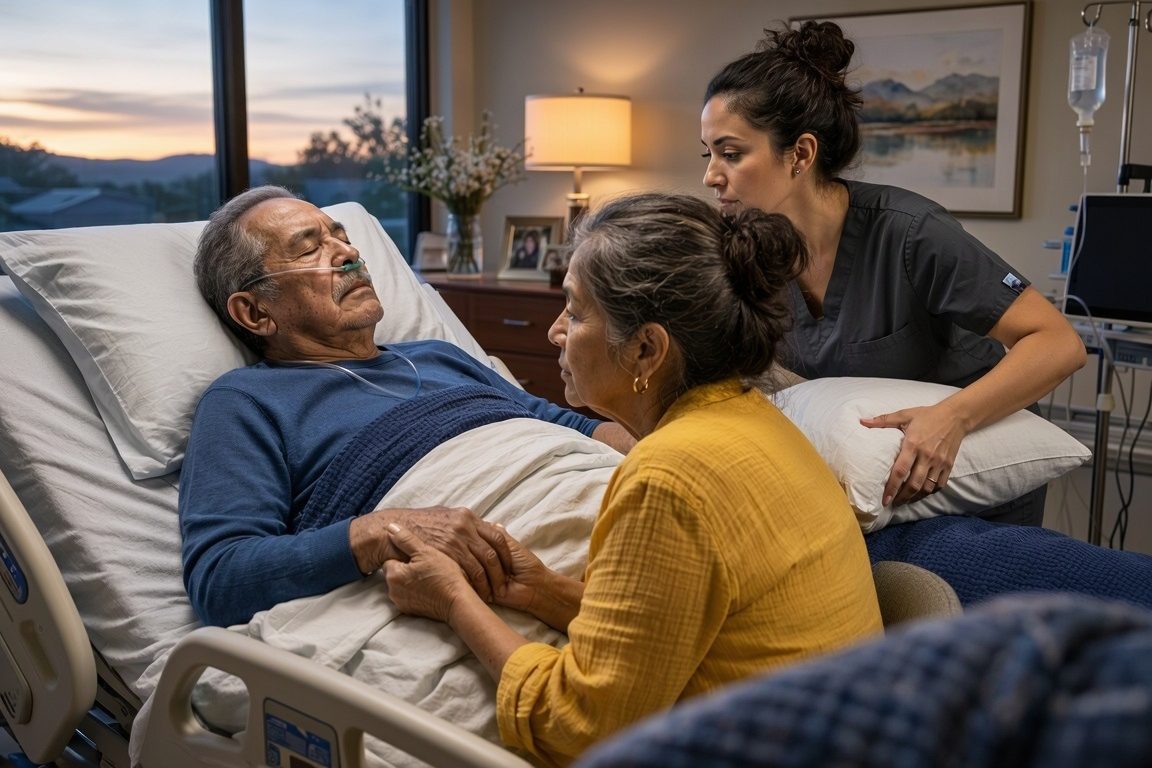
Step by step
What not to do
- Do not assume that because your loved one is quiet, they are not in pain. Many dying patients cannot cry out or move much. Look for subtle signs like a furrowed brow, rapid breathing, or guarding a body part.Instead, use the pain assessment checklist from Step 1 daily.
- Do not withhold pain medications because you fear addiction or side effects. The AAFP source says physicians must overcome their own fears about narcotics. At the end of life, the goal is comfort, not abstinence. If side effects occur, ask the hospice team to treat them, do not stop the pain meds.
- Do not try to wake or feed your loved one if they are sleeping peacefully. The dying process often involves reduced consciousness, and forcing food or drink can cause choking or aspiration.Instead, focus on mouth care: moisten their lips with a damp sponge or lip balm, and offer small sips of water if they can swallow safely.
- Do not leave your loved one alone for long periods if they are in pain or agitated. Your presence is a powerful comfort. If you need a break, ask another family member, a friend, or a hospice volunteer to sit with them. The All Home Care Matters source says nobody should die alone if possible.
- Do not argue with your loved one if they seem confused or hallucinate. This can increase agitation and pain.Instead, use gentle redirection: say something like 'I am here with you, and you are safe.' Play soft music or hold their hand to ground them.
- Do not make major changes to the care plan during a terminal lucidity episode. The Cleveland Clinic source warns that families may want to stop comfort medicines or try curative treatments. This can cause unnecessary suffering.Instead, enjoy the lucid moment, but continue the same pain management and comfort measures.
Key points
- Pain is common at the end of life but can be successfully managed in nearly 90% of patients with proper assessment and medication.
- Learn to recognize non-verbal pain signs: wincing, grimacing, restlessness, changes in sleep, and physical signs like pale skin or swelling.
- Work closely with the hospice team to start medications at low doses and titrate up, using both as-needed and standing doses.
- Non-drug comfort measures, gentle touch, music, familiar smells, and silent presence, are powerful tools to reduce pain and agitation.
- Do not withhold pain medications due to fear of addiction or side effects; treat side effects promptly instead.
- Hold vigil and invite others to sit with your loved one; silent presence is as meaningful as talking.
Videos
 Alzheimer's Disease - The End Stage (Mini-Series Part 3)This video explains the physical changes in the end stage of Alzheimer's, including how to recognize pain and discomfort when your loved one can no longer speak.
 End of Life Care for Patients with Dementia: Palliative Care & HospiceThis video clarifies the difference between palliative care and hospice, and how both approaches focus on comfort and pain relief at the end of life.
 An Interview with Hospice Nurse and Author Beth Cavenaugh R.N.Hospice nurse Beth Cavenaugh shares practical advice on what to do when your loved one is actively dying, including how to hold vigil and use silent presence.
 When You Want to Walk Away From Dementia Caregiving (But Can't)This video addresses caregiver burnout and grief, which can affect your ability to manage pain. It offers emotional tools to keep going.
2 more videos
 TELLING A PARENT WITH DEMENTIA ABOUT A DEATHIf your loved one is aware and asks about a deceased spouse or friend, this video helps you respond honestly without causing additional pain.
 How to Cope With the Grief and Loss When You Love Someone with DementiaThis video helps you process anticipatory grief, which can make it easier to stay present and focused on comfort care at the end of life.
Background
Why Pain Is Often Missed at the End of Life
In the final stage of dementia or any life-limiting illness, your loved one may lose the ability to tell you they are in pain. The Alzheimer’s Association notes that pain is under-recognized and undertreated in people with dementia, largely because they cannot communicate it. This can lead to behavioral symptoms like agitation, shouting, or restlessness, which are sometimes mistaken for confusion or anxiety. The source from All Home Care Matters explains that you must look for physical signs: pale or flushed skin, dry pale gums, mouth sores, vomiting, feverish skin, swelling, and non-verbal cues like wincing, trembling, or changes in sleep. Treating pain as a 'fifth vital sign', just as important as blood pressure or pulse, is a key principle from the Alzheimer’s Association. The goal is to ease distress and improve quality of life, not just to prolong it.
The Role of Hospice and Palliative Care
Hospice is not about dying; it is about high-quality living in the present moment, as the NW GWEC source emphasizes. It focuses on symptom relief and supporting the family. The Dementia Careblazers video explains that palliative care can be introduced early to relieve pain and address symptoms, while hospice is specifically for the end of life when curative treatments are no longer pursued. The AAFP source states that by following guidelines on analgesics, physicians can achieve successful pain relief in nearly 90% of dying patients. This requires overcoming fears about using narcotics, which are safe and effective when properly managed. The hospice team, nurses, doctors, and social workers, will guide you in using medications like opioids, corticosteroids, antidepressants, and anticonvulsants for neuropathic pain. Your role is to observe, report, and provide comfort.
What Comfort Looks Like Beyond Medication
Pain management at the end of life is not only about drugs. The James L. West Center for Dementia Care and All Home Care Matters highlight sensory connections: gentle touch, massage, familiar music from early childhood, white noise, nature sounds, reading meaningful books, looking at old photos, brushing hair, holding hands, and just sitting in silent presence. These actions can soothe agitation and reduce pain perception. The NW GWEC source reminds us that hospice is about making today a good day. Even if your loved one cannot respond, they may still feel comfort through their senses. The AAFP source adds that treating the primary cause of a symptom, like addressing shortness of breath to relieve anxiety, is more effective than treating symptoms in isolation.
Practical tools
6
Pain Assessment Checklist for Non-Verbal Patients
Create a simple list:
Check off any signs you see every 2-4 hours and report to the hospice team.
Comfort Kit for End-of-Life Care
Assemble a basket with:
Exact Phrases to Say to Your Loved One
Even if they cannot respond, your voice is soothing. Say: 'I am here with you. You are safe. I love you. You can let go when you are ready. I am holding your hand. It is okay to rest.' Use a calm, low tone. Avoid asking questions that require a decision, like 'Do you want water?' Instead, say 'I am going to moisten your lips now.'
Positioning and Pressure Ulcer Prevention Schedule
Set a timer every 2 hours to gently reposition your loved one. Use pillows under knees, between legs, and behind the back. Check heels, hips, tailbone, and shoulder blades for redness. If you see a red spot that does not blanch (turn white when pressed), report it to the hospice nurse immediately.
Medication Log Template
Use a simple notebook or a free app. For each dose, record: date, time, medication name and dose, pain signs before and after (using the checklist), any side effects (like constipation or nausea), and non-drug measures used. Share this log with the hospice team at every visit.
Vigil Planning Checklist
If you want to hold a vigil, coordinate with family and friends. Assign shifts so someone is always present. Keep the room calm:
The All Home Care Matters source says silent presence is enough. You can also read a prayer, poem, or just sit quietly.
Different situations
Late-stage Alzheimer's or other dementia
Your loved one may be completely non-verbal and unable to move. Focus heavily on the pain assessment checklist and non-drug sensory measures like music from early childhood, gentle massage, and familiar smells (like lavender or baked bread). The Answers About Alzheimer's source notes that they are often very thin and prone to pressure ulcers, so repositioning is critical. Also, the cause of death is often from complications like pneumonia or sepsis, not dementia itself, so pain from infections must be watched for.
Lewy body dementia
Patients with Lewy body dementia are very sensitive to antipsychotic medications and some pain meds. Discuss with the clinician before using any new drug. They may also have visual hallucinations or severe movement issues. Use non-drug comfort measures first, and report any new pain signs to the hospice team immediately. The AAFP source mentions anticonvulsants for neuropathic pain, but these must be chosen carefully.
Spouse vs. adult child caregiver
A spouse may feel a deep sense of duty and guilt, making it hard to ask for help. The Dementia Careblazers video on anticipatory grief encourages caregivers to give themselves permission to step back and get support. An adult child may be managing multiple responsibilities (work, family). Both should lean on the hospice team for respite care and emotional support. The All Home Care Matters source says to include the loved one in end-of-life planning if possible, but if not, the family can create a plan together.
In a facility (nursing home or memory care)
You may not be present 24/7. Train the staff on your loved one’s pain signs and preferences. Ask for a written pain management plan that includes both medications and non-drug measures. Visit often and use the comfort kit during your visits. The Alzheimer’s Association source emphasizes that pain should be treated as a 'fifth vital sign' in facilities, so advocate for routine assessments.
Medicaid or limited resources
Hospice is covered by Medicare and Medicaid, so you can access a team of nurses, doctors, and social workers at no cost. If your loved one is not on hospice, ask about palliative care. The Dementia Careblazers video explains that palliative care can be provided alongside curative treatments. For non-drug comfort, use free resources: borrow music from the library, use a free white noise app, and ask family to help with vigil shifts.
For the doctor
6
- Ask the hospice doctor: 'What is the best medication for my loved one’s type of pain (e.g., nerve pain, bone pain, or general discomfort)?'
- Ask: 'How should I adjust pain medications if my loved one becomes more agitated or seems to have breakthrough pain?'
- Ask: 'What side effects should I watch for with the prescribed pain medications, and what should I do if they occur?'
- Ask: 'Is it safe to use over-the-counter pain relievers like acetaminophen or ibuprofen along with the prescribed medications?'
- Ask: 'How do I manage pain if my loved one has difficulty swallowing or is no longer able to take oral medications?' (The hospice team may have liquid, sublingual, or rectal options.)
- Ask: 'What is the plan for managing terminal restlessness or agitation that may be caused by pain?'