Step by step
What not to do
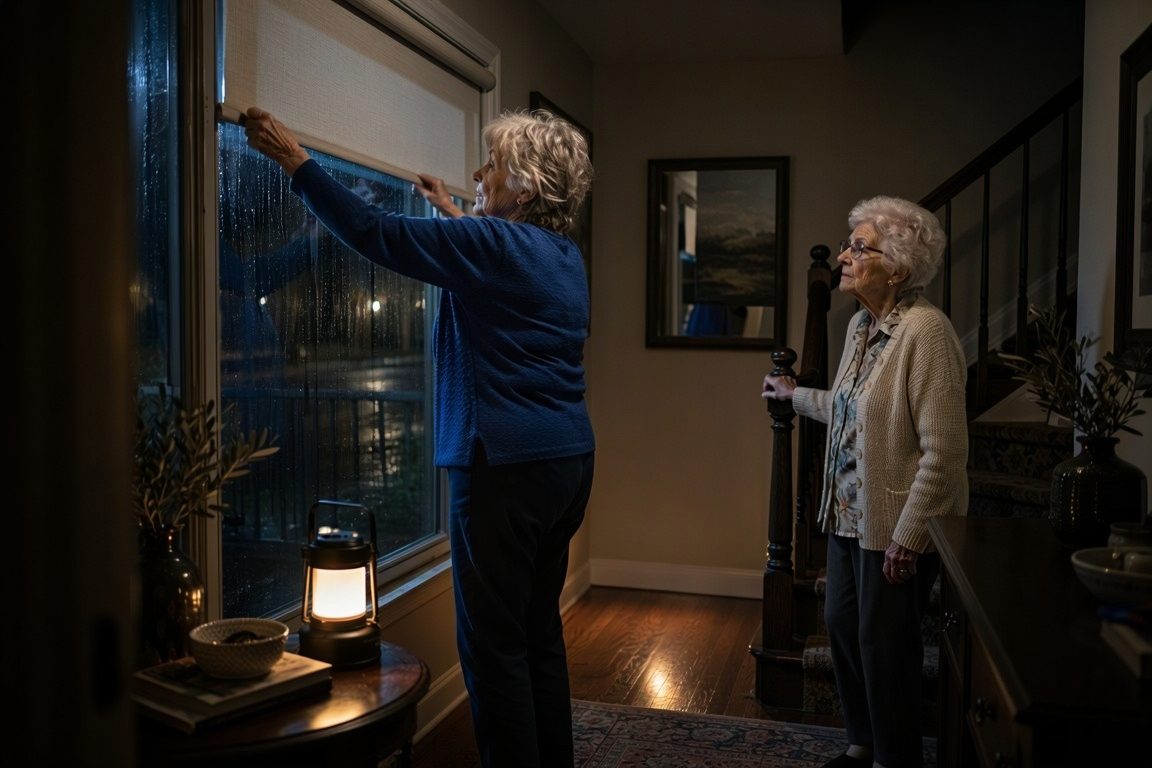
- Do NOT turn on a bright overhead light or flashlight beam directly in their face. This creates harsh shadows and can make hallucinations worse.Instead, use soft, indirect light from a lamp or lantern placed low and to the side.
- Do NOT argue or say 'There is nobody there.' This invalidates their reality and increases fear and confusion.Instead, say 'I know you see something. I am here with you and we are safe.'
- Do NOT leave them alone in the dark 'to calm down.' Darkness increases disorientation and fear, and they may wander or fall. Stay with them or within earshot, with a soft light on.
- Do NOT use candles or open flames during an emergency. The flickering light creates moving shadows that can be misinterpreted as people or animals, and it is a fire hazard. Use battery-operated LED candles or lanterns instead.
- Do NOT try to 'fix' the hallucination by moving furniture or covering mirrors in the middle of the emergency. This adds more change and confusion. Wait until the person is calm and the emergency is over to make environmental adjustments.
- Do NOT assume that if they are not talking about the hallucination, it has stopped. They may be silently frightened. Watch for signs like staring, pointing, or looking around nervously, and respond with gentle reassurance and light.
Key points
- During an emergency, use soft, warm, indirect light, never bright overhead lights or flashlights pointed at the person.
- Stay calm and use simple, reassuring phrases: 'I am here. We are safe. Let me get some light.' Do not argue about what they see.
- Pre-pack an emergency lighting kit with a warm LED lantern, battery candles, a power bank, and a list of calming phrases.
- Natural light is best, open curtains during the day, even if overcast. At night, use soft artificial light and close curtains to block confusing shadows.
- If the hallucination is not bothering them, you do not need to intervene. If it is, validate their feeling, then redirect to a simple activity or a different room.
- Different dementias (especially Lewy body) require extra caution with light, avoid flickering, pulsing, or bright light. Always consult a clinician before using medications for hallucinations.
Videos
 Tips for Coping With SundowningThis video covers how lighting and environment affect sundowning, which often overlaps with hallucinations. It offers practical tips for using light to calm agitation.
 Understanding the signs of paranoia, hallucinations and delusional behaviors w/ Lucy Barylak Sept 12Lucy Barylak explains how to recognize and respond to hallucinations, including the role of lighting and environment. Very helpful for understanding the 'why' behind the behavior.
 Why Does Dementia Cause Hallucinations, Delusions, and Paranoia with Lucy Barylak, MSW Aug 10 23This video dives into the brain changes that cause hallucinations and offers non-medical strategies, including lighting adjustments, to reduce distress.
 2025 Emergency Preparedness with Steven and TruA practical guide to emergency preparedness for dementia caregivers, including lighting, backup power, and calming strategies. Directly applicable to this topic.
2 more videos
 Why does Dementia Sometimes Cause Hallucinations, Delusions, and Paranoia w/ Lucy Barylak Dec 14 23Another excellent session with Lucy Barylak, focusing on how to respond in the moment. Includes tips on using light to create a safe environment.
 Top 11 Things to Know about Alzheimer’s Disease PsychosisCovers the basics of psychosis in Alzheimer's, including hallucinations, and discusses when medication might be needed. Good for understanding the bigger picture.
Background
Why Darkness and Poor Light Trigger Hallucinations
In dementia, the brain's ability to correctly interpret what the eyes see is damaged. Shadows, reflections, and sudden changes in light can be misread as people, animals, or threatening objects. During an emergency, like a power outage or a storm that darkens the home, the environment becomes unpredictable. The person's brain, already struggling, may fill in the gaps with frightening images. This is not 'seeing things' on purpose; it is a symptom of the disease, and it feels absolutely real to them. The goal is not to argue, but to provide lighting that reduces those misinterpretations.
The Role of Natural and Artificial Light in Calming Hallucinations
Research and expert guidance show that hallucinations often subside in well-lit areas where other people are present. Bright, even light reduces shadows and helps the brain distinguish real objects from imagined ones. During an emergency, you may not have your usual lights, but you can still create a calming environment. The key is to avoid harsh, flickering, or directional light that casts strong shadows. Instead, aim for soft, diffused, warm light that mimics natural daylight as much as possible. This helps the person's brain feel safe and oriented.
What Happens in the Brain During a Hallucination Emergency
When a person with dementia hallucinates, the brain's sensory processing regions are misfiring. They are not choosing to see things; their brain is presenting them with a false but convincing reality. In an emergency, stress hormones rise, making the brain even more prone to misinterpretation. The person may feel trapped, scared, and unable to trust what they see. Your calm presence and the right lighting can lower that stress, giving the brain a chance to settle. Remember: if the hallucination is not bothering them, you may not need to intervene. But if they are frightened, your response matters deeply.
Practical tools
6
Soft, Warm Battery Lantern
A battery-powered lantern with a warm (2700K-3000K) LED bulb, placed on a table or counter, pointing upward. Avoid cool white or blue light, which mimics daylight and can increase agitation. Examples: LuminAID or similar diffused lanterns. Keep one in your emergency kit.
Smartphone or Tablet with Calming Video
Battery-Operated LED Candles
Place 2-3 flameless LED candles on a mantle or table. Their soft, warm glow mimics candlelight without the fire risk or flickering shadows. They provide a sense of normalcy and safety. Avoid real candles.
Emergency Lighting Kit
A small bag or box with:
Keep it in an easily accessible place. Test batteries every 3 months.
Calming Phrases for the Moment
Write these on a card and keep it in your emergency kit: 'I am here with you. We are safe.' 'Let me get some light so we can see better.' 'I know you see something. I am with you.' 'Would you like to come sit with me?' Practice saying them in a calm, low voice.
Nightlight with Motion Sensor
Install a warm-toned, motion-sensor nightlight in the hallway and bathroom. During a power outage, if you have a backup battery, plug one in near their bedroom. It provides gentle light when they get up, reducing the chance of a hallucination triggered by sudden darkness.
Different situations
Lewy Body Dementia (LBD)
People with LBD are extremely sensitive to light and often have vivid, complex visual hallucinations. During an emergency, use the dimmest warm light that still allows safe movement. Avoid any flickering or pulsing light. Be extra careful with shadows, even a moving curtain can trigger a hallucination. Discuss with a clinician whether a cholinesterase inhibitor (like donepezil) might help reduce hallucinations overall.
Late-Stage Dementia
In late stages, the person may be bedbound or have very limited communication. Use a soft, warm light placed on a bedside table, never directly in their face. Speak in a very low, slow voice. If they seem agitated, try a gentle touch on the arm along with the light. Avoid moving them unless absolutely necessary.
Spouse vs. Adult Child Caregiver
As a spouse, you may be the person they trust most. Your presence alone can be calming. Use phrases like 'I am right here, honey.' As an adult child, you may need to establish trust first. Use more formal but warm language: 'Mom, I am here with you. Let me get a light so we can see.' In both cases, avoid a commanding tone.
In a Facility or Assisted Living
During a facility emergency (like a fire drill or power outage), staff may use bright emergency lights. If possible, ask staff to bring a warm lantern to your loved one's room. If you are visiting, bring a small battery candle. Advocate for the facility to have soft emergency lighting options for residents with dementia.
Medicaid or Low-Income Settings
You do not need expensive equipment. A simple flashlight with a cloth or paper towel taped over it creates a soft, diffused light. A smartphone with a nature video works. Contact your local Alzheimer's Association or Area Agency on Aging for free or low-cost emergency lighting supplies. Many utility companies offer free LED bulbs to low-income households.
For the doctor
5
- Ask the doctor: 'Are there any medications that could help reduce my loved one's hallucinations, especially during stressful times like emergencies? I know antipsychotics are risky for some dementias.'
- Ask the doctor: 'Could a cholinesterase inhibitor (like donepezil or rivastigmine) help with hallucinations in my loved one's type of dementia?'
- Ask the doctor: 'Are there any non-medication interventions, like light therapy or sensory stimulation, that you recommend for reducing hallucinations at home?'
- Ask the doctor: 'If my loved one becomes very agitated during an emergency and I cannot calm them, when should I seek emergency medical help?'
- Ask the doctor: 'Could any of my loved one's current medications be contributing to hallucinations? Should we review them?'