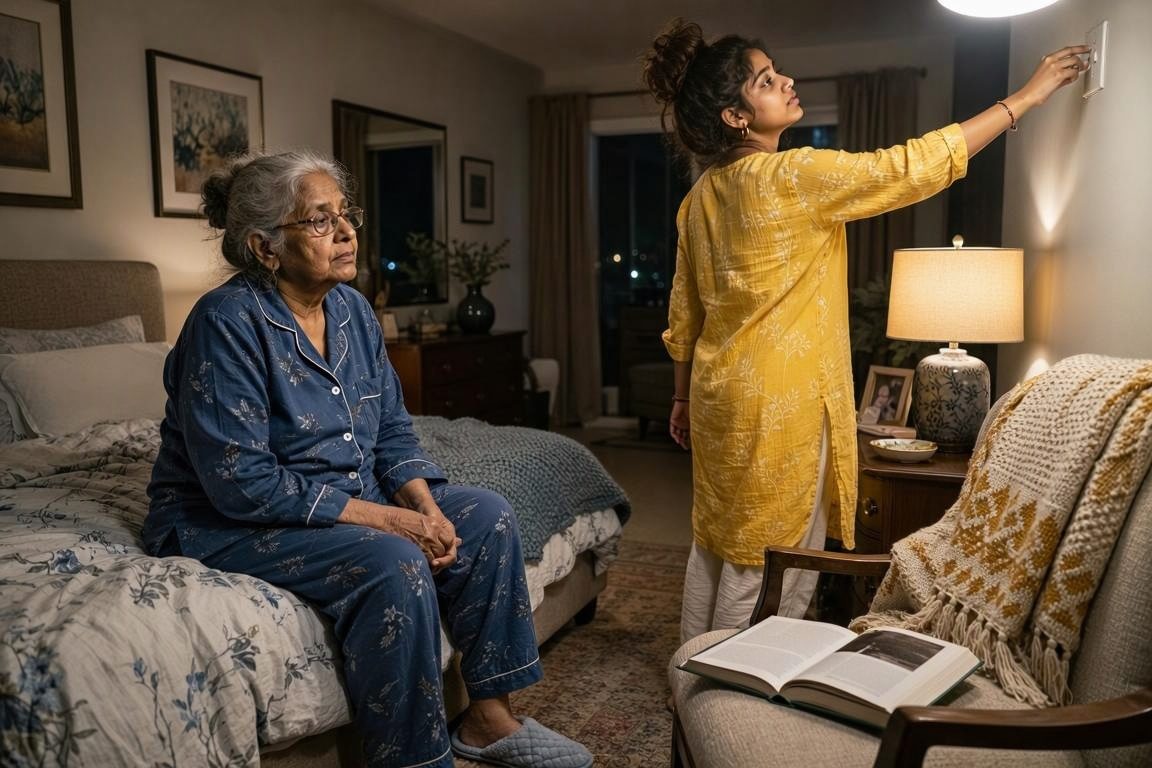
What not to do
- Do not argue, scold, or try to reason with them about sleep; it escalates anxiety.
- Do not use physical restraints or sedation to force sleep.
- Do not give over-the-counter sleep aids (e.g., diphenhydramine) unless approved by their doctor; they can worsen confusion and falls.
- Do not offer alcohol as a sleep aid; it fragments sleep and increases fall risk.
- Do not leave bright lights on all night; use a dim nightlight in the hallway or bathroom only.
- Do not assume agitation means they need medication; re-check for hunger, thirst, pain, or a full bladder first.
Key points
- Always start with non-drug approaches: consistent schedule, bedtime routine, exercise, and a sleep-friendly environment.
- Avoid over-the-counter sleep aids (antihistamines) and antipsychotics unless specifically prescribed and monitored by a specialist.
- Treat underlying causes: pain, sleep apnea, restless leg syndrome, medication side effects.
- Review all medications with the doctor, some can cause insomnia, especially if taken at night.
- Melatonin (low dose, 0.5-3 mg) may help with falling asleep but is not a cure-all; discuss with the doctor first.
- You are not alone, keep a sleep diary and work closely with the healthcare team to find what works for your loved one.
Videos
 Managing Sleep & Sundowning in Dementia CareThis video explains the link between sundowning (evening agitation) and insomnia, offering practical non-drug strategies to calm the evening routine and improve sleep.
 Management of Comorbid Symptoms that Interfere with Sleep in the Older AdultCovers how pain, restless leg syndrome, and other medical issues disrupt sleep, and how to address them. Essential for understanding the 'why' behind insomnia.
 Neurologist's #1 Sleep Trick for 30% Sharper Memory | Dr. Khushboo VermaA simple, evidence-based sleep tip (likely morning light exposure) that can improve memory and sleep quality. Useful for both caregiver and patient.
 How To Manage Sundowning Exhaustion In Dementia Care - TestFocuses on caregiver exhaustion from sundowning and insomnia, offers self-care strategies and practical tips to reduce nighttime chaos.
Background
Why Insomnia Happens in Dementia
In dementia, the brain's internal clock (circadian rhythm) often breaks down, making it hard to distinguish day from night. This isn't just 'being stubborn', it's a neurological change. Additionally, many people with dementia have other conditions like restless leg syndrome, sleep apnea, or chronic pain that disrupt sleep. Medications for dementia or other health issues can also interfere with sleep quality. For example, cholinesterase inhibitors (like donepezil) should not be given at bedtime because they can cause vivid dreams or insomnia. The key is to treat the underlying causes, not just the symptom of sleeplessness.
The Two-Pronged Approach: Non-Drug First, Then Medication
Experts agree: non-drug treatments should always be tried first. These include improving sleep hygiene (regular schedule, calming bedtime routine, reducing daytime napping), addressing pain and discomfort, and creating a sleep-friendly environment. Cognitive behavioral therapy for insomnia (CBT-I) is highly effective but may require a trained therapist. Exercise during the day (but not within four hours of bedtime) can improve sleep as effectively as some sleep medications. If these don't work, medications may be considered, but only under strict medical supervision, many sleep aids are risky for people with dementia, increasing fall risk, confusion, and even mortality. Always discuss any medication changes with your healthcare team.
When to Suspect a Medical Cause
If insomnia is severe or has lasted more than a month, a thorough medical evaluation is needed to rule out conditions like sleep apnea, restless leg syndrome, pain, or medication side effects. For example, if your loved one kicks or jerks during sleep, they may have restless leg syndrome or periodic limb movement disorder, which can be treated. If they snore loudly or gasp for air, sleep apnea might be the culprit. Don't assume it's 'just dementia', treating these underlying issues can dramatically improve sleep.
Practical tools
4
Blue-light-blocking glasses
Have them wear amber-tinted glasses for 1–2 hours before bed to reduce screen-light effects on melatonin; useful if you sit with them in a lit room.
Weighted blanket (15–30 lbs, ≤10% body weight)
Can reduce nighttime restlessness and provide calming proprioceptive input; test during daytime first to ensure comfort.
Automatic sunrise-alarm clock
Simulates gradual dawn light (starting 30 min before wake time) to help entrain the circadian rhythm, especially in winter or dark bedrooms.
Bed alarm or sensor pad
Placed under the mattress or on the floor; alerts caregiver if the person gets out of bed unsupervised, reducing fall risk.
Different situations
Lewy body dementia (LBD) or Parkinson's disease dementia
People with LBD are extremely sensitive to antipsychotics, they can cause severe rigidity, sedation, or even neuroleptic malignant syndrome. Avoid all antipsychotics for sleep unless absolutely necessary and under specialist care. Also, REM sleep behavior disorder (RBD) is common in LBD, they may act out dreams (kicking, punching). This is not insomnia but a different condition that requires specific treatment (often clonazepam or melatonin, but only with a neurologist). Sleep apnea is also common, consider a sleep study.
Late-stage dementia (unable to communicate or bedbound)
Focus on comfort and pain management. Check for physical discomfort: reposition every 2 hours, check for wet/soiled briefs, ensure room temperature is comfortable. Use a pressure-relieving mattress. If they are agitated at night, consider a nighttime routine that includes gentle rocking, soft music, or a familiar voice. Avoid sedatives if possible, they increase fall risk and can cause respiratory depression. Discuss with the hospice or palliative care team if applicable.
Spouse caregiver vs. adult child caregiver
Spouses may feel guilty about setting boundaries or changing routines. Remind yourself: 'I am helping them by improving their sleep.' Adult children may need to balance care with their own family. Set a consistent bedtime for your loved one so you have time for yourself. Use respite care or ask siblings to help with nighttime monitoring. Both roles: prioritize your own sleep, caregiver burnout worsens everyone's health.
Living in a facility (nursing home, assisted living)
Advocate for your loved one's sleep. Ask staff to: 1) Keep the same bedtime and wake time daily. 2) Avoid waking them for unnecessary checks or medication at night. 3) Provide a nightlight and keep the door slightly open for safety. 4) Limit caffeine after dinner. 5) Offer a warm drink before bed. If they are given sleep medications, ask why and request a review. You can also bring in familiar items (a favorite blanket, photos) to make the room feel safe.
Medicaid or limited resources
Many non-drug strategies cost nothing: a consistent schedule, free white noise apps, morning sunlight, a warm bath. For pain relief, acetaminophen is inexpensive. For light therapy, sitting by a window is free. If you need a light box, check with local Alzheimer's Association chapter or library for loan programs. Melatonin is cheap (generic). Avoid expensive supplements or gadgets that claim to 'cure' insomnia, stick to evidence-based basics.
Common questions
1
What treatments are available for tinnitus?
Start with a calming bedtime routine and a consistent sleep schedule, as non-drug approaches are the safest first step for dementia-related insomnia.
For the doctor
7
- Ask: 'Could my loved one have sleep apnea or restless leg syndrome? Should we consider a sleep study?'
- Ask: 'Is it safe to give melatonin? What dose should we start with?'
- Ask: 'Could any of their current medications be causing or worsening insomnia? Can we adjust the timing or switch to a different drug?'
- Ask: 'Is Belsomra (suvorexant) an option for their insomnia? What are the risks and benefits?'
- Ask: 'Are there any anticholinergic drugs (like Benadryl, Tylenol PM, or certain antidepressants) in their regimen that we should stop?'
- Ask: 'If non-drug treatments fail, what is the safest sleep medication for someone with dementia? What about trazodone or low-dose doxepin?'
- Ask: 'What are the signs that insomnia is caused by a medical problem (like pain, infection, or thyroid issues) rather than dementia itself?'