Step by step
What not to do
- Do not wait until the final days or weeks to call hospice. Many families delay because they think it means giving up, but hospice can be involved for months and provides the most benefit when started early.
- Do not assume hospice is only for people with cancer. Dementia, Alzheimer's, and other progressive neurological conditions qualify, and many programs specialize in dementia care.
- Do not think you are locked in once you sign up. You can leave hospice at any time if your loved one improves or you want to pursue curative treatment again, and you can re-enroll later.
- Do not try to handle everything yourself. The hospice team is there to share the load with bathing, medications, and emotional support. Respite care (up to five days in a facility, covered by Medicare) lets you rest.
- Do not assume all hospices are the same. Some have more dementia experience, more volunteers, or extra services, so interview a few before choosing.
- Do not hesitate to call the 24-hour hotline, even for small concerns or in the middle of the night. A quick call often prevents a crisis.
Key points
- Hospice is fully covered by Medicare Part A with no copay for eligible individuals over 65. Medicaid and most private insurance also cover hospice.
- Hospice is not just for cancer, dementia, Alzheimer's, and other progressive neurological conditions qualify when a doctor certifies a six-month or less prognosis.
- Hospice care can be provided at home, in a nursing home, or in a facility. The team comes to you.
- You can leave hospice at any time and re-enroll later if needed. It is flexible.
- Hospice provides practical items like a hospital bed, oxygen, medications, and supplies at no cost to you.
- Hospice offers respite care (up to five days) so you can rest, and bereavement support for a year after the loss.
Videos
 What is Hospice?A clear, compassionate overview of what hospice actually does, perfect for families who are just starting to learn about it.
 Hospice 101: Everything You Ever Wanted to Know, but Were Afraid to AskAnswers the most common questions families have, including myths and financial concerns, in a straightforward way.
 Dementia and Hospice: The Who, What, When, Where, and How of hospiceSpecifically addresses how hospice applies to dementia, including eligibility criteria and what to expect.
 Does Alzheimer's Qualify For Hospice?Directly answers the question about Alzheimer's and hospice eligibility, with practical guidance for caregivers.
2 more videos
 8 Ways That Hospice Can Help Caregivers of Seniors And Elderly ParentsFocuses on the caregiver's experience and how hospice provides practical, emotional, and respite support.
 What Does It Mean When Someone Is Hospice?Explains the transition to hospice care in simple, reassuring terms, helping families understand the shift in goals.
Background
What Hospice Actually Provides for Your Loved One and You
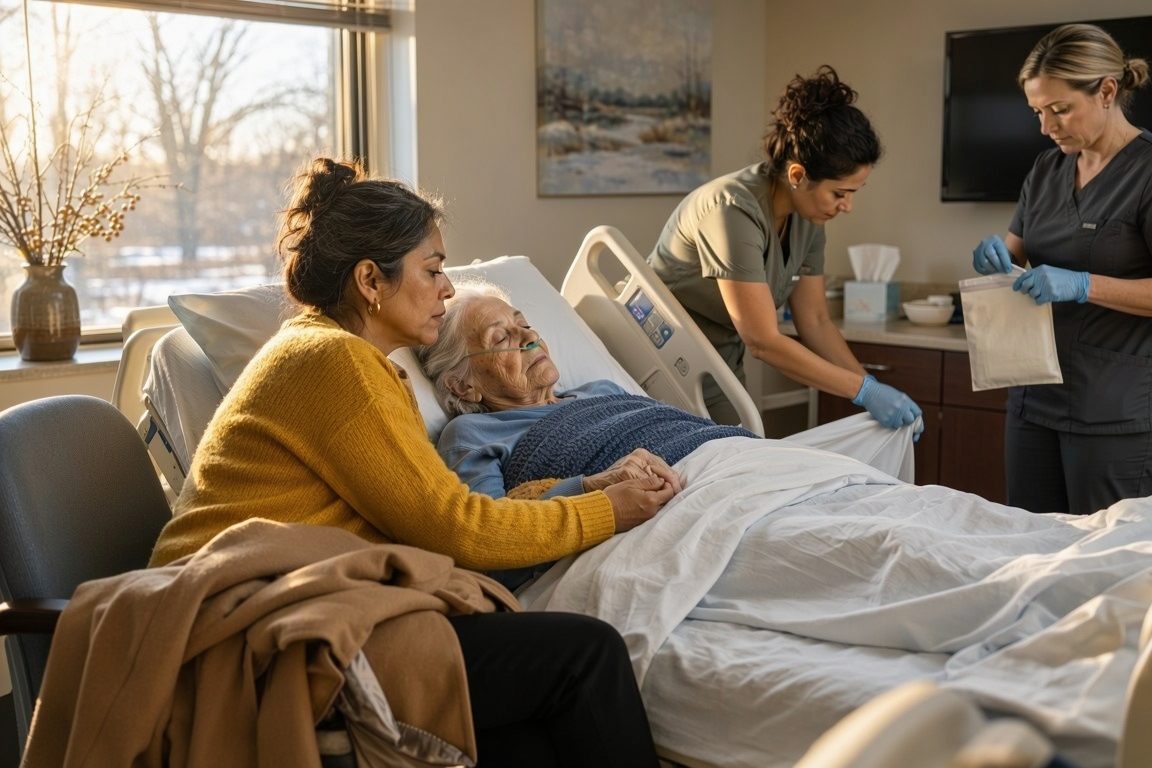
Hospice care is a special kind of medical care for people who are in the final stages of a terminal illness, like advanced Alzheimer's or other dementias. Instead of trying to cure the disease, the entire goal is to provide comfort, dignity, and the highest possible quality of life for whatever time remains. The hospice team, which includes a doctor, nurses, a social worker, a chaplain, a nurse's aide, and trained volunteers, works together to address physical, emotional, and spiritual needs. They manage pain and other distressing symptoms, help with bathing and personal care, and are on call 24 hours a day, seven days a week so you never have to face a crisis alone.
How Hospice Care Is Paid For: The Good News
One of the first questions families ask is, 'How will we pay for this?' The worry is understandable, but it is usually unfounded. For people over 65 who are eligible for Medicare Part A, hospice care is covered 100% with no copay. That means the government pays the entire cost of all hospice services related to the terminal illness. If your loved one is on Medicaid, that program also covers hospice with a very similar benefit. For those under 65 or with private insurance, most plans include a hospice benefit. And if someone has no insurance at all, many hospice organizations provide free or deeply discounted care through charity programs. The key is that hospice is almost always available regardless of your financial situation.
Where and When Hospice Care Happens
Hospice care can be provided wherever your loved one calls home, that could be their own house, a family member's home, a nursing home, an assisted living facility, or even a hospital. The hospice team comes to you. For someone with dementia, hospice is appropriate when a doctor certifies that the person is expected to have six months or less to live if the disease follows its usual course. Importantly, you can go in and out of hospice if your loved one's condition stabilizes. It is not a one-way door. And hospice does not mean you stop all care, it means you stop treatments aimed at curing the dementia and instead focus on comfort, which can include physical therapy, occupational therapy, or speech therapy as comfort measures.
Practical tools
4
Hospice Eligibility Checklist for Dementia
Print this list and bring it to the doctor:
Several yes answers signal it is time to discuss hospice.
Hospice Phone Interview Script
Open with: 'Hello, I am calling to learn about your hospice services for my loved one with dementia.' Then ask:
All About My Loved One Care Worksheet
Fill this out before your first hospice team meeting so they can personalize care:
Between-Visit Observation Log
Keep a small notebook by the bed and jot down the date, time, and any changes you notice in breathing, pain, agitation, eating, sleeping, or bowel/bladder function between hospice visits. Note any questions that come up so you can share them with the nurse.
Different situations
For a loved one with Lewy body dementia or Parkinson's disease dementia
Hospice eligibility may be easier to establish because these conditions often have more predictable physical declines, such as frequent falls, swallowing problems, and severe rigidity. The hospice team should be experienced with managing hallucinations and movement issues. Ask specifically about their experience with Lewy body dementia.
For a spouse caregiver vs. an adult child caregiver
Spouse caregivers often feel a deep sense of duty and may resist hospice because they see it as 'giving up.' Adult children may feel guilt or conflict with siblings. In both cases, the hospice social worker can help mediate family conversations. Spouses may need more reassurance that hospice is about comfort, not abandonment. Adult children may need help coordinating care from a distance.
For a loved one living in a nursing home or assisted living facility
Hospice can come into the facility and provide additional services beyond what the facility staff normally offers. The hospice team will work alongside the nursing home team. You do not need to move your loved one. Ask the facility if they have a preferred hospice provider, but you have the right to choose any Medicare-certified hospice.
For a loved one on Medicaid
Medicaid covers hospice very similarly to Medicare. In most states, Medicaid will pay for all hospice services with no copay. If your loved one is dual-eligible (both Medicare and Medicaid), the hospice benefit is even more comprehensive. Ask the hospice financial counselor to explain the specific Medicaid rules in your state.
For a loved one under age 65 with dementia (early-onset)
If your loved one is under 65, they may not qualify for Medicare unless they have been on disability for 24 months. In that case, private insurance or Medicaid may cover hospice. If they have no insurance, many hospices offer free or reduced-cost care through charity programs. Do not assume they are ineligible, call and ask.
Common questions
4
How much medication is wasted in hospice care and what are the financial implications?
Hospice aims to minimize waste by matching medication to your loved one's current needs, and since Medicare Part A fully covers eligible hospice medications, you have no out-of-pocket costs for them.
How can I support a grieving child or teen with hospice bereavement services?
Hospice offers specialized grief counseling for children and teens, including support groups and one-on-one sessions, helping them process their feelings in a safe, age-appropriate way.
What Medicare services are available for someone with Alzheimer's?
For someone with Alzheimer's, Medicare Part A covers hospice if a doctor certifies a six-month prognosis, and Part B covers doctor visits, outpatient care, and some home health services.
What does hospice care actually provide for a dementia patient and their family?
Hospice provides a team that manages pain and symptoms, offers emotional and spiritual support, and supplies medical equipment and medications at no cost, so you can focus on being present with your loved one.
For the doctor
5
- Ask the doctor: 'Given my loved one's specific dementia stage and symptoms, do you believe they meet the six-month prognosis for hospice eligibility?'
- Ask the hospice medical director: 'What medications will be used for pain, anxiety, or agitation? Are there any medications that might be inappropriate for someone with dementia?'
- Ask the doctor: 'If my loved one develops an infection like pneumonia or a urinary tract infection, will hospice treat it with antibiotics for comfort, or will we focus only on symptom relief?'
- Ask the hospice team: 'How do you handle the weaning of medications that are no longer needed, especially in a nursing home setting where regulations may apply?'
- Ask the doctor: 'If my loved one's condition improves and they seem stable, can we discontinue hospice and re-enroll later if needed?'