Step by step
What not to do
- Do not wait until the very last days to call hospice: Many families wait too long, thinking hospice means ‘giving up.’ In reality, the earlier hospice is involved, the more support you get, including help with symptom management, caregiver training, and emotional support. If you are unsure, ask for an evaluation; it does not commit you to anything.
- Do not assume hospice means your loved one will be sedated or given too much medication: Hospice teams are trained to use just enough medication to relieve suffering without causing unnecessary drowsiness. They will explain each medication and its purpose. If you have concerns, speak up, they want to work with you.
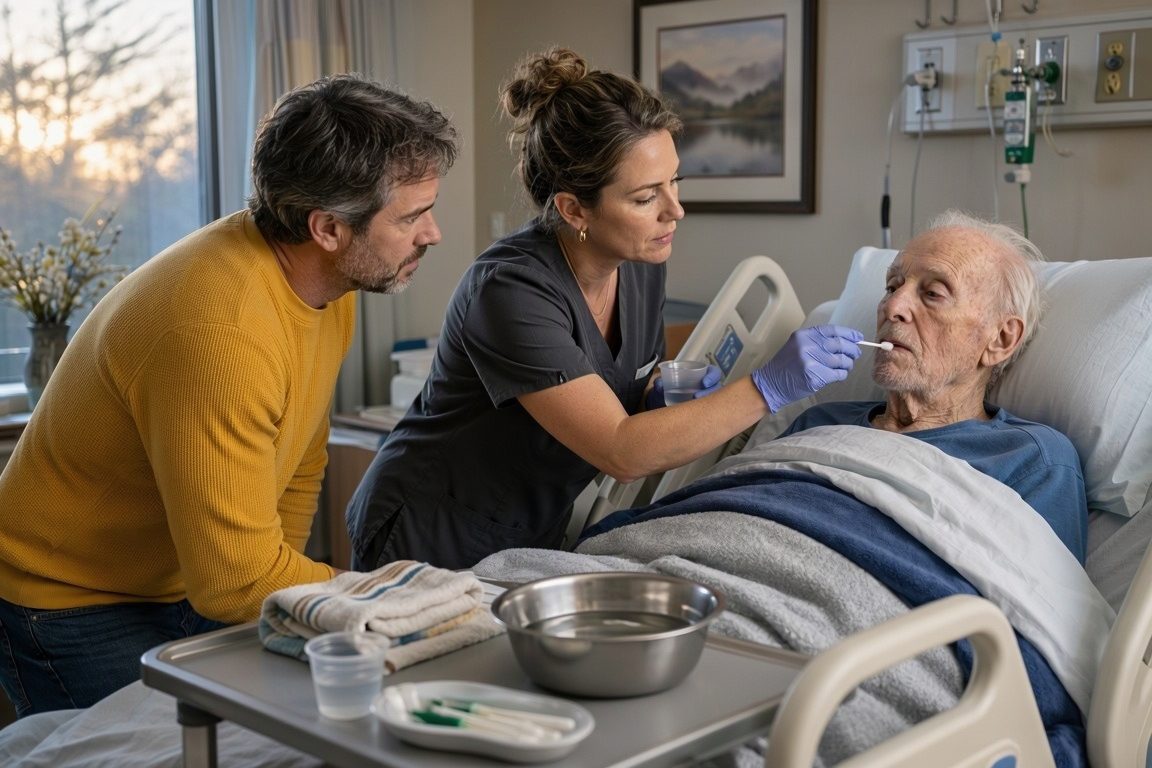
- Do not try to force food or drink when swallowing becomes unsafe: This is one of the hardest things for families. Forcing a person who cannot swallow can lead to choking or pneumonia.Instead, offer small sips of water, ice chips, or moistened sponges if they are awake and willing. The hospice team can guide you on comfort feeding.
- Do not ignore your own needs: Caregiver burnout is real. Accept offers of respite care from hospice volunteers or family members. Use the bereavement services even if you think you are fine. Taking care of yourself is not selfish, it helps you be present for your loved one.
- Do not assume you cannot go in and out of hospice: If your loved one stabilizes and no longer meets the six-month criteria, they can be discharged from hospice. This is not a failure. You can re-enroll later if their condition declines again. Keep the hospice team’s contact information handy.
Key points
- Hospice is comfort care for people with a life expectancy of six months or less, not a sign of giving up.
- Alzheimer’s decline is stair-step, so people can go on and off hospice multiple times.
- The hospice team includes a doctor, nurse, aide, social worker, chaplain, and volunteers, use them all.
- Forcing food or drink when swallowing is unsafe can cause harm; focus on comfort instead.
- Bereavement support is available for up to a year after death, take advantage of it.
- You can revoke hospice at any time if it is not working for your family.
Videos
 How Alzheimer’s Actually Leads to Death (and What Helps)Explains the physical process of dying from Alzheimer’s and what families can do to provide comfort.
 Dementia and Hospice: The Who, What, When, Where, and How of hospiceAnswers common questions about hospice eligibility and services for dementia patients.
 8 Ways That Hospice Can Help Caregivers of Seniors And Elderly ParentsLists practical supports hospice offers to caregivers, including respite and counseling.
 What to expect from Alzheimers/Dementia.Describes the late-stage symptoms and what families should watch for.
2 more videos
 Palliative Care And Hospice Conversations For Dementia Patients, Families And CaregiversOffers guidance on how to start difficult conversations about end-of-life care.
 Alzheimer's Disease - The End Stage (Mini-Series Part 3)Focuses on the final stage of Alzheimer’s and what to expect in the last weeks and days.
Background
What Hospice Is and Why It Matters for Alzheimer’s
Hospice is a type of palliative care specifically for people who are expected to have six months or less to live, as certified by a doctor. Unlike general palliative care, which can begin at any stage of a serious illness, hospice is reserved for the final chapter. Its core mission is not to cure or prolong life, but to ensure comfort, dignity, and quality of life for whatever time remains. For Alzheimer’s, this means managing symptoms like pain, agitation, breathing difficulties, and the physical changes that come as the body slows down. The hospice team, which includes a doctor, nurse, social worker, aide, chaplain, and trained volunteers, works together to address the physical, emotional, and spiritual needs of both the person with dementia and the family.
How Alzheimer’s Progresses in the Final Stage
In the late stage of Alzheimer’s, the person typically loses the ability to speak more than a few words, walk or sit up without help, and control their bladder or bowels. Swallowing becomes very difficult, which raises the risk of choking or aspiration pneumonia. The person may also become restless, agitated, or have trouble sleeping. In the final days or weeks, hands, feet, arms, and legs often feel cold to the touch, and the person may stop swallowing altogether. Many people with Alzheimer’s die from complications like infections or the inability to eat or drink, rather than from the disease itself. Hospice workers are trained to recognize these signs and to help families understand what is happening and how to respond with compassion.
The Unique Challenge of Qualifying for Hospice with Alzheimer’s
Getting onto hospice with Alzheimer’s can be more difficult than with some other diseases because the decline often happens in a stair-step pattern, long plateaus of stability interrupted by sudden drops after an infection, fall, or hospitalization. A person may meet the six-month criteria after a crisis, but then improve with good care and no longer qualify. This is normal; people can come on and off hospice multiple times. Medicare requires that a doctor recertify the six-month prognosis at regular intervals. If your loved one plateaus and is stable for a long time, the hospice team may need to discharge them, but you can always re-enroll if their condition worsens again. This is not a failure, it is a feature of how Alzheimer’s progresses.
Practical tools
6
Comfort Care Checklist for Late-Stage Alzheimer’s
A simple list to keep by the bedside:
Phrases to Say When You Don’t Know What to Say
Even if your loved one cannot respond, they may still hear you. Say things like: ‘I am here with you.’ ‘You are safe.’ ‘I love you.’ ‘It is okay to let go when you are ready.’ ‘Thank you for everything.’ Your presence and gentle touch are more important than words.
The FAST Scale (Functional Assessment Staging Tool)
This is a tool doctors use to determine hospice eligibility for dementia. A score of 7 (out of 7) means the person can no longer speak, walk, sit up, or swallow, and needs total care. Ask your doctor what your loved one’s FAST score is. This can help you understand where they are in the disease and whether hospice might be appropriate.
Hospice Provider Comparison Worksheet
Create a simple table with columns for:
Call at least two providers before choosing. Ask: ‘How do you handle pain and agitation in someone with Alzheimer’s?’
End-of-Life Comfort Kit
Ask the hospice nurse to help you assemble a kit with:
Keep it in a clean, accessible container.
Bereavement Support Calendar
After your loved one passes, mark on a calendar when the hospice will call for follow-up (usually at 1 month, 3 months, 6 months, and 1 year). Write down the names and numbers of grief counselors or support groups. Plan small self-care activities, like a walk or a coffee with a friend, on those dates to help you through the harder days.
Different situations
If the person with Alzheimer’s is in a nursing home or assisted living
Hospice services can be provided in the facility. The hospice team will work with the facility staff to coordinate care. Ask the facility if they have a preferred hospice provider or if you can choose your own. The hospice team can also provide extra training for staff on comfort care and may offer bereavement support for other residents and staff who have grown attached to your loved one.
If you are an adult child caregiver living far away
You can still be involved. Ask the hospice team to set up regular phone or video check-ins. They can send you updates and photos. Consider hiring a local geriatric care manager to be your eyes and ears. Use the hospice social worker to help coordinate long-distance logistics, like arranging for a volunteer to sit with your parent while you travel.
If the person has a different type of dementia (e.g., Lewy body, vascular)
The general principles are the same, but the timeline and symptoms may differ. For example, people with Lewy body dementia may have more fluctuations in alertness and more movement issues. Discuss with the hospice team how to manage specific symptoms like hallucinations or stiffness. The six-month prognosis criteria are similar across dementia types.
If the family has cultural or religious preferences for end-of-life care
Tell the hospice team about any rituals, dietary restrictions, or spiritual practices that are important. Many hospices have chaplains from various faiths or can arrange for a clergy member from your community. They can also help with things like having family members present during the final moments or performing specific prayers or blessings.
If the person is on Medicaid or has limited insurance
Medicare covers hospice for anyone who qualifies, regardless of income. Medicaid also covers hospice in most states. If you are uninsured, some hospices offer charity care or sliding-scale fees. Ask the hospice intake coordinator about financial assistance. Do not let cost stop you from seeking care.
For the doctor
5
- Ask the doctor: ‘What is my loved one’s FAST score, and does it meet hospice criteria?’
- Ask the hospice nurse: ‘How do you manage pain and agitation in someone who cannot speak?’
- Ask the social worker: ‘What are the steps for getting a death certificate and planning a funeral?’
- Ask the chaplain: ‘Can you help us with a specific religious ritual at the end of life?’
- Ask the doctor: ‘What are the signs that death is near, and what should we do when we see them?’