Step by step
What not to do
- Do not rely on verbal complaints without written follow-up, this leaves no audit trail.
- Do not accept promises of improvement without a written timeline and specific corrective actions.
- Do not confront staff emotionally in front of residents; maintain a cooperative but firm tone in all communications.
Key points
- Document everything in writing, dates, times, names, and what was said. This is your most powerful tool.
- Form or join a family council to present collective concerns; facilities must respond to these.
- Contact the state long-term care ombudsman for free, confidential advocacy and investigation.
- Do not rely on verbal complaints alone; always follow up in writing and keep copies.
- If harm is severe, consult an attorney who specializes in elder abuse or nursing home neglect.
- Your presence and attention are a safeguard, visit often, ask questions, and trust your gut.
Videos
 The Story Behind the Film 'No Country for Old People'This video helps you understand the broader systemic issues in elder care that lead to safety failures, giving you context for why facilities may resist accountability.
 'Inflamed' with Co-Authors Anne E. Belden & Paul GullixsonLearn how corporate ownership and profit motives can undermine resident safety, and how families can push back by demanding transparency and accountability.
 Dementia Care Partner Talk Show # 33: An Interview with Dr. Tia Powell (Part 2)Dr. Powell discusses ethical dilemmas in dementia care and offers guidance on how families can advocate effectively when facilities fail to provide safe care.
 Conscious Caregiving with L & L 'Staffing Issues for Senior Services'This video directly addresses staffing shortages, a root cause of many safety failures, and offers strategies for families to document and report understaffing.
2 more videos
 Why Do Elderly Parents With Dementia Become AgitatedUnderstanding agitation helps you distinguish between dementia-related behavior and facility-caused distress, which is critical when documenting safety failures.
 Caring For Aging Parents: Practical Tips & AdvocacyThis video provides practical advocacy tips, including how to communicate with facility staff and regulators, and how to build a support network of other families.
Background
Why Safety Failures Happen, and Why They’re So Hard to Prove
Many safety failures in facilities are not one-time accidents but predictable breakdowns in staffing, training, communication, or documentation. For example, when a resident who requires a two-person Hoyer lift is transferred by a single staff member using a sit-to-stand device, a fall and fracture become almost inevitable. Similarly, a resident on a pureed diet who is served a breakfast sandwich can choke and die. These are not random events; they are systemic failures that facilities often try to minimize or hide.
Facilities are often run by businesspeople who may prioritize profit over care, and there is frequently a lack of transparency about who actually owns and operates the facility. Some facilities change names repeatedly while the same owners remain in the background, making it difficult for families to track accountability. When harm occurs, facilities may deny responsibility, lie in official reports, or only admit fault when forced to by a civil or criminal case. This pattern of deflection is why families must be proactive, persistent, and organized.
The Role of Documentation and Family Presence
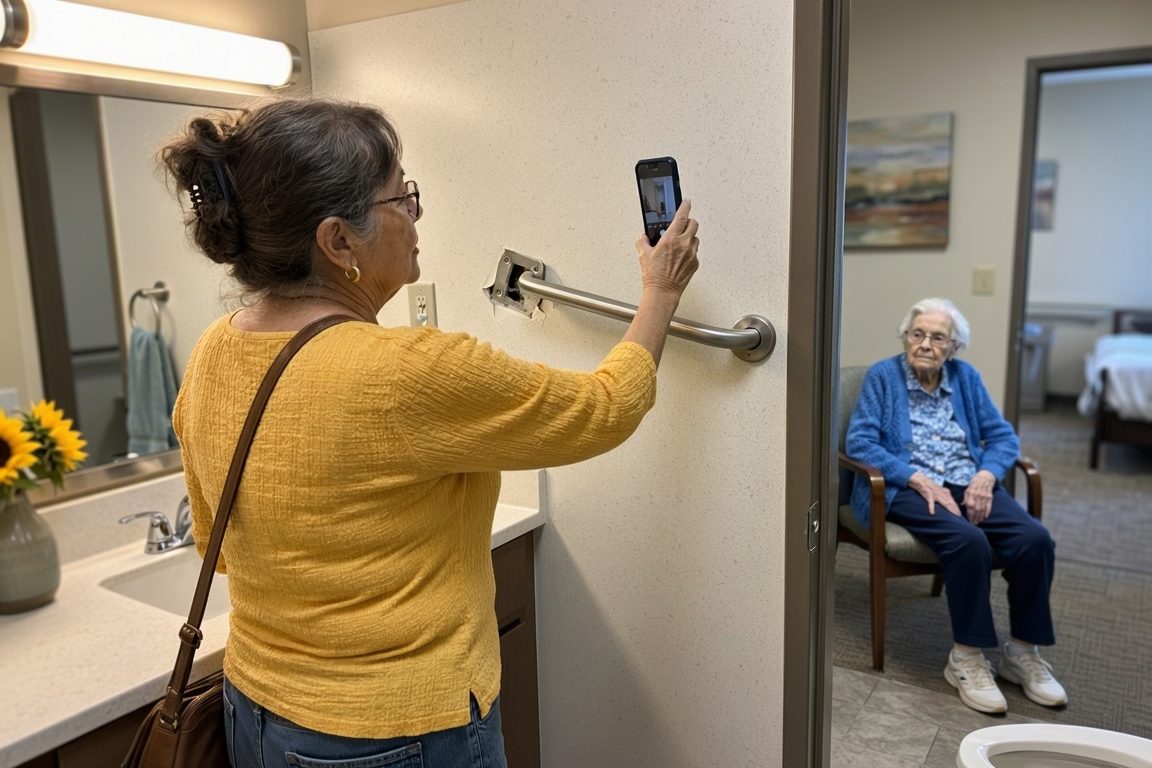
One of the most powerful tools families have is documentation, not for the purpose of defending the facility, but for accuracy. When you consistently record what you see, hear, and are told, you create an undeniable record of patterns. For instance, note when you see a different caregiver every day who doesn’t know your loved one’s name or needs. Track every fall, every medication error, every refused care event, and what the facility did in response. This kind of documentation is what makes litigation possible, and what can push a facility to change before a lawsuit is ever filed.
Families often feel guilty about placing a loved one in a facility, but that guilt can be reframed as a call to action. Your presence and attention are not a burden, they are a safeguard. When you show up regularly, ask questions, and write things down, you signal to staff that someone is watching. This alone can reduce the likelihood of neglect and error.
Practical tools
2
Daily Observation Log Template
A dated, time-stamped form to record each shift's safety events, staff actions, and communications, with columns for date, time, staff observed, safety issue, and witness initials.
Complaint Escalation Checklist
Step-by-step checklist with contact information for facility administrator, state ombudsman, and health department, including deadlines for each escalation stage.
Different situations
If your loved one has Lewy body dementia or Parkinson’s disease dementia
These conditions often involve fluctuating cognition, hallucinations, and severe sensitivity to medications. Safety failures may include missed doses of critical Parkinson’s medications, leading to rigidity or falls. Emphasize in your documentation any missed medication times and any sudden changes in mobility or alertness. Ask the facility to have a neurologist or geriatric psychiatrist review the medication regimen.
If your loved one is in late-stage dementia and is bedbound or non-verbal
Safety failures here often involve pressure ulcers, dehydration, or aspiration. Document the condition of their skin every visit, note any changes in breathing or swallowing, and ask to see the turning-and-repositioning schedule. If the facility refuses to show you the schedule, that is a red flag. Consider hiring a private geriatric care manager to do weekly spot checks.
If you are an adult child living far away (long-distance caregiver)
You cannot be there every day, but you can hire a local geriatric care manager or a private advocate to visit weekly and report back to you. Set up a video call schedule with your loved one (if they are able) and ask the facility to have a staff member present during the call. Join the family council by phone or video. Send your observation log to the ombudsman monthly.
If your loved one is on Medicaid (in a facility that accepts Medicaid)
Medicaid-funded facilities are often understaffed and may have higher turnover. You have the right to request a transfer to another Medicaid bed if the facility is unsafe, but this can be difficult. Contact your state’s Medicaid office and ask for a 'nursing home relocation specialist' or 'transition coordinator.' Document every safety failure and send copies to the state Medicaid fraud control unit.
If the facility is a memory care unit within a larger assisted living community
Memory care units often have locked doors and specialized staff, but they may still be understaffed or poorly trained. Ask specifically about staff-to-resident ratios during evenings and weekends. Request a copy of the unit’s elopement prevention policy. If your loved one wanders, document any time they were found outside the locked unit or in an unauthorized area.
For the doctor
4
- Ask your loved one’s primary care doctor or geriatrician: 'Given my loved one’s current health status, what specific safety risks should I be monitoring for in the facility, and how often should I request a medication review?'
- Ask the facility’s medical director: 'What is the protocol for notifying families immediately after a fall, a medication error, or a change in condition? Can you put that in writing?'
- If you suspect a medication error or adverse drug reaction, ask a pharmacist or the facility’s consulting pharmacist: 'Can you review the current medication list for interactions or dosages that may be contributing to falls or confusion?'
- Before moving your loved one to a new facility, ask the new facility’s director of nursing: 'What is your policy for accepting residents with a history of falls or elopement? Do you have a fall prevention program, and can I see it in writing?'