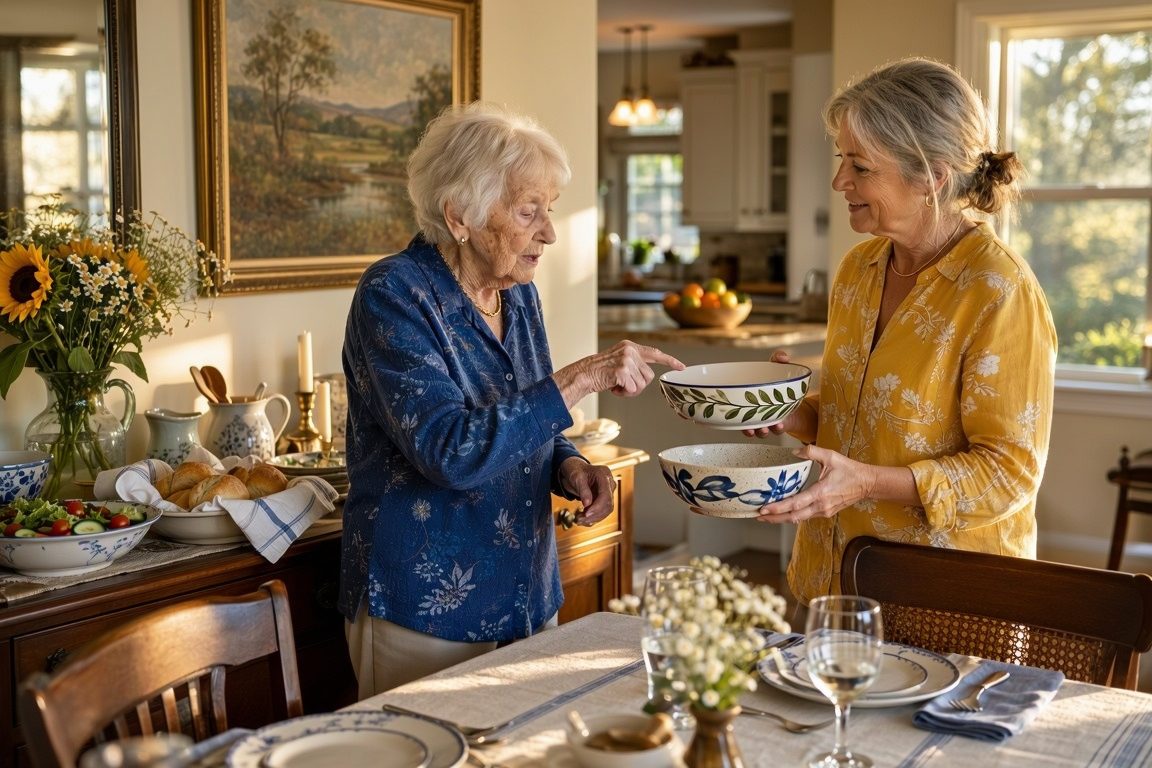
Step by step
What not to do
- Do not correct them or point out mistakes; if they sort a fork into the wrong pile, gently guide their hand and focus on effort
- Do not use children's activities, toys, or a childlike tone, choose adult coloring books, real silverware, and age-appropriate puzzles
- Do not overwhelm them with too many choices or complex tasks; keep options to two simple items and tasks short and achievable
- Do not engage when you are irritable or exhausted; if not in a good place, take a break and come back calm
- Do not assume they cannot do something without trying; start simple and gradually build difficulty as they show success
- Do not overlook co-existing health conditions like heart disease or diabetes, as managing these reduces symptoms that worsen dementia
Key points
- Mixed dementia means multiple types of dementia occur together, causing a wide range of symptoms. Tailored care is key.
- Your loved one needs to feel valued and capable. Simple compliments and asking for help can make a huge difference.
- Adapt tasks to their abilities: use prompts for cognitive struggles, provide seating or tools for physical limitations.
- Use positive, encouraging language like 'You're doing a great job' and 'Take your time.' Avoid correction or frustration.
- Create daily anchor rituals and routines to reduce confusion and build confidence.
- Take care of yourself: seek respite care, delegate chores, and give yourself permission to step back when needed.
Videos
 When You Want to Walk Away From Dementia Caregiving (But Can’t)This video addresses the emotional toll of caregiving and offers strategies to cope with feelings of wanting to give up, which is common when caring for someone with mixed dementia.
 What Is Mixed Dementia And How Does It Impact Caregivers? - Dementia Help HubThis video explains what mixed dementia is and how it affects both the patient and caregiver, providing a foundation for understanding the condition.
 How Do You Get Specialized Support For Mixed Dementia? - Dementia Help HubThis video covers how to build a team of healthcare professionals and access community resources for mixed dementia care.
 Living With DementiaThis video offers a personal perspective on living with dementia, helping caregivers understand the emotional experience of their loved one.
2 more videos
 How Can Mixed Dementia Patients Show Surprising Resilience? - Dementia Help HubThis video highlights factors that support resilience in mixed dementia, such as physical activity and social engagement, which align with preserving abilities.
 Is It Hard To Care For Someone With Dementia?This video validates the difficulty of caregiving and offers practical tips for managing stress and finding support.
Background
What Is Happening and Why
Mixed dementia means your loved one has more than one type of dementia at the same time, such as Alzheimer's disease and vascular dementia. This combination can cause a wider range of symptoms, including memory loss, confusion, trouble with planning, and changes in mood or movement. Because the brain is facing multiple challenges, your loved one may feel overwhelmed, frustrated, or as if they no longer belong. They may withdraw or become anxious because they sense they are losing abilities they once had. This is not a sign of giving up; it is a natural response to feeling incapable.
Why Feeling Capable Matters
When people with dementia feel they have no purpose, they can become depressed, withdrawn, and feel tiny or broken. They need to feel valued and able to contribute. Research shows that when caregivers understand the strengths of the person they care for and encourage independence, it boosts confidence and maintains dignity. Even with mixed dementia, many individuals show surprising resilience when they have brain reserve, physical activity, social engagement, emotional support, and good health management. Your role is to find ways to help them feel important and capable, not to fix everything.
The Caregiver's Role in Preserving Abilities
You are not expected to master caregiving overnight. It is a huge adjustment, and most people find they get the hang of it after a few months. The key is to focus on what your loved one can still do, not what they cannot. By asking for their help, offering genuine compliments, and adapting tasks to their current abilities, you can create moments of success. This approach also helps you feel less overwhelmed because you are working with your loved one, not against them. Remember, your mood matters: avoid visiting when you are irritable or tired, because your loved one will pick up on your energy.
Practical tools
4
Phrase Bank for Caregivers
Ready list of exact words: 'I need your opinion on this,' 'Can you help me with this?', 'You're doing a great job,' 'Take your time,' 'It's okay,' 'I really appreciate your help,' and 'Let's do this together.' Avoid commands like 'Do this' or 'You need to...' and avoid hollow encouragement when the task is beyond them.
Task Library with Built-In Adaptations
Rotating checklist of doable tasks with modifications: sort silverware, sort cards into red and black, fold towels, wipe counters, polish silverware, set table, water a plant, match socks, arrange placemats. For each, note potential struggles and adjust by breaking into steps, switching to larger cards, providing a chair, or doing side by side.
Daily Anchor Ritual Template
Simple written schedule posted where you both can see it, with consistent times and places for shared activities, morning coffee together, short walk after lunch, folding laundry in the afternoon. The same rhythm each day reduces confusion and gives a reliable sense of purpose.
Respite and Support Resource List
Prepared list of contacts: local Alzheimer's Association affiliate for respite care referrals, support groups, and home care agencies, plus MedicAlert+Safe Return or similar wandering-prevention programs if needed. Keep in one easy-to-find place so stepping away is a planned act of care.
Different situations
For mixed dementia with vascular components (e.g., stroke history)
Be extra mindful of physical limitations like weakness or balance issues. Adapt tasks to be seated or use adaptive tools. Also, managing blood pressure, diabetes, and heart health is critical because these conditions directly affect dementia symptoms. Work closely with a doctor to keep these under control.
For early-stage mixed dementia
Your loved one may still have good insight and can participate in planning. Ask them directly what tasks they enjoy or feel capable of. Use reminders like post-it notes for appointments or events. Encourage them to stay socially active and physically fit, which supports brain resilience.
For middle-stage mixed dementia
Tasks will need more simplification and prompting. Focus on sensory and familiar activities, like folding towels or sorting silverware. Use visual cues and demonstrate the task first. Avoid tasks that require multiple steps. Your encouragement and patience are key.
For spouse vs. adult child caregiver
Spouses may need to adjust to a shift in roles from partner to caregiver. It is okay to grieve this loss. Adult children may need to balance caregiving with their own family and work. Both can benefit from delegating chores like grocery shopping or cleaning to others. Seek support groups specific to your role.
For a loved one in a facility
Visit with a specific activity in mind, like sorting cards or looking at a photo album together. Ask staff for their input on what tasks your loved one enjoys. Use the same encouraging phrases and avoid visiting when you are tired. If possible, involve another resident or family member to reduce pressure.
For the doctor
5
- Ask your doctor: 'What specific therapies or activities are best for my loved one's combination of dementia types?'
- Discuss: 'Are there any medications or treatments that can help manage symptoms of mixed dementia?'
- Inquire: 'How can we best manage other health conditions like heart disease or diabetes to support brain health?'
- Ask: 'What community resources or support groups are available for caregivers of people with mixed dementia?'
- Discuss: 'Should we consider a referral to a physical or occupational therapist for a home safety evaluation?'