Step by step
What not to do
- Do not assume any confusion after surgery is 'just the dementia'; sudden changes can signal treatable delirium, infection, medication side effects, or pain.
- Do not argue with or try to correct a loved one who is delirious, it increases agitation.Instead, validate their feelings and gently redirect.
- Do not leave your loved one alone for long stretches; arrange for a family member, friend, or volunteer to sit with them when you cannot.
- Do not neglect your own physical and emotional health; taking breaks, eating, and sleeping is part of effective caregiving.
Key points
- Delirium is preventable and treatable, it is not an inevitable part of surgery for dementia patients.
- Your role as advocate is critical: speak up about the dementia diagnosis, request a baseline cognitive test, and ask for delirium prevention protocols.
- Familiar faces, orientation, and sensory aids (glasses, hearing aids) are powerful, low-cost tools against confusion.
- Use the word 'sudden' when reporting changes to trigger a search for reversible causes like infection or medication side effects.
- After discharge, maintain a consistent routine and watch for lingering decline, report it to the doctor promptly.
- Take care of yourself: you cannot pour from an empty cup. Accept help, take breaks, and use hospital support services.
Videos
 Does Anesthesia Cause Dementia? The Truth (Plus a Prevention Plan)This video directly addresses the fear that anesthesia causes dementia, explains the real risk of delirium, and provides a checklist of modifiable risk factors and prevention steps you can take.
 An Interview with the Golden GeroPsych Girls - Dr. Lisa Taylor and Dr. Kristen DillonPsychologists who specialize in geriatrics discuss how families can support a loved one during hospitalization, including strategies for managing confusion and working with the medical team.
- Caregiver Stress and Depression, Dr. Helen Lavretsky | UCLAMDChatThis video offers practical advice for managing caregiver stress and avoiding burnout, which is essential for maintaining your ability to advocate effectively.
Background
Why Surgery Poses a Special Risk for Dementia Patients
For older adults, especially those already living with dementia or mild cognitive impairment, surgery is more than a physical event, it is a major stressor on the brain. Aging itself reduces what doctors call 'cognitive reserve,' the brain's ability to bounce back from insults like anesthesia, inflammation, and the disruption of a hospital stay. When you add the underlying vulnerability of dementia, the risk of postoperative neurocognitive disorders, including delirium and longer-lasting cognitive dysfunction, rises sharply. This is not because general anesthesia causes Alzheimer's or dementia (the strongest evidence says it does not), but because the combination of surgery, hospital environment, and a pre-existing brain condition creates a perfect storm for confusion and decline.
Delirium: The Real Villain You Can Fight
Delirium is an acute, sudden change in how a person thinks, acts, or understands what is happening around them. It can look like agitation, hallucinations, withdrawal, or extreme sleepiness. It is often mistaken for dementia or depression, but the key difference is its sudden onset, hours or days after surgery. Delirium is not a harmless side effect; it raises the risk of falls, longer hospital stays, higher costs, and permanent cognitive decline. Critically, delirium is preventable. There are established guidelines and modifiable risk factors, things you and the medical team can address together. In one study, a family-involvement program reduced delirium from 19.4% to 2.6%, and physical and cognitive function improved even 30 days after discharge. Individual results vary, but the message is clear: your involvement can make a real difference.
Your Role as Advocate and Anchor
Hospital teams are often hyperfocused on the success of the surgery itself, the heart, the hip, the organ being operated on. They may not automatically think about your loved one's brain health. That is where you come in. You are the one who knows their baseline: how they were thinking, talking, and functioning the week before surgery. You are the one who can speak up when something seems off. You are also the one who can provide the familiar presence, orientation, and comfort that no medical protocol can replace. By communicating your concerns, requesting a baseline cognitive assessment, and helping implement simple prevention strategies, you can dramatically reduce the risk that your loved one will wake up confused and never fully return to their previous self.
Practical tools
4
Preoperative Advocacy Script
Say to the surgeon and anesthesiologist: 'My loved one has a diagnosis of dementia. I am very concerned about postoperative delirium. Can we incorporate delirium prevention protocols and do a baseline cognitive test before surgery?'
Cognitive Rescue Kit Checklist
Pack:
Label every item with their name.
Sudden Change Report
When you notice a shift in thinking or behavior, say to the nurse or doctor: 'This change came on suddenly. She was fine this morning and is different now.' This signals possible delirium and triggers an immediate workup for reversible causes.
Baseline Description Card
One-page card for nursing staff on surgery day: list what your loved one could do before admission (lived alone, managed medications, walked unaided, recognized family, followed conversations) and any comfort preferences. This prevents treatable problems from being mistaken for chronic dementia.
Different situations
For a person with Lewy body dementia (LBD)
LBD patients are extremely sensitive to antipsychotic medications, which can worsen symptoms or cause severe side effects. Discuss with the clinician: avoid all antipsychotics unless absolutely necessary. Also, LBD often involves visual hallucinations and fluctuating cognition, so delirium may be harder to distinguish from the disease itself. Use the 'sudden change' report and insist on a thorough medical workup before assuming it is just the dementia.
For a person in middle-stage dementia
At this stage, your loved one may have more trouble communicating pain, fear, or confusion. Watch for non-verbal cues: grimacing, restlessness, pulling at tubes, or changes in breathing. Use simple, one-step instructions: 'Sit down now.' 'Open your mouth.' Avoid open-ended questions like 'What do you want?' which can overwhelm them. Bring familiar objects and music to provide comfort.
For an adult child caregiver vs. a spouse caregiver
Adult children may have less authority with medical staff and may need to be more assertive. Practice the advocacy script beforehand. Spouses may be more emotionally exhausted and at risk of burnout, prioritize self-care. Both roles benefit from bringing a second family member to key meetings to take notes and provide support.
For a person in a facility (nursing home or assisted living)
Coordinate with the facility's staff before the hospital stay. Share the cognitive rescue kit and the family rotation schedule with them. Ask the facility to provide a familiar staff member to visit during the hospital stay. After discharge, ensure a smooth transition back with a detailed handoff to the facility's nursing team about any new medications or changes in function.
For a person with hearing or vision loss
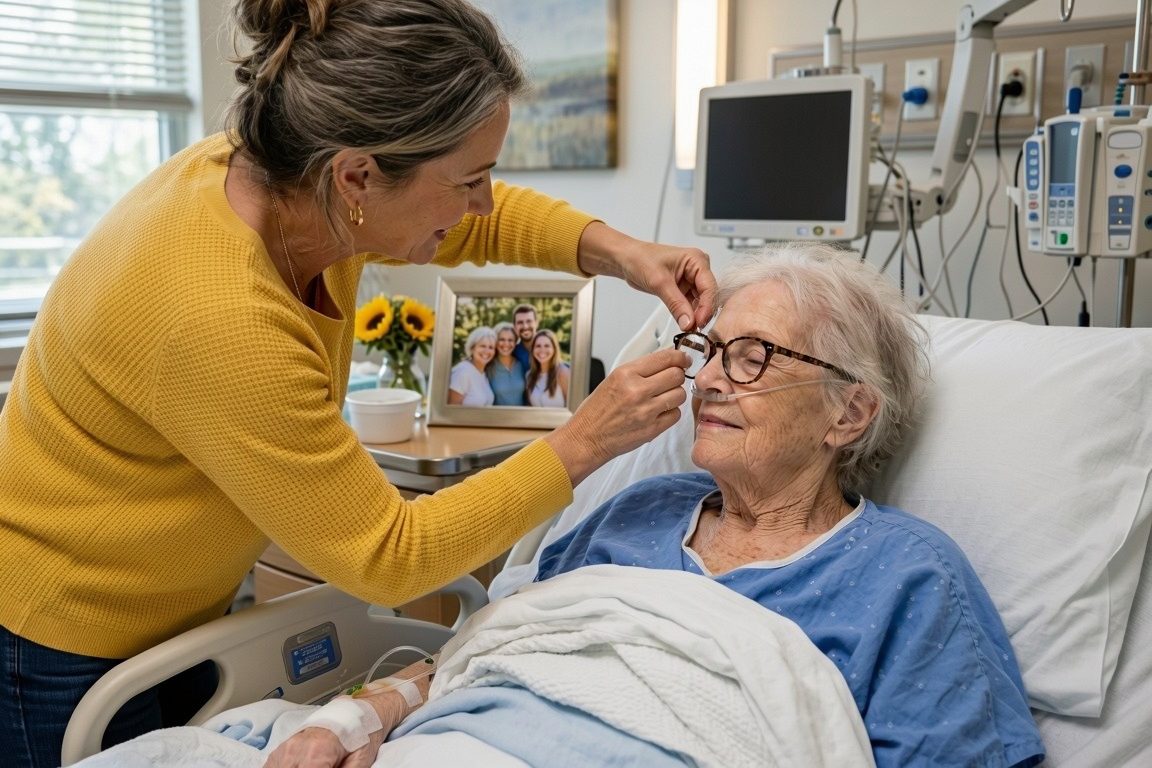
Sensory deficits are major risk factors for delirium. Ensure glasses and hearing aids are worn at all times during waking hours. If the person cannot use their usual devices, ask the hospital for a pocket talker (amplifier) or large-print materials. Reorient using touch and a calm voice: 'I am here. You are safe.'
For the doctor
5
- Ask the anesthesiologist: 'Given my loved one's dementia, is there a specific type of anesthesia or sedation that is safer for their brain? Should we avoid certain medications like benzodiazepines or anticholinergics?'
- Ask the surgeon: 'What is the plan for pain management after surgery? Can we avoid opioids if possible, or use the lowest effective dose? Are there non-drug options like ice, positioning, or TENS units?'
- Ask the hospitalist or primary care doctor: 'Please review all of my loved one's current medications, including over-the-counter and supplements, for any that could increase delirium risk. Are there any we should stop or adjust before and after surgery?'
- Ask the nursing team: 'What is the protocol for early mobilization and getting my loved one out of bed? When can they start walking? Can we have a physical therapy consult before discharge?'
- Ask the discharge planner: 'What follow-up appointments are needed? Who will monitor for cognitive changes after discharge? Can we have a referral to a geriatrician or neurologist if we see persistent decline?'