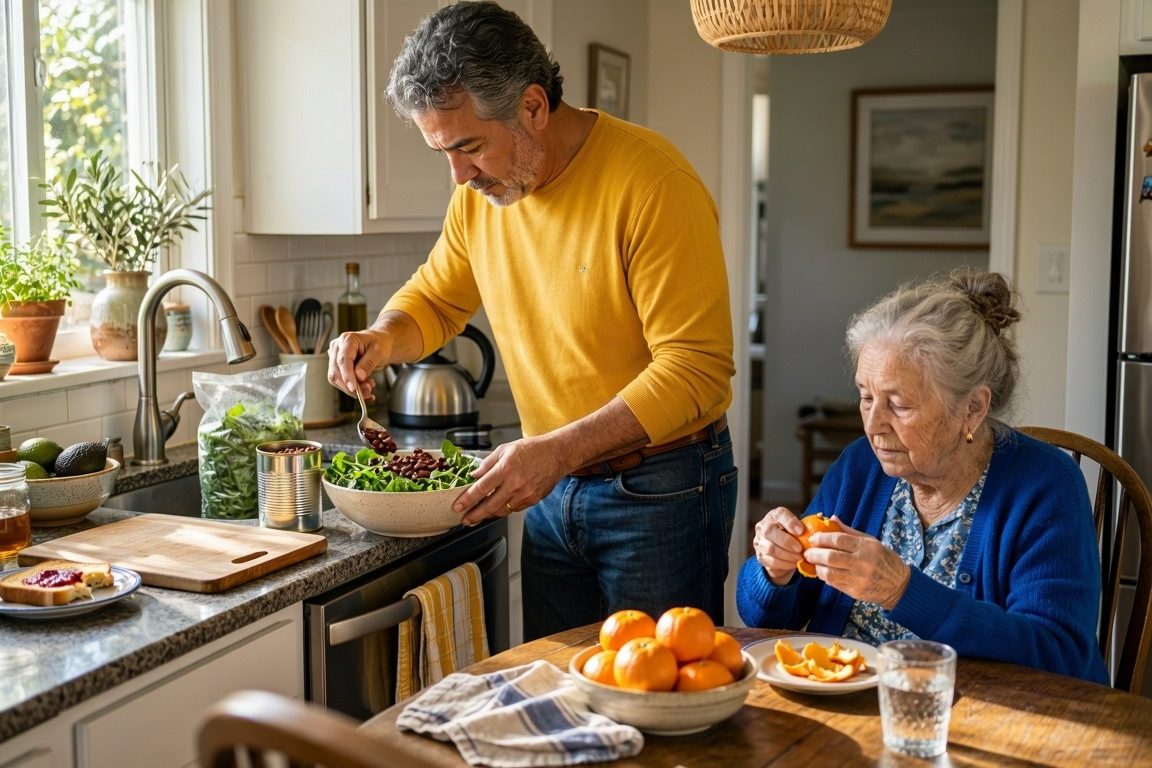
Step by step
What not to do
- Don't skip meals to 'save time.' This backfires because your blood sugar drops, you get irritable, and you overeat junk later.Instead, eat small, frequent meals or snacks every 3-4 hours to keep your energy stable.
- Don't rely on fast food or drive-thrus more than once a week. They are high in sodium, sugar, and unhealthy fats, and they worsen depression and anxiety.Instead, keep a list of 3-4 'emergency' healthy takeout options (like a grilled chicken salad or a burrito bowl with brown rice and beans).
- Don't try to cook elaborate meals from scratch. That adds stress, not relief.Instead, use shortcuts like pre-chopped vegetables, rotisserie chicken, canned beans (rinsed), and frozen vegetables. These are just as nutritious and save huge time.
- Don't eat while standing over the sink or while driving. This leads to mindless overeating and poor digestion.Instead, sit down for even 10 minutes, put your food on a plate, and take a few deep breaths before eating. This signals your body to digest properly.
- Don't feel guilty for buying pre-made healthy options. A bag of pre-washed salad, a container of hummus, or a frozen vegetable stir-fry are not failures, they are survival tools. Use them without shame.
- Don't forget to eat just because your loved one is eating. Many caregivers feed their care partner first and then eat nothing themselves. Always prepare a plate for yourself at the same time, even if it's just a small portion.
Key points
- Your nutrition directly affects your mood, energy, and ability to care for your loved one, skipping meals or eating junk is a fast track to burnout.
- Accept help with meals immediately and specifically, don't wait until you're desperate.
- Use batch cooking and appliances like slow cookers or Instant Pots to make healthy meals with minimal effort.
- Keep healthy emergency snacks everywhere, your bag, car, and pantry, so you always have a real food option.
- Eat small, frequent meals to stabilize blood sugar and avoid the junk-food cycle.
- Involve your care partner in simple meal tasks when possible, it helps them and gives you a shared moment.
Videos
 How to eat healthy as a dementia caregiver: Interview with a nutritionistThis video directly addresses the caregiver's question with a nutritionist's practical advice on eating well under stress, including tips on meal timing and nutrient-dense choices.
 Quick Tips: Top Ten Tips for Caregivers to Stay Healthy and ActiveOffers quick, actionable tips for maintaining your own health, including diet, exercise, and sleep, all in a short format that fits a busy caregiver's schedule.
 Coping with Caregiver BurnoutExplains the connection between poor diet and burnout, and provides strategies to break the cycle, reinforcing why nutrition matters for your mental health.
 Quick Tips: Tips for New CaregiversCovers foundational self-care tips, including meal planning and asking for help, which are essential for new caregivers who are just learning to prioritize their own health.
Background
Why Your Diet Crashes Under Stress
When you're constantly in a state of high alert, watching for falls, managing agitation, or handling sundowning, your body's stress response hijacks your decision-making. Your brain craves quick energy, which is why a candy bar or a fast-food run feels like the only option. But those empty calories spike your blood sugar, then crash it, leaving you more tired, irritable, and prone to depression. Over time, this cycle raises your risk for chronic conditions like diabetes and high blood pressure, which are already common in caregivers who neglect their own checkups.
The Vicious Cycle of Junk Food and Burnout
The more stressed you feel, the more you reach for processed, high-calorie foods. Your body can't reabsorb all that excess, so you gain weight, feel sluggish, and then feel guilty. That guilt adds to your stress, and you reach for junk again. Meanwhile, you're missing key nutrients your brain and body need to handle the emotional and physical demands of caregiving. This isn't a personal failing, it's a biological trap. The way out is not willpower; it's planning and using the right tools to make the healthy choice the easy choice.
You Can't Pour from an Empty Cup
It sounds like a cliché, but it's neuroscience: if you don't feed yourself, you literally cannot regulate your own emotions or make good decisions for your loved one. Your nervous system needs fuel to stay calm. When you're undernourished, you're more likely to snap at your care partner, feel hopeless, or miss early signs of their distress. Prioritizing your own meals isn't selfish, it's the most effective caregiving strategy you can adopt.
Practical tools
6
The 'Help Me Eat' Script
When someone offers help, say exactly this: 'Thank you so much. What would really help is if you could bring a meal on Tuesday night, anything is fine, we're not picky. Or if you could pick up a few groceries for me, I'll text you a short list.' This gives them a clear, easy action and you get real support.
The 5-Minute Meal Builder Checklist
Keep this list on your fridge or phone:
Combine and eat.
The 'No-Cook' Emergency Meal Kit
Assemble a basket or shelf in your pantry with:
When you have zero energy, you can eat a balanced meal without turning on the stove.
The Slow Cooker / Instant Pot 'Set and Forget' Method
In the morning, put 1 cup lentils, 2 cups chopped vegetables (carrots, onions, celery), 3 cups broth, and spices in the slow cooker. Cook on low for 6-8 hours. When you come back, you have a hearty soup. Or use an Instant Pot: 1 cup brown rice + 2 cups water + a pinch of salt, pressure cook for 22 minutes. Done.
The 'Caregiver Plate' Visual Cue
Use a divided plate or a lunchbox-style container. Fill one section with protein, one with veggies, and one with a grain or starch. This takes the guesswork out of balanced eating. You can prep several at once and grab one when you're hungry.
The 'Meal Time De-stressor' for Your Loved One
If your care partner gets agitated while you're cooking, give them a small snack (like a few crackers or a piece of fruit) or a simple activity (coloring, looking at a photo album, or folding napkins). This buys you 10-15 minutes to prepare your own food without interruption.
Different situations
If your loved one has Lewy body dementia or Parkinson's dementia
These conditions often cause swallowing difficulties (dysphagia) and sensitivity to textures. You may need to modify your own meals to avoid choking hazards, or you might need to prepare pureed or soft foods for them. In that case, cook one batch of soft food for them and eat the same meal in its whole form for yourself. Also, these conditions can cause sudden changes in behavior, so your meal prep might need to be even more flexible, keep shelf-stable snacks in every room.
If you are an adult child caregiver (not a spouse)
You may have your own children at home, making meal time doubly stressful. Use the same batch-cooking strategies for your whole family. Involve your kids in simple tasks like setting the table or washing vegetables. Also, you might feel guilty taking time for yourself, remind yourself that your health is essential for both your kids and your parent. Accept help from siblings, neighbors, or your own children's friends' parents.
If your loved one is in a facility or receiving hospice care
Your caregiving role shifts to visiting, advocating, and emotional support. You still need to eat well, but you have more control over your schedule. Use the time during their appointments or visits to eat a proper meal beforehand. Keep a healthy snack in your bag for the car. You may also have more opportunity to join a caregiver support group that meets during those hours.
If you are on a tight budget (Medicaid or low income)
Focus on inexpensive staples: beans, lentils, rice, oats, eggs, frozen vegetables, and seasonal produce. Buy in bulk when possible. Use food banks or community meal programs if needed, they are there for you. Many areas have 'Meals on Wheels' for caregivers too. Don't feel shame; this is a resource to keep you healthy.
If your loved one has frontotemporal dementia (FTD)
FTD often causes changes in eating behavior, they may overeat, crave sweets, or refuse food. This can be very stressful for you at meal times. Prepare your own food separately and eat at a different time if needed. Keep your own healthy snacks hidden and accessible only to you. Use the 'small snack' diversion technique to keep them occupied while you eat.
For the doctor
5
- Ask your doctor: 'Given my stress levels and caregiving schedule, what is a safe and effective way to manage my weight and blood sugar? Should I be checking my blood pressure or glucose at home?'
- Ask your doctor: 'I'm having trouble eating regularly. Are there any supplements (like a multivitamin or protein shakes) you recommend to fill nutritional gaps?'
- Ask your doctor: 'I've been relying on caffeine and sugar to get through the day. Could this be affecting my mood or sleep? What are safe alternatives?'
- Ask your doctor: 'I have a history of [diabetes/heart disease/depression]. How should my diet change specifically to support my caregiving role?'
- Ask your doctor: 'I'm considering a meal delivery service or pre-made meal plan. Are there any ingredients or dietary patterns I should avoid given my health history?'