Step by step
What not to do
- Do not assume the immobility is just part of dementia or aging. Many caregivers think 'they are just slowing down,' but pain is a treatable cause.Instead, always investigate pain as a possible reason for any new movement change.
- Do not force them to move or get angry if they resist. Forcing can increase pain and fear, making the problem worse.Instead, use a gentle, patient approach and offer choices: 'Would you like to stand now or in five minutes?'
- Do not ignore moaning or groaning as 'just noise.' As one source warns, ignoring a person who is crying out for help is abuse. Moaning can be a sign of pain or self-soothing, you need to figure out which. If it is pain, address it; if it is self-soothing, offer comfort.
- Do not rely only on verbal reports of pain. A person with dementia may say 'I am fine' even when they are in agony because they cannot articulate it or do not want to burden you. Trust your observations over their words.
- Do not give over-the-counter pain relievers without checking with their doctor first. Some pain meds can interact with dementia medications or worsen kidney function. Always get a doctor's okay before starting any new pain regimen.
- Do not forget to check for environmental causes of pain. A wrinkled sheet, a tag on clothing, a too-warm room, or a hard chair can all cause discomfort that leads to immobility. Make their environment as comfortable as possible.
Key points
- Pain is a common but often overlooked cause of sudden immobility in dementia. Look for non-verbal signs like wincing, moaning, guarding, or changes in behavior.
- Use a pain assessment tool like PAINAD daily to track pain objectively, especially in late stages when the person cannot speak.
- Always check for a urinary tract infection, it can cause pain, confusion, and immobility that mimics dementia progression.
- Review all medications with a doctor or pharmacist, some can cause drowsiness or weakness that makes moving harder.
- Break movement into tiny steps and use a calm, reassuring script to reduce fear and pain during transfers.
- Do not ignore moaning or crying out, it is a cry for help. Advocate for your loved one's comfort, even if they cannot say the words.
Videos
 Time with Teepa - Why Can't She Move SuddenlyTeepa Snow directly addresses the question of sudden immobility and explores pain as a possible cause, along with other factors like medication and fear. This video is essential for understanding the 'why' behind the behavior.
 Alzheimer's Disease - The End Stage (Mini-Series Part 3)This video covers end-stage dementia, where pain signs become very subtle and immobility is common. It helps you know what to look for and how to advocate for comfort care.
 Terminal Agitation: Empowering Caregivers in End-of-Life SupportTerminal agitation can be a sign of pain at end of life. This video gives you tools to recognize it and work with hospice to manage it, so your loved one can be comfortable.
- Kicking or PunchingThis video addresses aggressive behaviors like kicking or punching, which can sometimes be pain-related in dementia. It offers strategies to interpret and respond to these actions with compassion.
Background
Why Pain Makes Movement Stop
Pain is a powerful signal that tells the body to protect itself. For someone with dementia, that signal can get scrambled. Instead of saying 'my hip hurts,' the person may simply stop trying to stand or walk because the movement triggers pain. Over time, repeated attempts that cause discomfort teach the brain that moving is bad, so the person gives up. This is not laziness or stubbornness, it is a learned survival response. As Teepa Snow explains, sometimes people quit moving because they hurt or are afraid they will hurt, but there can be other reasons too, like medication side effects or physical changes that make getting up harder.
The Many Faces of Pain in Dementia
Pain in dementia can be physical (like arthritis, a urinary tract infection, or a sore from sitting too long), emotional (grief, fear, or frustration), or social (loneliness or feeling ignored). The tricky part is that a person with dementia may not be able to tell you what is wrong. Instead, you have to read their body. Look for wincing, moaning, groaning, guarding a body part, or changes in facial expression. Also watch for new agitation, trembling, shouting, or sleep problems, these can all be signs of pain. As one source notes, pain symptoms often go unnoticed by care staff due to lack of training, so it is up to you as the caregiver to become a detective.
The Link Between Pain and Immobility
When pain is present, the person may also develop a fear of moving because they expect it to hurt. This can create a cycle: less movement leads to stiffness and more pain, which leads to even less movement. Additionally, if the person has been sitting in the same position for a long time, they may develop pressure sores or muscle contractures that make moving even more painful. The Dementia Doctor reminds us that some medications, like muscle relaxants or strong pain pills, can also affect memory and thinking, making it harder for the person to initiate movement. So when you see a sudden drop in mobility, always consider pain as a possible cause.
Practical tools
6
The PAINAD Scale (Pain Assessment in Advanced Dementia)
A simple, free tool you can use daily to track pain. It scores five areas:
Print a copy and keep it with your care notes. Use it before and after any pain intervention to see if it helps.
The 'Stop, Look, Listen' Checklist
A quick mental checklist to run when you see immobility:
Then ask: 'Is there a physical cause? A medication change? A new fear?' This keeps you from jumping to conclusions.
Gentle Movement Script
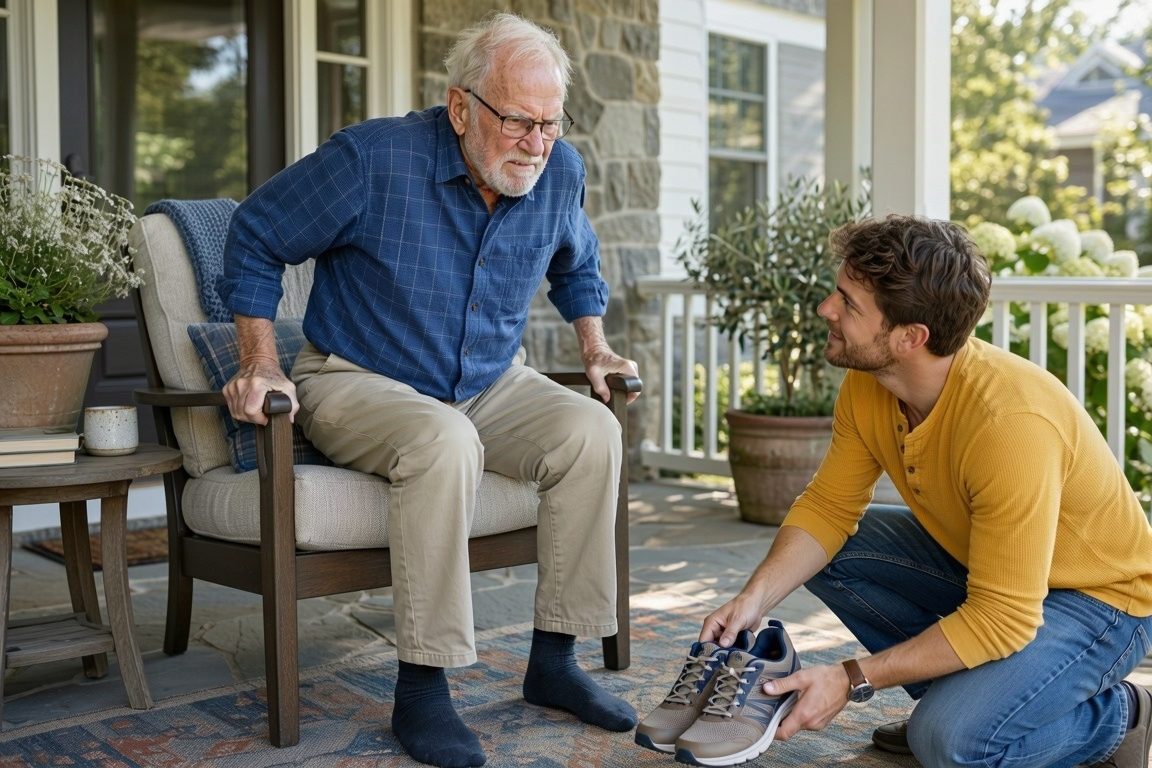
Use these exact words when helping them move: 'I know it might hurt a little, but I am right here with you. Let us try just one small move. First, let us scoot your bottom forward. Good. Now put your feet flat on the floor. I will count to three, and we will stand together. One, two, three, up!' This gives them control and predictability, reducing fear.
Comfort Positioning Guide
If they are stuck in a chair or bed, use pillows and rolled towels to support their body. For a chair, place a small lumbar roll behind their lower back and a pillow under each arm. For a bed, use a wedge pillow to elevate their head slightly, and place a pillow between their knees if they lie on their side. This reduces pressure points and pain.
Pain Diary Template
Create a simple log with columns for: Date/Time, Pain Signs Observed (e.g., wincing, moaning), What They Were Doing (e.g., sitting, trying to stand), What You Tried (e.g., repositioning, warm compress), and Result (e.g., stopped moaning, stood up). Bring this to every doctor visit.
The 'Two-Question' Doctor Call Script
When you call the doctor, say: 'My loved one has stopped moving and I think it might be pain. Can we do a pain assessment? And can we review their medications to see if any are causing drowsiness or weakness?' This gets you a focused response.
Different situations
Late-stage dementia (end stage)
In the end stage, the person may be completely nonverbal and unable to move at all. Pain signs become very subtle: a slight grimace, a change in breathing pattern, or a furrowed brow. Use the PAINAD scale daily. Also, watch for terminal agitation, restlessness, calling out, or thrashing, which can be a sign of pain or discomfort. As one video notes, terminal agitation is common at end of life and often responds to pain medication. Discuss with hospice or palliative care team immediately. Do not assume they are not in pain just because they are quiet.
Lewy body dementia or Parkinson's disease dementia
People with Lewy body dementia may have movement symptoms like rigidity, tremors, and difficulty initiating movement (called 'freezing'). Pain can worsen these symptoms. Also, they are sensitive to antipsychotic medications, which can cause severe side effects. If you suspect pain, avoid using strong painkillers that can affect cognition. Instead, try non-drug approaches first. Also, be aware that sleep behavior disorders (like kicking or punching in sleep) can be a sign of pain or discomfort, do not dismiss it as just part of the disease. Discuss with a neurologist who specializes in movement disorders.
Spouse caregiver vs. adult child caregiver
As a spouse, you may have known your partner for decades and can read their subtle cues better than anyone. Trust your gut. However, you may also be more emotionally attached and miss signs because you do not want to see them in pain. As an adult child, you may feel less confident in reading their body language. Use the PAINAD scale and the checklist tools to stay objective. Also, if your loved one has a history of not caring for you (e.g., an abusive parent), you may struggle with feelings of resentment or guilt. As one source reminds us, the reason you care for them might be about the person you want to be, not about them. That is okay. Focus on the task at hand: relieving their pain is a compassionate act, regardless of the past.
In a facility (nursing home or assisted living)
If your loved one is in a facility, you may not be there to see the pain signs. Call the nursing staff and ask them to use a pain assessment tool like PAINAD. Ask for a daily report on their movement and any pain behaviors. Also, request a medication review with the facility's doctor. If you suspect pain is being undertreated, advocate firmly but politely: 'I am seeing signs of pain, and I want a pain management plan in place.' You have the right to request a change.
On hospice or palliative care
Hospice teams are experts in pain management. If your loved one is on hospice, call the hospice nurse immediately if you see any signs of pain or immobility. They can adjust medications quickly. Do not wait. Also, ask about non-drug comfort measures like gentle massage, music therapy, or aromatherapy. The goal is comfort, not just pain relief. As one source notes, pain is often undertreated at end of life despite available tools, so speak up.
For the doctor
7
- Ask the doctor: 'Could my loved one's immobility be caused by an undiagnosed urinary tract infection or other infection?'
- Ask the pharmacist: 'Are any of my loved one's medications causing drowsiness, weakness, or dizziness that could make moving harder?'
- Ask the doctor: 'Is a short trial of a pain medication appropriate to see if it improves their movement?'
- Ask the doctor: 'Could there be a vitamin deficiency (like B12 or D) contributing to muscle weakness or pain?'
- Ask the doctor: 'Should we do an X-ray or other imaging to check for a hidden fracture or arthritis flare?'
- Ask the hospice team: 'What is the best way to manage pain at this stage without over-sedating them?'
- Ask the doctor: 'Is it safe to use a heating pad or warm compress for my loved one? What precautions should I take?'