Step by step
What not to do
- Do not correct them. Saying 'No, that's not right' or 'Remember, I already told you' will only cause frustration and may lead to a meltdown.Instead, validate their experience and redirect. For example, if they say they need to go home, say 'You're safe here with me. Let's have a cup of tea.'
- Do not use long sentences or multiple instructions. The brain with dementia cannot hold a string of information. Instead of 'Please go to the bathroom, wash your hands, and then come to the table for dinner,' say one thing at a time: 'Let's go to the bathroom.' Then, after they do that, 'Let's wash our hands.'
- Do not ask open-ended questions like 'What do you want for lunch?' This requires decision-making and recall, which are impaired.Instead, offer two simple choices: 'Would you like soup or a sandwich?' Or better yet, just start preparing the meal and invite them to join.
- Do not argue about the time of day or the season. If they think it's morning when it's evening, do not correct them. This is a common symptom and arguing will only cause distress.Instead, go with their reality. Say 'Good morning! Let's have some breakfast' and serve a light meal.
- Do not take their confusion or resistance personally. Their brain is changing, and their behavior is a symptom, not a choice. As one source notes, 'Your job is not to fix this problem because you can't. Your job is to stand alongside them and guide them.'
- Do not assume they are being stubborn or not trying. Normal aging forgetfulness can look like 'she's not trying' but dementia is different. The person literally cannot do what you are asking. Your cueing must adapt to their ability, not the other way around.
Key points
- When forgetfulness becomes dementia, verbal cueing often stops working. Switch to physical and visual cues first.
- Slow down your pace and give your loved one time to process. Rushing increases confusion and agitation.
- Stop correcting them. Validation and redirection are far more effective and preserve their dignity.
- Use the actual object as the cue, hand them the toothbrush instead of saying 'brush your teeth.'
- Break tasks into one-step cues. Do not give multi-step instructions.
- Your body language matters more than your words. Stay calm, open, and patient.
- Routines reduce the need for cueing. Build consistent daily patterns.
- Adapt your approach based on the type of dementia and the stage of the disease.
Videos
 3 Essential Dementia Care Shifts You Need to Make Today!This video explains the shift from focusing on 'difficult behaviors' to 'difficult situations,' which is exactly the mindset change needed when your cueing stops working. It helps you see that the problem is not your loved one but the approach.
 Normal Aging or Dementia? Watch This Simple Rule: Annoying vs Life-Disrupting Memory LossThis video gives a clear rule for distinguishing normal forgetfulness from dementia, which is the foundation for knowing when to change your cueing. It helps you understand why your old methods no longer apply.
 Assisting with Activities of Daily Living in Dementia CareThis video demonstrates practical cueing techniques for daily tasks like bathing and dressing. It shows exactly how to use physical and visual cues instead of words.
 Why does a Person Not Know They Have Dementia? || The 'Why' SeriesUnderstanding why your loved one cannot recognize their own memory loss helps you stop correcting them. This video explains the brain changes behind anosognosia, which is key to changing your cueing approach.
2 more videos
 Worse Than Being Dead | Dementia Caregiver Experiences in Dealing with Progressively Worse BehaviorsThis video shares real caregiver stories about the emotional toll of dementia and the need to adapt. It reinforces why your cueing must change as the disease progresses.
 What Are Some Early Signs or Symptoms That a Person is Living with Dementia?This video helps you recognize the early signs that forgetfulness is becoming dementia, so you can start adapting your cueing sooner rather than later.
Background
Why Your Old Cueing Stops Working
In normal aging, forgetfulness is frustrating but the brain still works well enough to process a verbal reminder. You might say, 'Your keys are on the hook,' and your loved one can follow that cue. But in dementia, the brain's ability to hold and process language changes. The part of the brain that handles attention and shifting focus becomes damaged. As Teepa Snow explains, a person with dementia may become either 'busy busy busy all over the place can't focus' or 'so hyper focused I totally ignore everything else going on around me.' This means your verbal cue may not even register, or it may cause them to feel overwhelmed and defensive.
The Shift from Forgetting to Not Knowing
Normal forgetfulness is about not remembering a detail, like where you put the keys or what you went to the store for. Dementia is different. As one source notes, the person may 'struggle to complete routine tasks at home, at work, or even with their hobbies. Things that they've done for a long time, they're starting to struggle with.' This means they no longer know how to start a familiar task, like using a microwave or buttoning a shirt. Your cueing must shift from reminding them of a step to showing them the step. You move from being a prompter to being a guide.
The Emotional Impact of Being Corrected
When you correct a person with dementia, saying 'I already told you that' or 'No, that's not what happened', you are not helping them remember. Instead, you are creating a 'difficult situation' rather than addressing a 'difficult behavior,' as the Dementia Careblazers emphasize. The person may feel shame, fear, or anger. They may become defensive or withdraw. Your job is not to fix their memory but to stand alongside them and guide them through the experience. This means your cueing must become supportive, not corrective.
Practical tools
6
The 'Object First' Cueing Method
Instead of saying 'It's time to eat,' place a plate of food in front of them. Instead of saying 'Let's go for a walk,' hold up their coat and shoes. This uses the brain's ability to respond to objects rather than words. Keep the object at eye level and wait for them to reach for it or acknowledge it.
The One-Step Verbal Script
Write down short, one-step phrases you can use repeatedly. Examples: 'Let's sit down.' 'Here is your cup.' 'Time for a walk.' 'Let's wash your hands.' Keep a list on the fridge or in your phone. Use the same phrase each time for the same task to build a routine.
The 'Pause and Breathe' Reset
Before you approach your loved one, take three slow breaths. Exhale longer than you inhale. This calms your nervous system and helps you project calm. If they become agitated, step back, take a breath, and then try a different cue. This tool is free and always available.
Visual Schedule Board
Create a simple board with pictures of daily routines:
Point to the picture as you say the step. This gives a visual cue that supports the verbal one. Use large, clear images. Laminate it for durability.
The 'Hand-Over-Hand' Technique
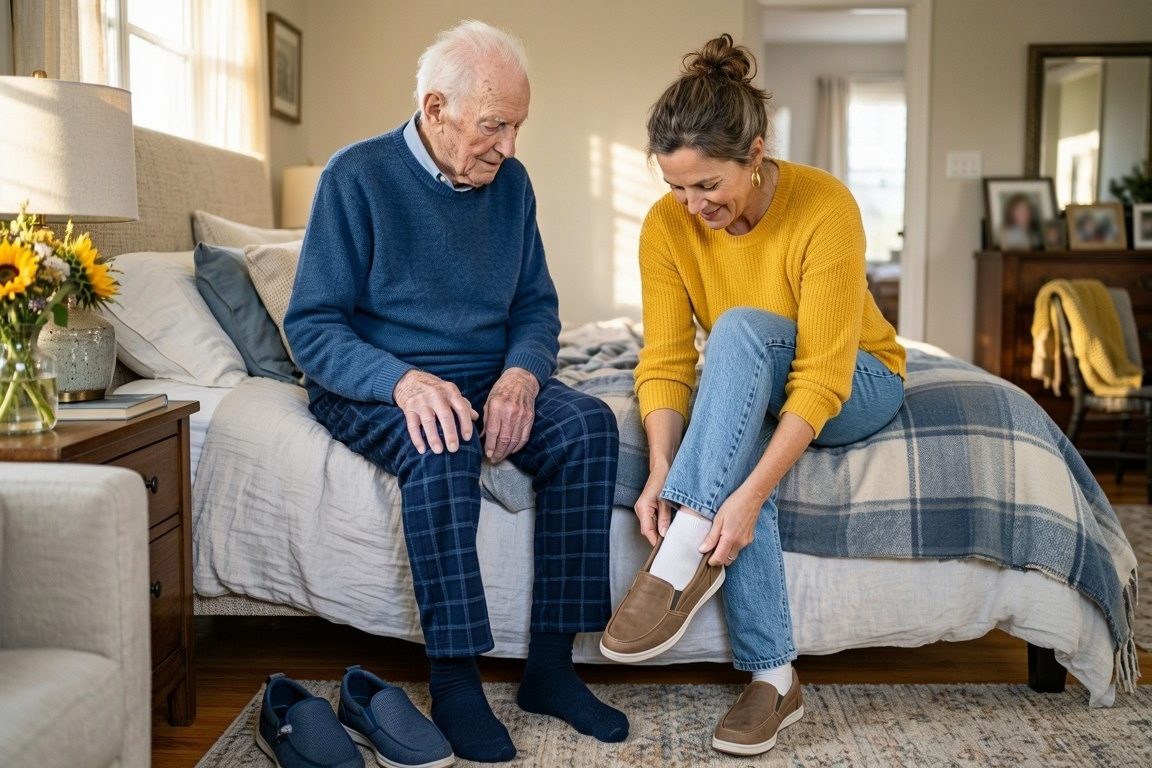
For tasks like brushing teeth or eating, place your hand gently over theirs and guide the motion. This provides physical cueing without words. It can feel less intrusive than verbal instructions and helps them complete the task with a sense of participation.
The 'Distraction Redirect' Script
When they are stuck on a thought or question, redirect to a different sensory experience. Say 'I smell something good, let's see what's in the kitchen' or 'I hear a bird outside, let's look.' This shifts their attention without correcting or arguing.
Different situations
Lewy body dementia
In Lewy body dementia, attention and alertness fluctuate dramatically. Your cueing may work one hour and fail the next. Be prepared to switch approaches quickly. Visual hallucinations are common, so avoid pointing at things they may not see. Use simple, direct language and be extra patient. Also, because movement can be affected, use physical cues like gently taking their hand to guide them.
Late-stage dementia
In late stages, verbal cueing may no longer work at all. Focus entirely on physical and sensory cues. Use touch, music, and familiar smells to guide them. For example, play their favorite song to cue a calm mood, or use the scent of lavender to cue relaxation. Speak in a soft, rhythmic tone. Your goal shifts from task completion to comfort and connection.
Spouse vs. adult child caregiver
A spouse may have decades of shared history and can use inside jokes or familiar phrases as cues. An adult child may need to be more formal and patient, as the parent may resist being 'parented.' If you are an adult child, avoid a commanding tone. Instead, use a collaborative approach: 'Let's do this together.' A spouse can sometimes use gentle teasing, but be careful, dementia can make a person more sensitive.
In a facility setting
In a facility, you have less control over the environment. Work with staff to ensure consistent cueing methods. Provide a written list of what works: 'Hand her the toothbrush, don't say 'brush your teeth.'' Visit at times when your loved one is most alert. Use familiar objects from home as cues, a favorite mug, a familiar blanket. These can trigger positive associations.
Frontotemporal dementia (FTD)
FTD often affects personality and behavior before memory. Your loved one may become impulsive, apathetic, or socially inappropriate. Verbal cueing may be met with resistance or aggression. Use very short, direct commands. Avoid reasoning or explaining. If they refuse to shower, try a different time of day or a different method (sponge bath). Focus on safety and redirection rather than correction.
For the doctor
4
- If your loved one becomes aggressive when you try to cue them for personal care, ask the doctor about possible medication or behavioral strategies to reduce agitation.
- If they are unable to follow any cueing at all and are at risk of injury (e.g., wandering into traffic), discuss with a clinician whether a higher level of care or safety interventions are needed.
- If you notice sudden changes in their ability to respond to cues (e.g., they were able to follow a one-step cue yesterday but cannot today), this could signal a medical issue like an infection or medication side effect. Contact their doctor.
- If you are feeling overwhelmed or burned out by the constant need to adapt your cueing, ask your clinician about respite care, support groups, or counseling for caregivers.