Step by step
What not to do
- Do not give CBD or cannabis without consulting the doctor first; bring the actual product to the appointment.
- Do not assume 'natural' means safe: CBD and THC can cause drowsiness, dizziness, nausea, and worsen confusion or trigger psychosis.
- Do not use any product without a current certificate of analysis (COA) from an independent lab, many are mislabeled or contaminated with heavy metals/pesticides.
- Do not give THC to someone with Lewy body dementia or Parkinson's disease dementia without extreme caution and specialist guidance, it can worsen movement problems and increase fall risk.
- Do not stop or change any prescribed medication (especially antipsychotics) without medical guidance, sudden withdrawal can cause rebound agitation and serious symptoms.
Key points
- CBD and THC are not proven treatments for dementia-related psychosis or agitation; the research is still early and inconclusive.
- Always rule out medical causes (like infection or pain) before trying any new substance.
- Start with non-drug approaches first, environmental changes, validation, and routine, as they are safe and often effective.
- If you decide to try CBD, use a high-quality, lab-tested product, start with a very low dose, and keep a detailed log.
- THC carries significant risks for older adults with dementia, especially those with Lewy body or Parkinson's disease dementia.
- Never give cannabis products without consulting the doctor, and never stop prescribed medications without medical guidance.
Videos
 Being Patient: Explainer | Medical Cannabis and DementiaProvides a clear, balanced overview of the difference between CBD and THC, and why researchers are studying cannabis as an alternative to antipsychotics.
 Dementia Medications Pharmacist InterviewA pharmacist explains how dementia medications work, including antipsychotics, and discusses the potential role of CBD and THC from a medication management perspective.
 Cannabis Gets the Green Light for Dementia Patients | Brain Talks | Being PatientFeatures a lead researcher from King's College London discussing the Sativex (CBD/THC spray) study for dementia-related agitation, including what they hope to learn.
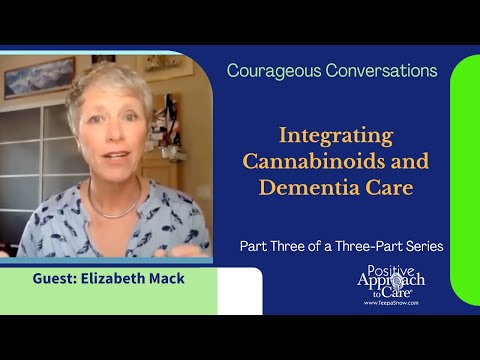 Courageous Conversations: Integrating Cannabinoids and Dementia CareA deep dive into how to have conversations with doctors and families about using cannabinoids, including practical tips on dosing and monitoring.
2 more videos
 Cannabis & Alzheimer's: CBD/THC for Dementia? [Hemp, Marijuana, etc.]Explains the differences between hemp-derived CBD and marijuana-derived THC, and reviews the current scientific evidence for their use in Alzheimer's disease.
 Agitation and Alzheimer’s: Strategies for Managing Behavioral and Psychological Symptoms of DementiaFocuses on non-drug strategies for managing agitation, which should be tried before considering cannabis products.
Background
What Is Happening: Psychosis, Agitation, and the Brain in Dementia
In dementia, the brain is physically changing. As nerve cells die and connections are lost, the brain's normal 'brakes' or inhibitory mechanisms weaken. This means that urges or reactions that most of us can suppress, like anger, fear, or confusion, can burst through without warning. This is why a person with dementia might suddenly become agitated, aggressive, or have hallucinations and delusions (psychosis). These behaviors are not intentional; they are symptoms of a brain that is struggling to process the world.
Psychosis in dementia often involves seeing or hearing things that aren't there (hallucinations) or holding fixed, false beliefs (delusions), like thinking someone is stealing from them. Agitation can look like pacing, restlessness, verbal outbursts, or physical aggression. These symptoms are very common, up to 90% of people with dementia will experience some form of neuropsychiatric symptom during their illness. They are also a major source of distress for both the person and their caregiver.
What CBD and THC Are and How They Might Work
CBD (cannabidiol) and THC (delta-9-tetrahydrocannabinol) are two of the most studied compounds in the cannabis plant, known as cannabinoids. They work by interacting with the body's endocannabinoid system, which helps regulate mood, pain, and inflammation. CBD is non-intoxicating, it does not produce a 'high.' It has shown anti-inflammatory, neuroprotective, and antipsychotic properties in some studies. THC is the main psychoactive component, meaning it can produce a high, but it also has calming and pain-relieving effects.
For dementia-related agitation and psychosis, some experts believe that a combination of CBD and THC may be more effective than CBD alone, because the symptoms are often severe. However, THC carries risks, especially for older adults with dementia, including increased confusion, falls, and potential worsening of psychosis. The research is still in its early stages, and there is no clear evidence yet that cannabis-based products are safe or effective for treating dementia-related symptoms. The FDA has warned that many CBD products are marketed with unproven claims and are of unknown quality.
Why This Is So Hard: The Limits of Current Medications
Doctors sometimes prescribe antipsychotic medications 'off-label' to manage severe agitation or psychosis in dementia. These drugs work by blocking certain brain pathways to slow down activity. The problem is that they cannot target just the problematic symptoms, they slow down everything, including the good parts of the brain. This can lead to serious side effects like blunted emotions, sedation, increased risk of falls, and even a higher risk of death in older adults with dementia. For people with Lewy body dementia or Parkinson's disease dementia, antipsychotics can worsen movement symptoms and cause severe sensitivity reactions.
Because of these risks, doctors are cautious and recommend using antipsychotics only at the lowest effective dose for the shortest possible time. This is why many families and researchers are looking for safer alternatives, like CBD or medical cannabis. But it is crucial to understand that these alternatives are not yet proven, and they come with their own risks, including drug interactions, side effects like drowsiness or dizziness, and the potential for dependence.
Practical tools
4
Start Low, Go Slow Dosing Log
Daily log with columns: date, time, dose (mg of CBD/THC), behavior rating (1-10 for target behavior), side effects (drowsiness, dizziness, confusion), and other medications taken that day. Bring to every appointment. Opening line for doctor: 'I am starting with about 2.5 mg of CBD once a day at bedtime, and I will write down what I see each day for two weeks.'
Rule Out Infection and Discomfort Checklist
Before any new substance, check for:
If any present, call doctor before starting CBD/cannabis.
Validate and Redirect Script for Agitation or Hallucinations
When loved one is upset or responding to hallucinations, do not argue or correct. Move close, speak softly: 'I can see you are upset. That sounds frightening. You are safe, and I am right here with you.' Once heard, redirect to soothing activity, old photos, favorite blanket, familiar song, or garden, to let the moment pass.
Bringing Up Cannabis With the Doctor Conversation Starter
Script: 'I have been reading about CBD and medical cannabis for dementia agitation, and I would like your honest view. Given my loved one's specific dementia, other conditions, and medications, do you see any reason this could be worth a careful trial? If not, can you refer us to a geriatric psychiatrist or palliative care doctor who is?' Bring
Different situations
For Lewy body dementia or Parkinson's disease dementia
These conditions make the brain extremely sensitive to medications. Antipsychotics can cause severe, sometimes fatal, sensitivity reactions. THC should be used with extreme caution or avoided, as it can worsen confusion, hallucinations, and movement problems. CBD alone may be safer but still requires close monitoring. Always discuss with a neurologist or geriatric psychiatrist who specializes in these conditions. Non-drug approaches are even more critical here.
For late-stage dementia (severe cognitive decline)
In late stages, the person may have difficulty swallowing or communicating. CBD or THC oils can be given under the tongue or mixed into a small amount of food, but be careful with aspiration risk. The goal shifts from managing agitation to ensuring comfort and dignity. Drowsiness from these products might be acceptable if it reduces suffering, but it can also increase fall risk. Work closely with a palliative care or hospice team.
For a spouse caregiver vs. an adult child caregiver
Spouse caregivers often feel more comfortable making decisions about treatments, but may also be more reluctant to try new things. Adult children may need to have a conversation with the other parent or siblings about the decision. In both cases, it is vital to have a healthcare proxy or power of attorney in place so that medical decisions can be made legally. Adult children should also be aware of potential financial costs, as CBD products are not typically covered by insurance.
For a person living in a facility (nursing home or assisted living)
Facilities have strict policies about unapproved medications. You cannot simply give CBD or cannabis to a resident without the facility's knowledge and the doctor's order. You must work with the facility's medical director and nursing staff. They may require a doctor's prescription for a specific product. Also, be aware that many facilities are not allowed to administer THC-containing products due to federal regulations. Start by asking the facility's policy on 'complementary therapies' and schedule a care conference to discuss options.
For someone on Medicaid or Medicare
Medicare and Medicaid do not cover CBD or medical cannabis products. You will have to pay out-of-pocket. This can be expensive, especially for high-quality products. Some states have medical cannabis programs that may offer discounts for low-income patients, but this varies widely. Before spending money, talk to the doctor about whether there are any covered alternatives (like certain antidepressants or low-dose antipsychotics) that might be tried first.
For the doctor
6
- Ask your doctor: 'Is it safe to give CBD or THC to my loved one given their current medications (list them) and their specific type of dementia?'
- Ask your doctor: 'What is the lowest possible dose of an antipsychotic that might help, and what are the specific risks for my loved one?'
- Ask your doctor: 'Could my loved one's agitation or psychosis be caused by a medication they are already taking, such as a sedative or a painkiller?'
- Ask your doctor: 'If we try a CBD product, how should I monitor for drug interactions, especially with blood thinners or blood pressure medications?'
- Ask your doctor: 'Are there any clinical trials in our area for cannabis-based treatments for dementia symptoms that my loved one might be eligible for?'
- Ask your doctor: 'What are the signs that the CBD or THC is making things worse, and when should I stop it immediately?'