Step by step
What not to do
- Don't ask 'Do you remember?' This can cause embarrassment, anger, or a painful awareness of memory loss.Instead, use statements like 'I remember when we used to...' and let them join in if they can, without pressure.
- Don't speak loudly or in a high-pitched 'baby voice.' Even though cognitive abilities are impaired, the person is still an adult. Treat them with the same respect you would want if the roles were reversed. Use a calm, natural tone.
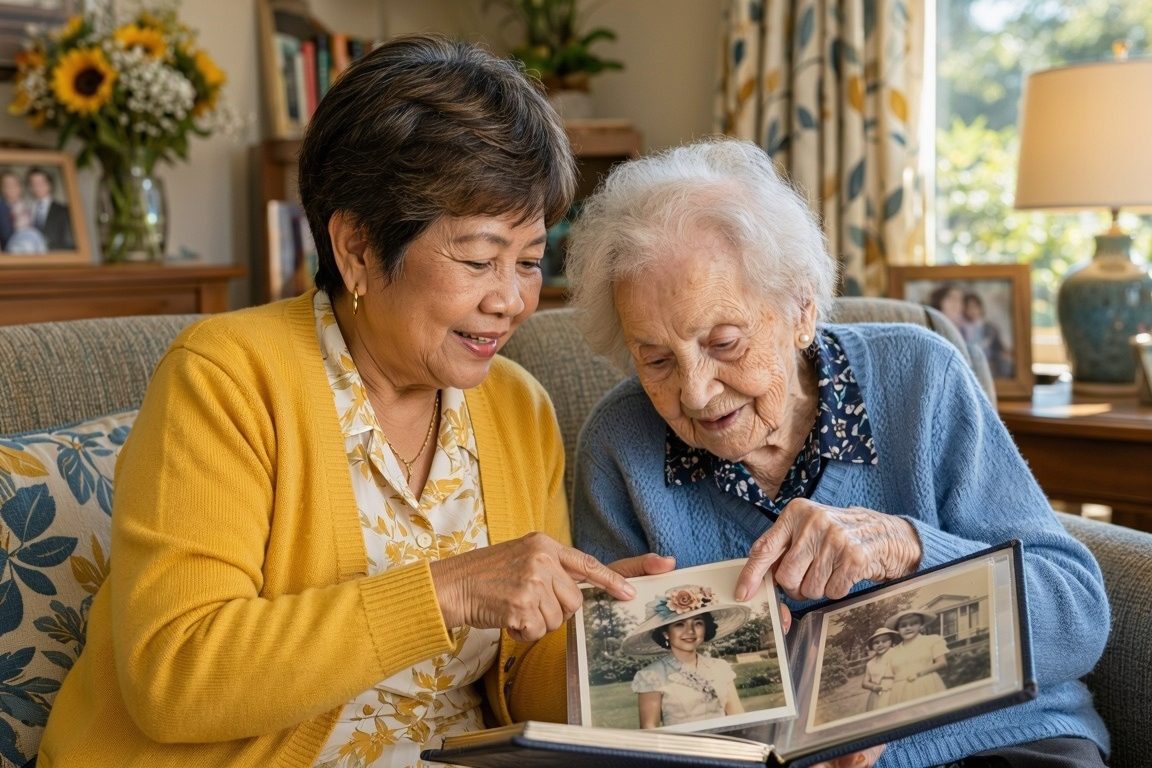
- Don't correct them if they say something inaccurate. Arguing only creates distress and damages the connection.Instead, validate the feeling behind the words. If they say 'I want to go home' when they are already home, you might say, 'You miss the feeling of home. Let's sit here together and look at this photo album.'
- Don't try to have a long, logical conversation. The brain with dementia cannot track multiple ideas or follow a complex thread. Keep to one idea per sentence and allow plenty of silence for them to process.
- Don't talk about the person as if they are not in the room. Even if you think they don't understand, they may catch the tone or a word. Always speak respectfully in their presence. If you need to discuss a care issue, step out of the room to do so.
- Don't force an activity if they are not interested. If they push away the book or turn their head, respect that 'no.' Simply sit quietly with them, offer a gentle touch, or try a different activity another time. The goal is connection, not completion.
Key points
- Shift your goal from 'having a conversation' to 'sharing a moment', connection is the real outcome.
- Use side-by-side activities (looking at a book, folding towels) to reduce pressure and create natural connection.
- Avoid questions that require memory ('Do you remember?') and instead use statements that invite without demanding.
- A five-minute positive visit is more valuable than a thirty-minute frustrating one.
- Your mood sets the tone, arrive calm, present, and with low expectations.
- Use sensory tools (touch, smell, music, photos) to bypass verbal difficulties and reach the person directly.
Videos
 Grandpa, Do you know Who I am? (Dementia Tips)This video helps you understand the emotional experience of the person with dementia and offers gentle ways to connect without relying on memory.
 The Do's and Don'ts of Visiting a Loved One with DementiaA practical, step-by-step guide on how to approach a visit, including what to say and what to avoid, directly supporting the advice in this article.
 How to talk to someone with dementia when they are afraid of saying the wrong thingThis video addresses the anxiety many people with dementia feel about conversation and offers scripts to put them at ease.
 Remember this when talking about someone with dementiaA short, powerful reminder to always speak respectfully in the presence of the person with dementia, even when they seem unaware.
Background
Why 'Just Talking' Stops Working
Dementia gradually affects the brain's ability to initiate, sustain, and follow a conversation. The person may lose the internal 'volitional switch' that makes them want to start an activity or a topic on their own. This means that even if they look uninterested or withdrawn, it's not that they don't want to connect, it's that their brain can no longer get the ball rolling. As one expert explains, people with dementia lose their ability to initiate activities on their own, so what looks like disinterest is often a loss of internal motivation. This is why a visit that relies on open-ended questions or waiting for them to lead the conversation can feel empty or even distressing for them.
The Real Goal: Connection, Not Information
The purpose of a visit is not to get a correct answer or have a logical back-and-forth. The purpose is to create a feeling of warmth, safety, and belonging. When you shift your goal from 'having a conversation' to 'sharing a moment,' the pressure lifts for both of you. The person with dementia may not remember what you talked about, but they will remember how you made them feel. This is why experts emphasize that the process of doing something together, not the outcome, is what matters. You can build connection through side-by-side activities, gentle touch, and shared sensory experiences that bypass the need for words entirely.
Your Mood Sets the Tone
Before you even walk in the door, check your own emotional state. People with dementia are highly attuned to non-verbal cues like body language, tone of voice, and facial expression. If you arrive feeling irritable, rushed, or tired, your loved one will pick up on that tension and may become anxious or withdrawn. One expert advises that you should avoid visiting when you are ambivalent, irritable, or tired. Instead, take a few minutes beforehand to breathe, reset your expectations, and remind yourself that a five-minute visit that is warm and present is far more valuable than a thirty-minute visit where you are distracted or frustrated.
Practical tools
5
The 'Memory Box' or 'Conversation Starter Kit'
Create a small box or bag filled with 3-5 items that relate to your loved one's past interests:
During a visit, take out one item at a time and simply say, 'I brought this because it made me think of you.' Let the item do the talking.
The 'One-Sentence Script' for Visitors
Before a visit, write down 2-3 simple, positive statements you can say that don't require a response. Examples: 'The sun is so warm today.' 'I love this color blue on you.' 'I brought a picture of the garden.' This script helps you avoid the pressure of 'thinking of something to say' and keeps the focus on the present moment.
The 'Five-Minute Visit' Mindset
Reset your own expectation. A good visit does not have to be long. Tell yourself: 'I am here to share a moment, not to fill time.' If the person is having a good day, you can stay longer. If they are tired or agitated, a short, sweet visit is a gift. This tool helps you avoid the guilt of leaving early and the frustration of staying too long.
The 'Side-by-Side Activity' List
Keep a small list of simple, age-appropriate activities you can do together without much setup: folding washcloths, looking at a bird feeder outside, listening to a 2-minute song, flipping through a magazine of landscapes, or simply holding hands and watching the clouds. The key is that you are doing it together, not performing for them.
The 'Validation First' Phrase
When the person says something that doesn't match reality, use this script: 'I hear you. That must feel [sad/frustrating/confusing].' Then gently redirect to something positive. Example: 'I want to go home.' Response: 'You miss the feeling of home. I do too. Let's look at this photo of your kitchen.' This validates the emotion without arguing about facts.
Different situations
Lewy body dementia (LBD) or Parkinson's dementia
People with LBD often have fluctuating attention, visual hallucinations, and sensitivity to noise. Keep visits very short (5-10 minutes). Avoid busy environments. Use calm, low lighting. If they see something that isn't there, don't argue, simply say, 'That sounds unsettling. Let's sit here together.' Focus on gentle touch and quiet music rather than visual activities.
Late-stage dementia (very limited verbal ability)
Focus entirely on sensory connection: hold their hand, brush their hair, play a familiar song, or simply sit in silence with a gentle hand on their arm. Speak in a soft, rhythmic tone. Use your presence as the activity. Do not expect a response. Your calm, loving presence is the engagement.
Spouse vs. adult child visitor
A spouse may feel the loss of partnership more acutely. The spouse can try activities that mirror past shared roles: folding laundry together, looking at a wedding album, or simply sitting side by side watching a favorite show. An adult child may need to let go of the 'parent-child' dynamic and instead approach as a loving friend. Use activities that honor the parent's past roles, like looking at tools from their work or recipes they used to make.
Visiting in a facility vs. at home
In a facility, let staff know you are visiting so they can minimize interruptions. Learn the facility's activity schedule and come during free time. Bring a small activity from home (a familiar blanket, a photo) to create a sense of continuity. At home, you have more control over the environment, reduce clutter, turn off the TV, and create a quiet, cozy corner for your visit.
When the person is withdrawn or 'retreated into themselves'
Do not try to pull them out by force. Instead, use the 'fishing' technique: sit nearby and engage in a quiet activity yourself, like looking at a book or humming a tune. Make soft, interested comments to yourself. This low-pressure invitation often draws them in when direct interaction would feel overwhelming. Be patient, it may take several visits before they respond.
For the doctor
3
- If your loved one becomes agitated, aggressive, or extremely withdrawn during visits, discuss with their doctor whether there might be an underlying medical issue (pain, infection, medication side effect) contributing to the behavior.
- If you are considering using any calming supplements or over-the-counter products (like melatonin or aromatherapy oils) to help your loved one relax during visits, always discuss with their clinician first, as interactions with dementia medications can occur.
- If your loved one has a history of falls, ask their doctor or physical therapist about safe ways to incorporate movement into visits (like walking to a window or standing to look at a bird feeder).