
Step by step
What not to do
- Don't use stage labels to predict decline or measure your success. Compare your loved one only to themselves last week, using your own notes.
- Don't assume 'early stage' means safety isn't needed. Wandering, aggression, or hallucinations can appear suddenly at any point.
- Don't dismiss sudden behavioral shifts as 'just the disease.' They are red flags for a medical issue; call the doctor if change lasts more than 24 hours.
- Don't isolate yourself when symptoms are unpredictable. That's when you most need your support network. Let people bring meals or sit with your loved one.
Key points
- Dementia stages are an incomplete road map that miss the real, day-to-day changes that matter most to caregivers.
- Every person's dementia journey is unique; two people with the same diagnosis can progress at completely different rates.
- Focus on tracking specific behaviors and functional abilities, not on assigning a stage label.
- Sudden changes in behavior may signal a treatable medical condition, not just disease progression.
- You can create meaningful, peaceful moments regardless of the stage; your loved one can still feel your love and effort.
- Use practical tools like a daily behavior log, a 'What Works' phrase bank, and a care team communication template to stay grounded and effective.
Videos
 What Stage of Dementia Is This? (And Why That Question Can Hurt More Than Help)Dr. Camille Sinclair explains why stages are misleading and what to track instead. Essential viewing for any caregiver feeling confused by stage labels.
 What are the different stages of dementia? The 3 stage and 7 stage models explainedA clear breakdown of the common staging models, so you understand what they are and why they fall short.
 Surprising Symptoms of Dementia: PART 2Discusses 'random remembering' and other symptoms that don't fit neatly into any stage, helping you see the full picture.
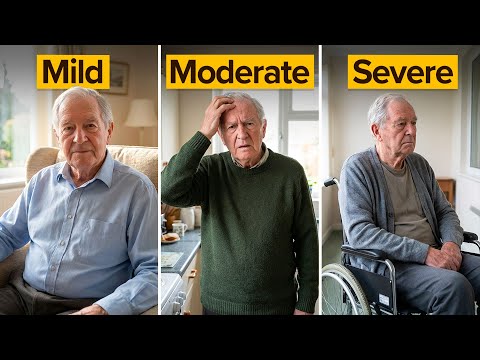 Dementia Progression: What I Wish Caregivers Were ToldA caregiver's perspective on what really matters during progression, beyond the stage numbers.
2 more videos
 What I Wish I Knew About the Stages of DementiaPractical advice from a dementia care specialist on how to avoid getting trapped by the staging mindset.
 The 7 Stages Of Alzheimer's: Stage 3An example of how even a detailed stage description can miss the variability and unique challenges of each person.
Background
The False Promise of Certainty
When a loved one is diagnosed with dementia, caregivers often cling to the staging model because they desperately want a forecast, a timeline, a way to know what's coming. The chaos of watching someone you love change day by day is overwhelming, and stages seem to offer a neat, predictable path. But dementia doesn't follow a neat path. As Dr. Camille Sinclair explains, the stages give a false sense of clarity because they only examine a few symptoms, and you end up missing the important changes that are actually happening. The result is that you feel confused when your loved one's behavior doesn't 'fit' the stage you think they're in, and you may even blame yourself for misunderstanding the disease.
Every Person's Journey Is Unique
Even if your loved one has Alzheimer's disease, every person's decline is different and unique. Relying on a small set of symptoms to plug your loved one into a stage does not give you the full picture. For example, your loved one might be unable to remember a neighbor's name they've known for decades, but that single symptom doesn't tell you whether they are in a mild, moderate, or severe stage. You have to look at several different symptoms, how they function in daily life, and how they fluctuate from day to day. Dementia often doesn't move in a straight line; it can be all over the place. Some people move through stages very quickly, others very slowly, and two people with the same diagnosis and same age can progress at completely different rates.
What the Stages Miss: The Real Caregiver Struggles
The dementia stages are not wrong, but they are widely misleading because they don't measure the things that break caregivers the most. They don't track the sudden mood swings, the personality changes, the 'random remembering' where your loved one can recall a trivial detail from weeks ago but can't remember your birthday or what they ate for breakfast. They don't account for the fact that your loved one can show symptoms from two or three different stages at any given time, fluctuating between them because the brain works in mysterious ways. If you've ever thought, 'We're in this stage, so why is this happening?' it's not that you've misunderstood dementia. It's that you've been given an incomplete road map.
The Danger of Missing Reversible Conditions
Another critical reason not to get hung up on stages is that dementia-like symptoms can sometimes be caused by conditions that are reversible or treatable. Things like a vitamin B12 deficiency, malnutrition, depression, sleep deprivation, drug and alcohol interactions, a brain tumor, or a brain hemorrhage can all mimic dementia. Many patients avoid going to the doctor because they fear a dementia diagnosis, but what if it's something that can be treated? Focusing too much on which stage your loved one is in might distract you from noticing a sudden change that signals a treatable medical issue, like a urinary tract infection (UTI) that can cause sudden confusion and agitation.
Practical tools
6
Daily Behavior Log
A notebook or notes app. Each evening write: Date, mood (1–10), appetite, one win, one challenge, one thing that helped. Review weekly for patterns.
The 'Just Right' Challenge Checklist
When a task fails, ask:
Adjust one thing and note what works.
Red Flag Quick Card
Index card on fridge: 'Sudden change? Check for UTI, pain, dehydration, new meds, constipation. Call doctor if >24 hours.' Keeps you acting instead of guessing.
'What Works' Playbook
Phone note or small notebook. Sections: calming phrases, engaging activities, sensory soothing. Add to it whenever you find something new.
Care Team Communication Template
When calling: 'My loved one is [name]. Since [date], I've noticed [specific change]. Their baseline is [description]. Please check for infection or pain.' Gets faster, more accurate help.
Support Team Roster
List on fridge:
Review monthly and reach out before crisis.
Different situations
For Lewy Body Dementia (LBD)
LBD is notorious for fluctuating cognition, hallucinations, and movement issues. Stages are even less helpful here because a person can be lucid one hour and confused the next. Focus on tracking the timing of fluctuations (e.g., 'good in the morning, worse after 3 PM') and note any visual hallucinations. Avoid using stage-based predictions; instead, work with a neurologist who specializes in LBD to manage the unique symptoms.
For Frontotemporal Dementia (FTD)
FTD often affects personality and behavior first, not memory. A person might be in 'early stage' by memory tests but have severe behavioral issues like loss of empathy or compulsive behaviors. The standard stage models miss this entirely. Track specific behaviors (e.g., 'started hoarding food,' 'lost interest in family photos') and share those with a specialist. Don't rely on Alzheimer's stage descriptions; they won't fit.
For Late-Stage or End-of-Life Care
In late stages, the person may be bedridden, unable to speak, and dependent for all care. Stages are irrelevant here; the focus is on comfort, pain management, and quality of life. Use the 'Pain Assessment in Advanced Dementia (PAINAD)' scale (available online) to check for non-verbal signs of pain. Discuss hospice care with your clinician. The goal is not to track progression but to ensure peace and dignity.
For Adult Child vs. Spouse Caregiver
Adult children may be more likely to Google stages and feel a sense of urgency or guilt about 'not doing enough.' Spouses may be more focused on the day-to-day but can get stuck in denial. Both benefit from shifting focus from stages to functional tracking. Adult children: use the 'What Works' list to communicate with siblings. Spouses: use the 'Three Good Things' practice to protect your own mental health.
For Someone Living in a Facility
Facility staff often use stage labels for care plans, but you can advocate for a more detailed approach. Ask the care team to share their daily notes on your loved one's mood, appetite, and engagement. Request a 'behavior log' that tracks specific incidents, not just a stage number. You can also bring your own 'What Works' list to the care plan meeting to ensure staff use the phrases and approaches that comfort your loved one.
For the doctor
4
- If your loved one has a sudden, dramatic change in behavior (e.g., new aggression, hallucinations, or confusion), ask the doctor: 'Could this be caused by a UTI, medication side effect, or another treatable condition?' Do not assume it's just the disease progressing.
- If you are considering using a stage-based tool (like the FAST scale) for care planning, ask your clinician: 'How should I interpret this tool given my loved one's specific dementia type and other health conditions?'
- If your loved one is diagnosed with a type of dementia that is not Alzheimer's (like Lewy body or FTD), ask: 'Are there any specific tracking tools or resources that are better suited to this diagnosis than the standard stage models?'
- If you are feeling overwhelmed by trying to figure out the stage, tell your clinician: 'I'm getting hung up on stages and it's causing me stress. Can we focus on tracking specific symptoms and functional abilities instead?'